

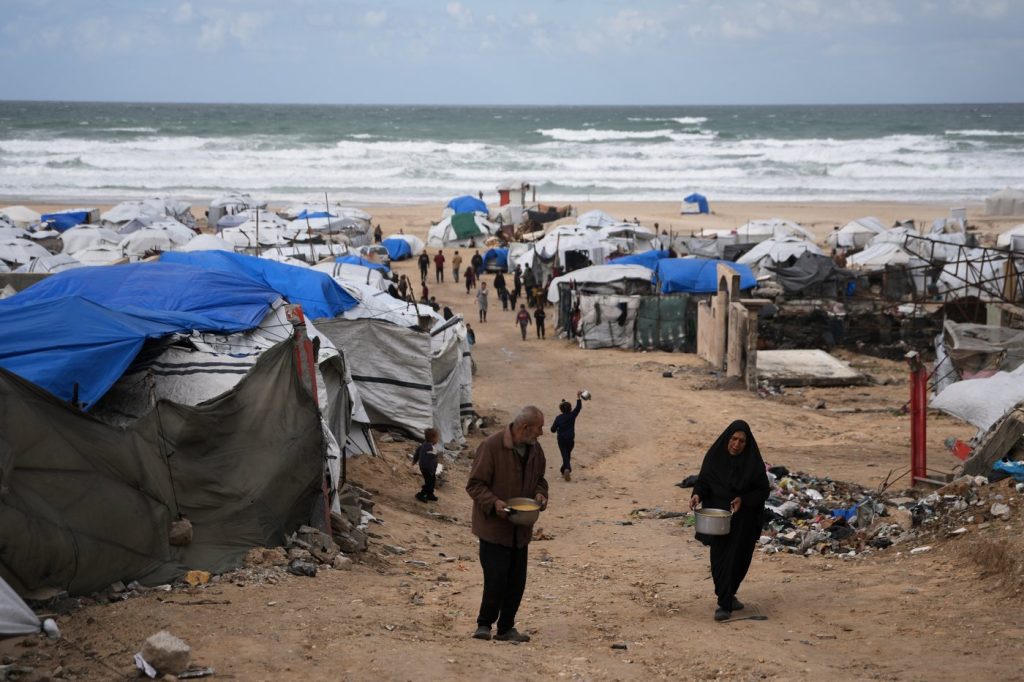
KHAN YOUNIS, Gaza Strip (AP) — The Gaza Strip experienced heavy winter rain over the weekend, leading to flooding in camps where thousands of Palestinians, displaced by two years of conflict, are trying to find some semblance of safety in tents that are wearing thin from extensive use. Floodwaters have created difficult living conditions, with blankets and mattresses soaked through, rendering them useless.
Israeli Prime Minister Benjamin Netanyahu was in transit for a meeting with U.S. President Donald Trump in Florida, addressing the second phase of a ceasefire initiated on October 10. The primary objective of this ceasefire is to increase humanitarian aid reaching Gaza, including essential shelter for those uprooted by the ongoing violence. However, Netanyahu did not make any public statements prior to his departure.
The situation in Khan Younis is particularly dire, with residents struggling to contend with ankle-deep puddles. Families have resorted to shoveling water from their tents to stay dry. Majdoleen Tarabein, displaced from Rafah, shared her distress: “We drowned last night. Puddles formed, and there was a bad smell. The tent flew away. We don’t know what to do or where to go.” Similarly, Eman Abu Riziq lamented the loss of her possessions due to the flooding, stating that her family is still mourning her husband’s recent passing, further exacerbating their suffering amidst these harsh conditions.
Tragically, at least twelve individuals, including a two-week-old infant, have died since December 13 due to hypothermia or weather-related collapses of war-damaged homes, according to Gaza’s Health Ministry, which operates under Hamas. Emergency workers have cautioned against staying in damaged structures due to the risk of collapse; however, with much of Gaza’s infrastructure in ruins, alternatives are few and far between. The United Nations reported in July that nearly 80% of buildings in Gaza have either been destroyed or significantly damaged.
Since the ceasefire began, the humanitarian toll continues to rise. According to the Health Ministry, 414 people have been killed and 1,142 wounded in Gaza since the truce commenced. The overall Palestinian death toll from this prolonged conflict has reached at least 71,266. The ministry, known for maintaining meticulous records, does not differentiate between militants and civilians in its figures, which are generally regarded as reliable by the international community.
Aid deliveries into Gaza are currently falling significantly short of the amounts stipulated under the U.S.-brokered ceasefire agreement, as reported by various aid organizations and an Associated Press analysis of Israeli military data. In the past week, the Israeli military in charge of humanitarian aid reported the entry of 4,200 trucks carrying supplies to Gaza, along with eight garbage trucks for sanitation purposes, as well as tents and winter clothing. However, the number of tents available is under dispute, with aid groups indicating that the demand far surpasses the supply.
As of now, approximately 72,000 tents and 403,000 tarps have made it into Gaza since the ceasefire's inception, according to the Shelter Cluster, an international coalition of aid providers led by the Norwegian Refugee Council. Philippe Lazzarini, the commissioner-general of the U.N. agency overseeing aid in Gaza, criticized the insufficient scale of relief efforts, stating, “Harsh winter weather is compounding more than two years of suffering. People in Gaza are surviving in flimsy, waterlogged tents and among ruins. There is nothing inevitable about this. Aid supplies are not being allowed in at the scale required.”
The ceasefire, while largely holding, faces numerous challenges. Israel remains hesitant to proceed to the next phase of the agreement while the remains of the final hostage from the October 7 Hamas attack— which incited the war— are still believed to be in Gaza. Hamas has countered that ongoing destruction in Gaza has hindered recovery efforts for remains.
Further complications in the ceasefire's next phase involve the deployment of an international stabilization force, establishing a technocratic governing body for Gaza, disarmament of Hamas, and potential further Israeli troop withdrawals from the territory. Both Israel and Hamas have exchanged allegations of violating the truce.








