

SEOUL, South Korea (AP) – North Korea launched multiple ballistic missiles toward the sea on Sunday, as reported by its neighboring countries. This development occurred just hours before South Korean President Lee Jae Myung departed for China for talks that were expected to address North Korea's nuclear program. According to South Korea's Joint Chiefs of Staff, several ballistic missile launches were detected from North Korea's capital region around 7:50 a.m. The missiles reportedly flew approximately 900 kilometers (560 miles), prompting South Korea and U.S. authorities to analyze the details of these launches.
The Joint Chiefs of Staff emphasized that South Korea remains prepared to counter any provocations from North Korea, coordinating closely with the U.S. and Japan regarding the missile launches. Japanese Defense Minister Shinjiro Koizumi confirmed that at least two missile launches have been verified, labeling them a serious threat to the peace and security of Japan, the region, and the global community.
The missile launches represent the latest in a series of weapons demonstrations by North Korea in recent weeks. Experts suggest that North Korea is attempting to showcase its achievements in the defense sector ahead of its upcoming ruling party congress, the first such gathering in five years. Observers are keenly watching the Workers’ Party congress to determine whether North Korea will establish a new policy toward the U.S. and whether it will respond to calls for resuming long-stalled talks.
Since the collapse of negotiations between North Korean leader Kim Jong Un and former U.S. President Donald Trump in 2019, North Korea has been accelerating its testing activities to expand its nuclear arsenal. Kim has bolstered his diplomatic stature by aligning more closely with Russia amid its war in Ukraine and strengthening ties with China. Analysts believe that Kim may see his leverage significantly increased in negotiations with the U.S. should talks resume.
While North Korea has not publicly announced the scheduling of the congress, South Korea's intelligence suggests it will likely take place in January or February. This weekend's missile launches also coincided with South Korean President Lee Jae Myung's trip to China for a summit with President Xi Jinping. Lee's office stated he would urge China, North Korea's primary ally and largest trading partner, to play “a constructive role” in promoting peace on the Korean Peninsula.
Historically, South Korea and the U.S. have called on China to use its influence over North Korea to encourage a return to negotiations or the denuclearization of the regime. However, there are ongoing questions regarding the extent of China’s leverage over North Korea, especially as China and Russia have repeatedly blocked attempts by the U.S. and its allies to impose stricter economic sanctions on North Korea.
On the same day of the missile launches, South Korea convened an emergency National Security Council meeting, where officials urged North Korea to cease its ballistic missile activities, which violate U.N. Security Council resolutions. The Council communicated the details of the missile launches and discussed unspecified responses with President Lee.
These missile tests occurred shortly after a significant U.S. military operation that resulted in the ousting of Venezuelan leader Nicolás Maduro, underscoring the U.S.'s assertiveness in achieving regime change in foreign countries. According to experts, this swift military action may reinforce Kim Jong Un's conviction regarding the necessity of a nuclear deterrent, heightening the paranoia of leaders within hostile regimes after witnessing the U.S.'s capability to effect change rapidly.
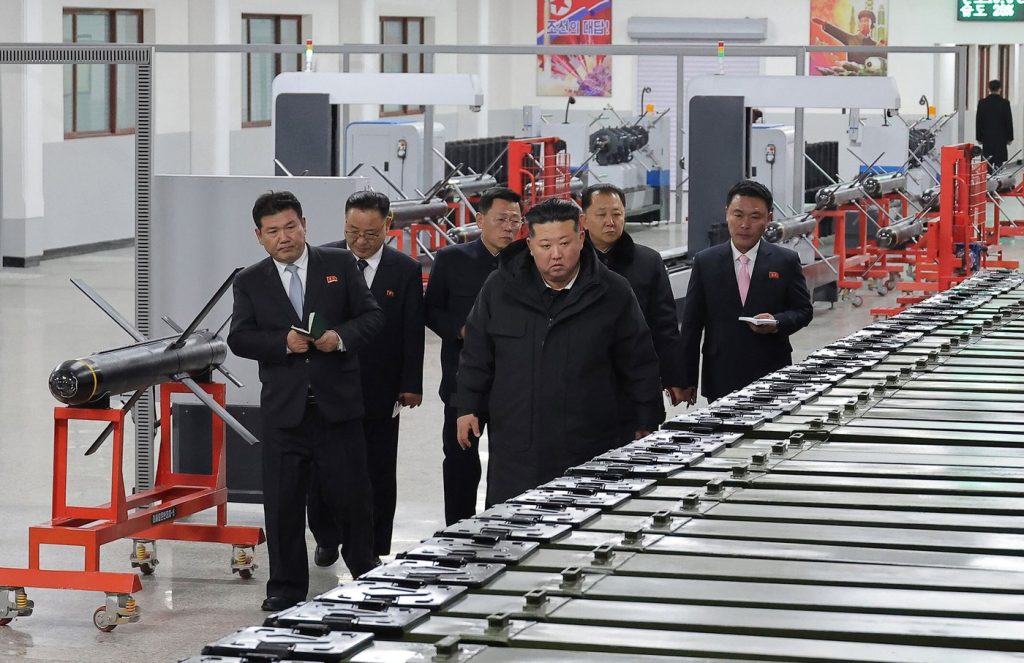
North Korea's state media has not commented on the recent U.S. operation, but it reported that Kim visited a weapons factory, expressing the desire to enhance production capacities for precision-guided weapons. Last Sunday, North Korea had also conducted tests of what it termed long-range strategic cruise missiles and released images showcasing progress in constructing its first nuclear-powered submarine.








