

CARACAS, Venezuela (AP) — Deposed Venezuelan leader Nicolás Maduro arrived in the United States to face criminal charges after being captured in an audacious nighttime military operation orchestrated by the Trump administration. This operation aimed to pave the way for U.S. control over Venezuela's vast oil reserves, as President Donald Trump claimed it would allow the U.S. to "run" the South American nation.
Maduro landed Saturday evening at a small airport in New York following the early morning operation that extracted him and his wife, Cilia Flores, from their home in Caracas. The couple faces U.S. charges related to a narco-terrorism conspiracy. Maduro's government denounced the operation as “imperialist,” while U.S. forces had been built up in the region as part of a pressure campaign against the autocratic leader.
The operation marks the most assertive American action toward regime change in Venezuela since the 2003 invasion of Iraq. Legal experts have raised concerns about the constitutionality of the operation, which was conducted without congressional approval. Meanwhile, Venezuela's Vice President Delcy Rodriguez demanded Maduro's release, asserting his status as the rightful leader of the nation, while Venezuela’s high court designated her as interim president.
During the military operation, multiple explosions occurred in Caracas, leading to casualties among both Venezuelan civilians and military personnel. President Trump confirmed that some U.S. forces were injured, but reported no American fatalities. In a post-capture news conference, Trump elaborated on plans to leverage the leadership void to repair Venezuela’s oil infrastructure and sell substantial amounts of oil to other countries.
The Trump administration has framed Maduro’s ousting as a necessary step to prevent drug trafficking into the U.S., also highlighting potential gains in oil and strategic influence over Venezuela. However, amidst the chaos, Venezuelan state television continued to broadcast pro-Maduro propaganda, showcasing protests against his capture while asserting that the U.S. would not establish an immediate presence in Venezuela.
Trump insisted during a news conference that the U.S. would "run the country" in the interim, claiming the operation was a success and served as a warning to those undermining American sovereignty. The U.S. Justice Department unveiled fresh indictments against Maduro and his wife, depicting their government as corrupt and deeply connected to drug trafficking operations that flooded the U.S. with cocaine. The U.S. does not recognize Maduro as Venezuela's legitimate leader since his contested re-election in 2018.
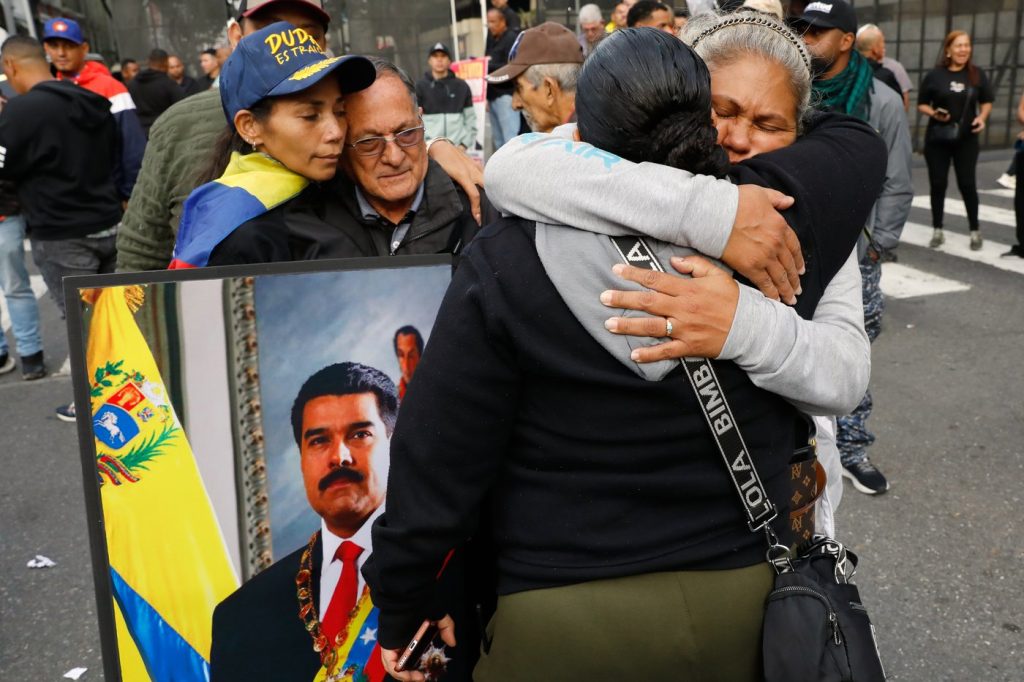
In the wake of the military operation, there were stark reactions in Venezuela. While many citizens took to the streets to protest Maduro’s capture, others expressed fears and uncertainty amid the upheaval. Mayor Carmen Meléndez of Caracas led calls for Maduro’s return, indicating the deep divisions within the country over his leadership.
Simultaneously, a gathering of Venezuelans in Doral, Florida, celebrated the news, exhibiting national pride and hope for a new beginning. Yet, questions about the legality of the U.S. operation lingered, prompting discussions in the U.N. Security Council and among U.S. lawmakers about the lack of authorization for military actions in Venezuela.
As both parties in Congress raised concerns over the military actions taken against suspected drug traffickers without legislative backing, the urgency for an explanation from the Trump administration regarding its strategy in Venezuela grew. The unfolding situation was reminiscent of past U.S. interventions in Latin America, highlighting the complexity and potential ramifications of such decisive military actions on international law and regional stability.








