

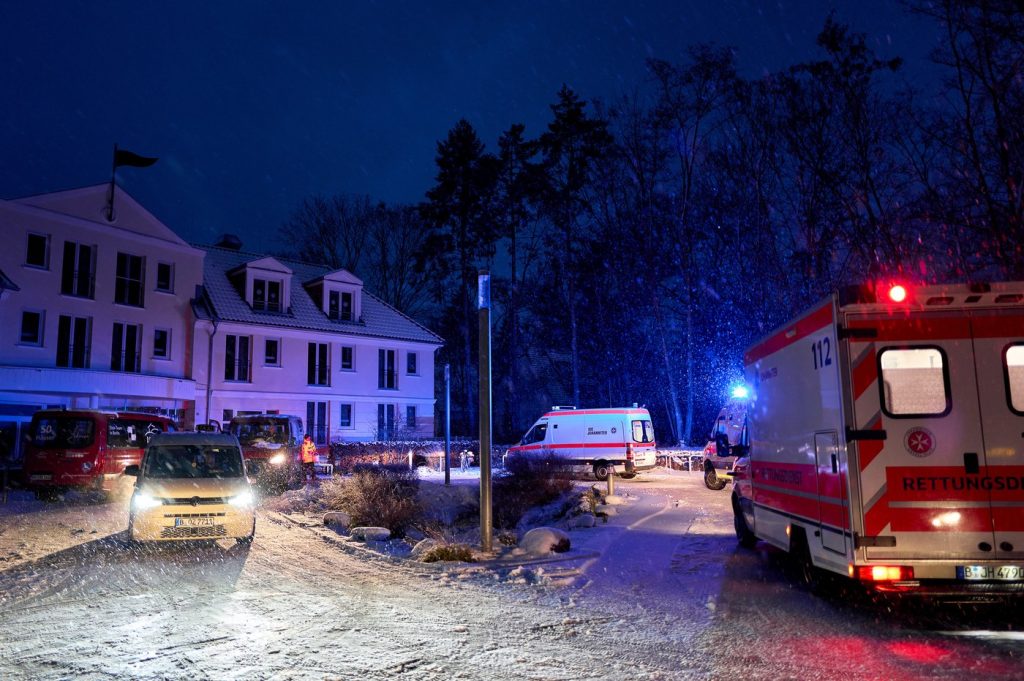
Many households and businesses in south-west Berlin are facing prolonged power outages after high-voltage power lines were damaged by a fire, which city authorities have labeled as a politically motivated attack by left-wing extremists. The incident occurred on Saturday morning on a cable bridge over the Teltow Canal in the vicinity of the Lichterfelde power plant, leading to an initial disruption that left over 45,000 households and 2,200 businesses without electricity across four districts. This blackout also impacted heating and internet services in the affected areas.
Franziska Giffey, Berlin's Senator for Economic Affairs, characterized the disruption as a "particularly severe power outage" affecting thousands, including critical facilities such as care homes, hospitals, and various social institutions. While authorities have worked quickly to restore power, by Sunday, assistance had only reached a fraction of those affected, with many still anticipated to remain without electricity until Thursday.
The restoration efforts have been hampered by snowy weather and freezing temperatures, presenting additional challenges for the residents struggling in these dire conditions. Local authorities have launched an investigation into the fire as a potential act of arson, noting its similarities to a previous power outage that occurred last September, for which radical activists had claimed responsibility.
As part of the ongoing investigation, officials are attempting to verify the authenticity of a letter that purportedly claims responsibility for the latest incident. Berlin's Mayor, Kai Wegner, remarked that "the perpetrators were clearly left-wing extremists," emphasizing the severity of the attack on the power grid and its potential to endanger lives. Wegner condemned the incident as unacceptable, reiterating the threat posed by such actions to the safety and well-being of the community.
Overall, this situation has raised significant concerns among local authorities and the public regarding the vulnerability of critical infrastructure to politically motivated attacks, prompting a broader dialogue about security measures and community safety in the face of such extremist actions.








