

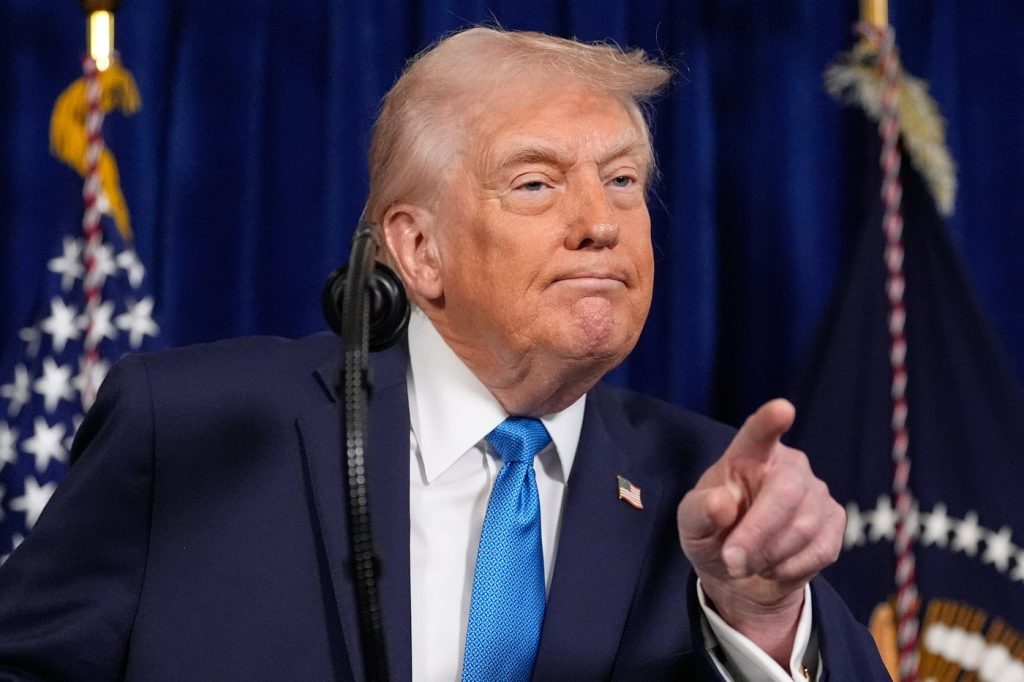
In a recent military operation that resulted in the arrest of Venezuelan President Nicolás Maduro, President Donald Trump invoked the Monroe Doctrine, a foundational principle of U.S. foreign policy established two centuries ago.
The Monroe Doctrine, articulated by President James Monroe in 1823, was designed to prevent European powers from colonizing or interfering in the independent nations of the Western Hemisphere. In turn, the U.S. committed itself to avoiding involvement in European conflicts and domestic affairs.
As Latin American nations were gaining independence from European rule, Monroe aimed to solidify U.S. influence in the region while deterring European re-colonization. According to Jay Sexton, a history professor at the University of Missouri, Venezuela has historically been a focal point concerning the Monroe Doctrine, serving as a context for various interventions by the United States.
Sexton explains that “Venezuela has been the pretext or trigger for many corollaries to the Monroe Doctrine,” which have emerged from the late 19th century through to Trump’s administration. The country has often found itself in tumultuous relations with foreign powers and has sought alliances with rivals of the U.S.
Among the earliest challenges to the Monroe Doctrine was France's installation of Emperor Maximilian in Mexico during the 1860s. Following significant pressure, France withdrew its forces. In 1904, President Theodore Roosevelt expanded the Monroe Doctrine through the Roosevelt Corollary, asserting that the U.S. could intervene in unstable Latin American nations.
Throughout the Cold War, the doctrine was invoked to combat communism and respond to threats, such as the U.S. demand for the Soviet Union to withdraw missiles from Cuba in 1962 and the Reagan administration's efforts against the Sandinista government in Nicaragua.
Gretchen Murphy, a professor at the University of Texas, suggests Trump’s reference to the Monroe Doctrine is consistent with how previous presidents have used it. She argues that the doctrine has often been leveraged not just to defend Latin America from European intrusion, but to uphold U.S. interests, sometimes undermining true democratic reforms in the process.
Addressing Venezuela, Trump claimed Maduro's regime was “hosting foreign adversaries” and acquiring weapons threatening U.S. interests, which he deemed a violation of core American principles. He expressed a resolve to ensure that American dominance in the Western Hemisphere remains unchallenged, highlighting the importance of Venezuelan resources, particularly energy, to the U.S. economy.
As discussions progressed, Trump described the U.S.'s potential governance over Venezuela as aligned with an “America First” strategy, maintaining that such actions are a means to strengthen the U.S. He mentioned a proposed national security strategy that introduces a "Trump Corollary" to the Monroe Doctrine, which aims to re-establish American leadership in the region.
The strategy emphasizes a renewed military presence in the Western Hemisphere to combat drug trafficking and migration, effectively representing a significant reorientation of U.S. military policy. Sexton observes that Trump might aim to issue a distinct doctrine, diverging from those defined by past leaders, instead crafting a narrative that centers on his administration's unique vision for foreign policy.
Despite the ambitious military approach to Venezuela, experts suggest that any prolonged U.S. involvement may fracture support among Trump's base, particularly among isolationist factions. Some critics apprehend that this inclination could contradict Trump's prior pledges regarding military withdrawal and raise concerns about engaging in extended conflict.








