

An atmosphere of tense calm enveloped Venezuela on Sunday, January 4, 2026, following a dramatic U.S. military operation that resulted in the capture and deposition of President Nicolas Maduro. The operation, which took place in Caracas, saw Maduro extracted from his residence located within a military base. He was subsequently transported to the United States, landing in a small airport in New York late Saturday afternoon.
The aftermath of the operation has left the country on edge, as citizens grapple with the implications of Maduro’s removal. Reports indicate that several areas in and around Caracas experienced violence and disruption during the military intervention. The operation was met with mixed reactions from the Venezuelan populace, with some expressing relief over Maduro’s capture while others showed support for the deposed leader.
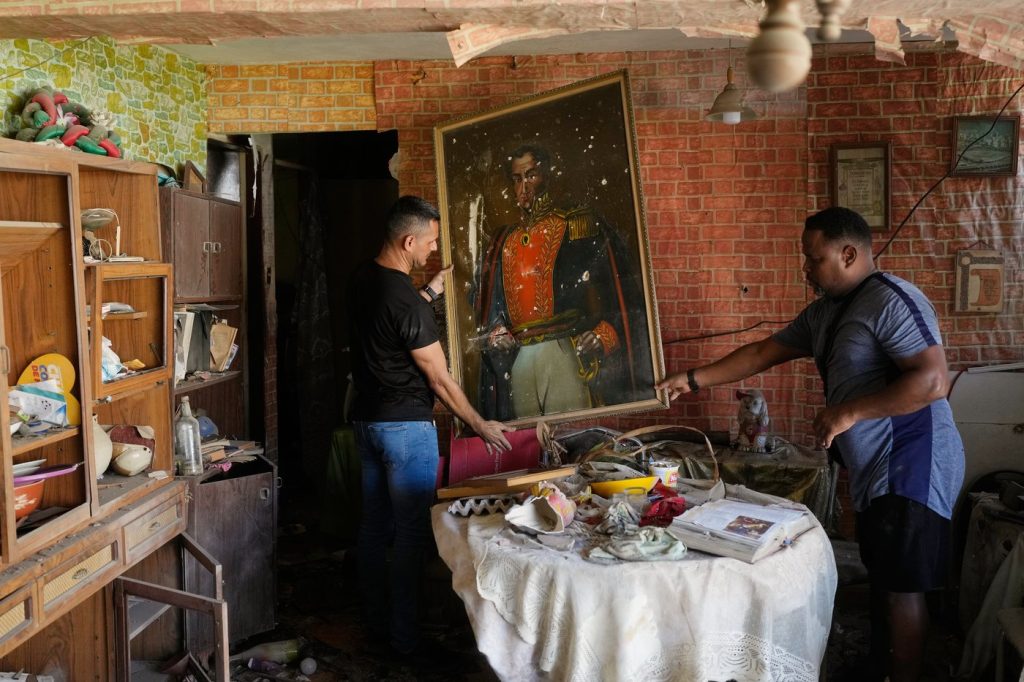
In Catia La Mar, a town adjacent to Caracas, local residents assessed the damage inflicted by the U.S. strikes. Notably, Jesus Linares, a resident, reported that his home sustained damage during the operation. He was photographed removing a painting of Simon Bolivar, a revered independence hero, from his home, which he claims was impacted by the military actions. Other residents in the area were also seen clearing debris from their properties, indicating that the operation may have caused collateral damage to civilian structures.
Pro-government armed civilians were observed enforcing checkpoints in Caracas, scrutinizing motorcyclists, and monitoring activities in public spaces. This presence of armed civilians highlights the ongoing tensions in the capital. Many Venezuelans were seen queuing outside supermarkets, indicating a sense of urgency to secure essential goods amid the uncertainty following the military intervention.
In addition to reports of armed civilians, various images emerged of damaged structures in Catia La Mar. Neighbors reported that these buildings, including an apartment complex, were affected during the U.S. military operations aimed at capturing Maduro. The visuals captured by journalists depict a community grappling with the consequences of international intervention in their domestic affairs.
As residents navigated the aftermath, images of former President Hugo Chavez adorned public spaces, reflecting his enduring influence in Venezuelan society. Pedestrians gathered in squares decorated with his likeness, underscoring a continued dedication to the legacy of Chavismo, the political ideology that Chavez championed and that Maduro sought to uphold.
Overall, the tense calm in Venezuela post-Maduro’s capture reflects a nation at a crossroads. The ramifications of the U.S. military's involvement and the future political landscape remain uncertain. The combination of public unrest, political loyalty, and visible damage caused by the operation encapsulates the delicate balance in Venezuela as it faces profound changes in leadership and governance.








