

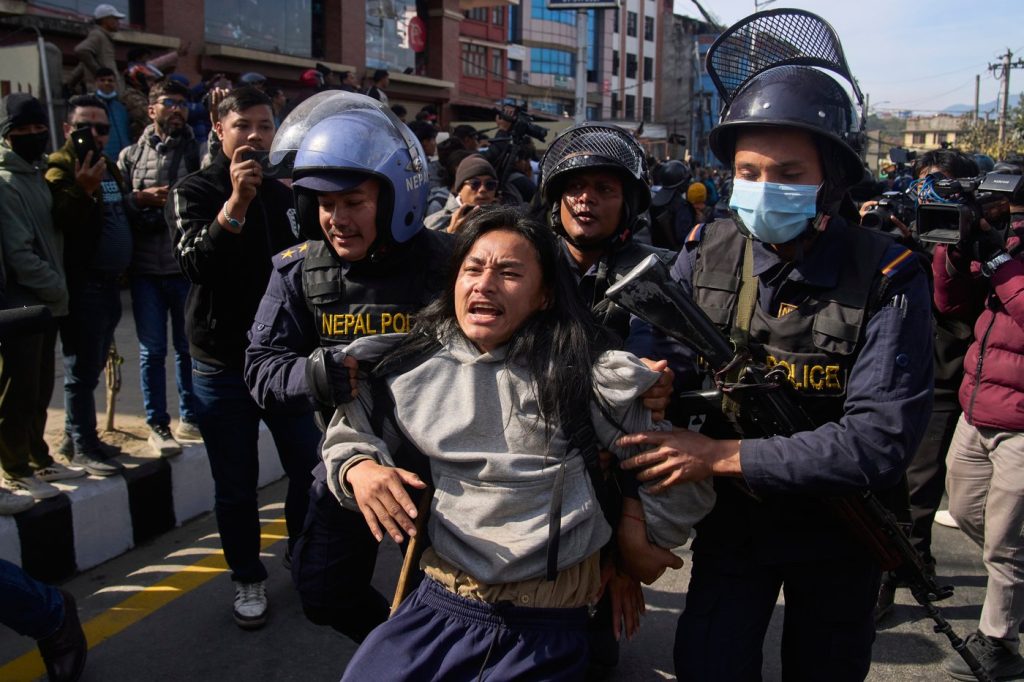
KATHMANDU, Nepal (AP) — Mukesh Awasti, a 22-year-old aspiring civil engineer, was poised to leave for Australia in September when he decided to join the youth-led protests against corruption in Nepal. Tragically, his involvement led to him being shot by security forces, resulting in the amputation of his leg. Currently recovering at the National Trauma Center in Kathmandu, Awasti expressed deep regret for prioritizing protests over his education, lamenting that the sacrifices made by many have yielded little significant change.
The violent protests that began on September 8, 2025, ultimately resulted in 76 deaths and over 2,300 injuries. The demonstrations, largely driven by “Gen Z” activists, culminated in the appointment of Sushila Karki as Nepal's first female prime minister on September 12. She vowed to hold fresh elections in March 2026. However, the interim government has faced mounting criticism from the very protestors who expected substantial reforms.
Awasti conveyed his disillusionment, stating, “I am regretting my decision to take part in the protest because there have been zero achievements from the new government we brought which has failed us.” He emphasized that the pervasive corruption remains unaddressed, and those responsible for the violence against protestors have not faced justice. Despite claims by the government’s anti-corruption agency regarding one significant case, no prominent political figures have been implicated, and many accused politicians are gearing up for upcoming elections.
Recent weeks have seen renewed protests from demonstrators, including many who were injured in the September confrontations. Suman Bohara, who walks with crutches due to injuries, voiced frustrations about the lack of action from the government: “We are here because we are compelled to.” He highlighted the pain and loss experienced by many families while noting the government's inaction in response to these tragedies.
The protests ignited after a social media ban, causing tens of thousands of primarily young people to rally in Kathmandu to protest against rampant corruption, lack of opportunities, and ineffective governance. The demonstrators confronted police barricades and attempted to breach the parliament, leading to violent clashes with security forces.
In the aftermath, government offices, police stations, and politician residences were attacked, prompting quick action from the army to restore order. This resulted in Karki's appointment, which was intended to stabilize the situation and manage the electoral process. Karki expressed optimism about conducting elections on March 5, 2026, assuring the public of improved security conditions.
The youth protest movement lacks unified demands, presenting significant challenges to the interim government’s authority. Calls for the direct election of prime ministers, an overhaul of the constitution, and the prosecution of corrupt politicians reflect a fragmented agenda among different groups within the protests. Analysts, such as Abeeral Thapa, noted that the ambiguity among protestor demands has hindered clear progress in addressing the issues at stake.
Some factions within the protest movement have started opposing the planned elections in March, arguing that the core issues of corruption and accountability must be prioritized over simply arranging new elections. Others believe that legitimate elections could facilitate the necessary reforms.
The future of the promised elections remains uncertain, yet analysts assert that there are no viable alternatives to this democratic process. The absence of a decisive framework for interim governance in Nepal’s constitution complicates the situation further. Ultimately, the protests, which initiated with the aim of ending corruption and reinstating online freedoms, have escalated into a broader challenge to political legitimacy in the country.








