

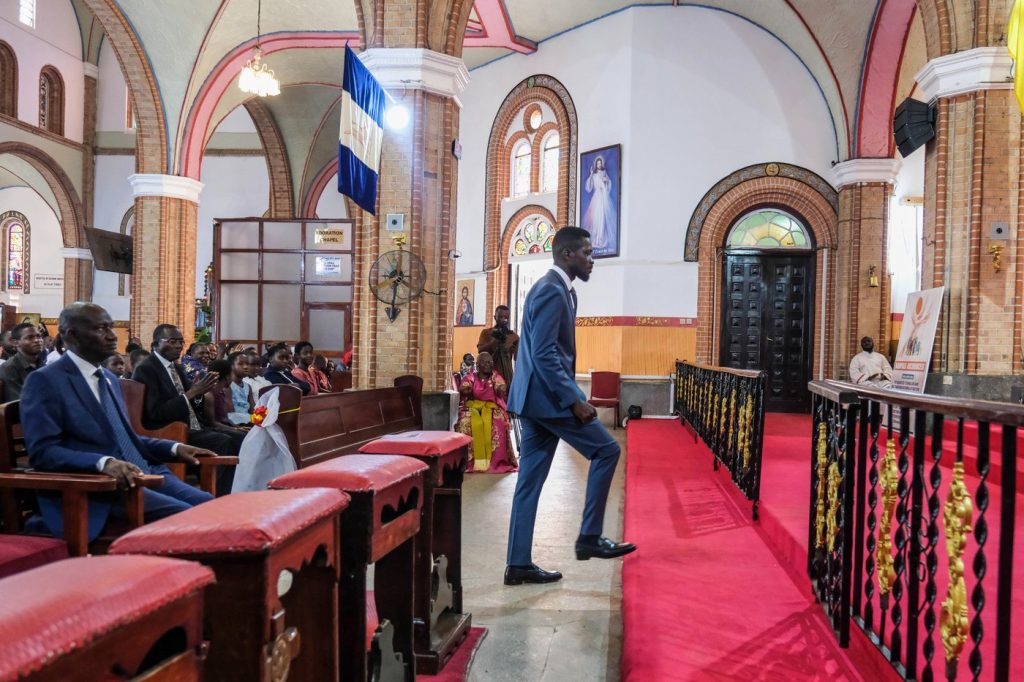
The Ugandan political landscape is marked by significant tension as presidential candidate Bobi Wine campaigns against long-standing President Yoweri Museveni, who has held power since 1986. Wine, known for his music career before entering politics, is currently facing violent oppression during his campaign efforts, requiring him to wear protective gear such as a flak jacket and helmet. Despite these precautions, he finds himself often met with tear gas and police brutality aimed at suppressing dissent.
As the opposition's most prominent figure, Wine—whose real name is Kyagulanyi Ssentamu—claims that the military has taken control of the electoral environment. He reports that at least three of his supporters have perished during his campaign, alleging that security forces are harshly intimidating his followers. “It has been very violent. There’s been a lot of impunity to the extent that we are denied the right to use the public roads,” he complained in a recent interview with The Associated Press. Wine’s accusations include being constantly monitored and harassed by security personnel as he attempts to mobilize support.
On January 1st, Museveni publicly defended the use of tear gas, referring to it as a legal and non-lethal means to disperse crowds, contrasting it with live ammunition. This statement prompted criticism as opposition rallies are often violently interrupted by the military, which has enabled Museveni to campaign with minimal disturbance. The president faces growing criticism for allegedly treating the election as a mere formality, perpetuating his grip on power amid allegations of voter suppression and misconduct.
The ongoing strife reflects deeper political divisions in Uganda. Museveni, a figure who transitioned from guerrilla warfare to leading a nation, is now criticized for his extended rule and betrayal of previously stated democratic ideals. Under his administration, rivals are frequently jailed or politically sidelined, and the urgency of the upcoming election on January 15th raises questions about the potential for change in the nation's leadership.
Wine, enjoying considerable support among urban youth and the working class, urges his followers to participate in "protest votes" despite the risks. He secured 35% of the votes in the 2021 election, marking it as a significant challenge to Museveni's dominance, who received 58%. However, Museveni still disparages Wine, painting him as an agent of foreign influences and questioning his loyalty to Uganda.
The political environment is further complicated by the aspirations of Museveni's son, General Muhoozi Kainerugaba, who has expressed his desire to succeed his father. This raises concerns about potential hereditary rule, continuing the cycle of power concentration within a single family. Critics within Museveni's own party are also alarmed by the violent tactics enforced by security forces against opposition supporters.
Human rights organizations, including Amnesty International, have condemned the political climate, recognizing the widespread use of violence, intimidation, and arbitrary arrests directed against political dissidents. High-profile arrests, such as that of Sarah Bireete, the head of a constitutional governance NGO, signify a broader crackdown on civil society leaders who publicly criticize the government. Such actions have led to mounting accusations that Uganda has devolved into a military dictatorship rather than a democratic society.
Overall, the landscape ahead of Uganda's upcoming elections illustrates deepening unrest and a struggle for political expression against a backdrop of repression. As both Bobi Wine and President Yoweri Museveni prepare for the forthcoming vote, the implications for Uganda's political future remain uncertain and fraught with tension.








