

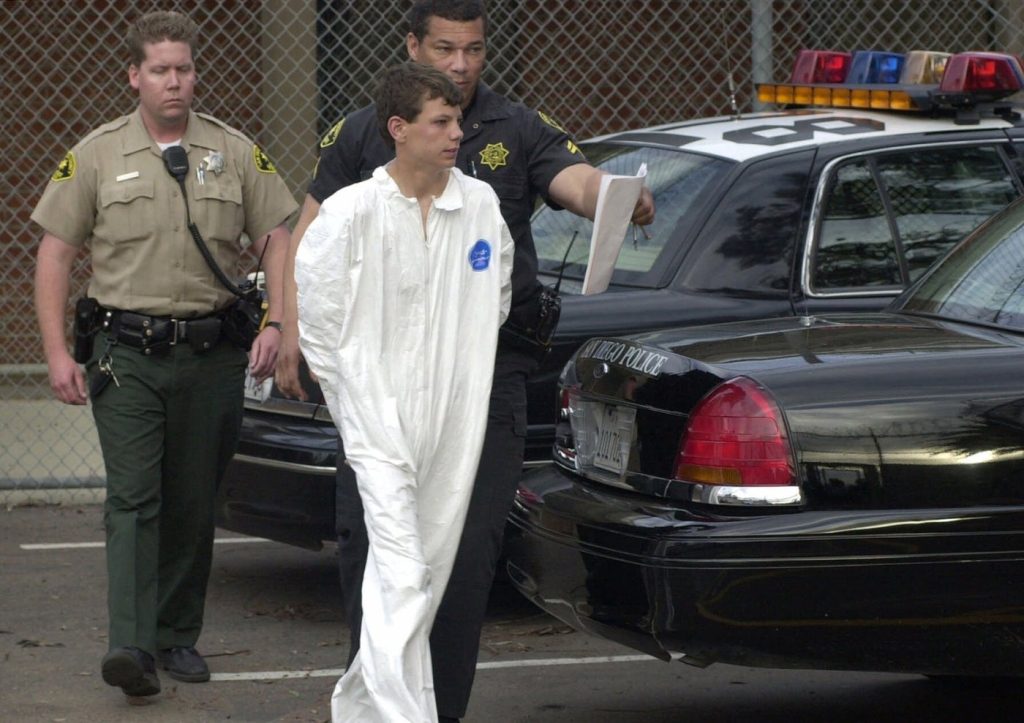
LOS ANGELES (AP) A judge has granted a request for resentencing to Charles Williams, the gunman responsible for a tragic 2001 shooting at Santana High School in San Diego, which could lead to his release after spending 23 years in prison. At just 15 years old, Williams opened fire with his father's revolver on March 5, 2001, leading to the deaths of two students, 14-year-old Bryan Zuckor and 17-year-old Randy Gordon, while injuring 13 others.
Williams was initially sentenced to 50 years to life in prison for his actions. However, the recent ruling means that Williams' case will now be transferred to juvenile court, which may allow for his immediate release from prison without any parole supervision or evaluation, as stated by the San Diego County District Attorney, Summer Stephan. The ruling marks a significant shift in how juvenile offenders are handled in the judicial system.
The San Diego County District Attorney's office announced plans to challenge the judge's ruling in appellate court, emphasizing the importance of justice for the victims and the need to prioritize public safety. Stephan remarked, "As prosecutors, our duty is to ensure justice for victims and protect public safety, and the defendant's cruel actions in this case continue to warrant the 50-years-to-life sentence that was imposed." She further highlighted the necessity for a balance between the rights of defendants, victims, and community safety.
Williams, now 39 years old, is currently incarcerated at the California Institution for Men in Chino. He is eligible for a parole hearing in September 2024. However, he was previously denied parole after being assessed as an "unreasonable risk to public safety" by a state board. The board also indicated uncertainty regarding whether Williams comprehended the reasons behind his violent acts during the shooting.
Due to Williams' age at the time of the crime, his convictions will be reclassified as juvenile "true findings" following the juvenile court disposition hearing. This legal framework stems from a law enacted in 2011 which provided juvenile offenders serving life without parole the opportunity for resentencing. An appeals court decision in 2022 further extended this eligibility to those with what is termed the "functional equivalent" of life without parole sentences.
Williams' case raises complex questions regarding juvenile justice, accountability, and the balance between rehabilitation and public safety. The developments in his legal situation are closely monitored by those invested in the issue of gun violence, juvenile crime, and the judicial processes surrounding such cases.








