

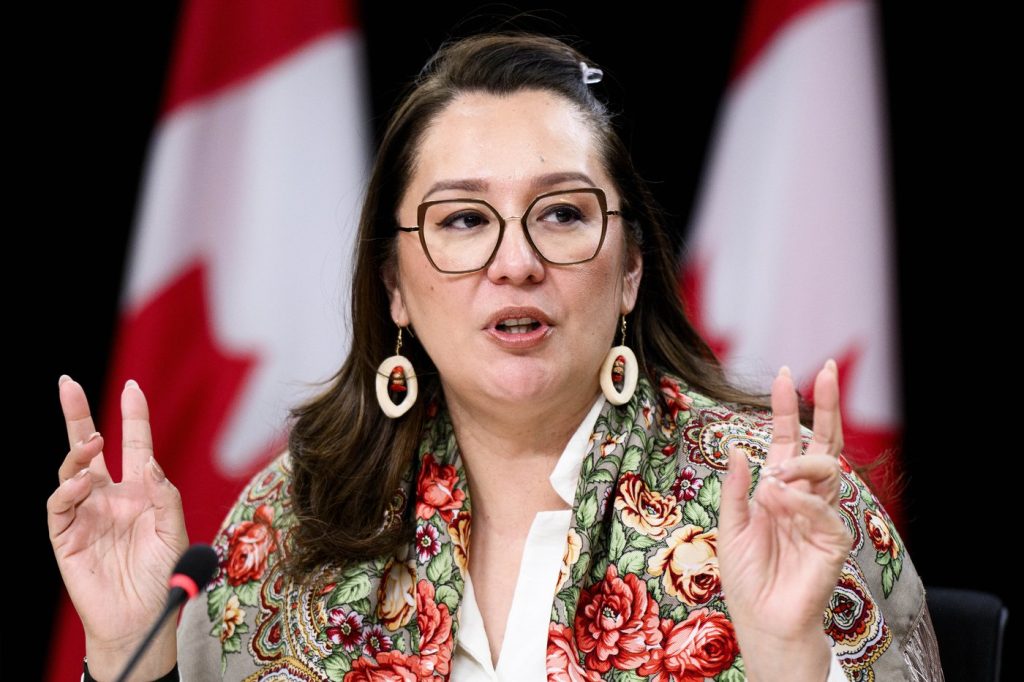
OTTAWA — Indigenous Services Minister Mandy Gull-Masty's recent remarks regarding source water protections in a new clean water bill have raised concerns among First Nations chiefs, who believe the government is prioritizing economic development over the health of Indigenous communities. This apprehension follows the introduction of clean water legislation by former Prime Minister Justin Trudeau's government, which was ultimately unable to pass before Parliament was prorogued last year. Gull-Masty previously pledged to reintroduce the bill, emphasizing its aim to affirm First Nations' human right to clean drinking water.
However, in a follow-up interview with The Canadian Press in December, Gull-Masty did not guarantee that the new legislation would include the same source water protections as before. She also refrained from disclosing whether she is advocating for these protections within the cabinet discussions. Chief Kelsey Jacko of Cold Lake First Nations expressed disappointment, stating that Indigenous communities previously collaborated extensively with the former government to develop the legislation, which was aimed at securing clear rules for protecting freshwater sources. Jacko emphasized the importance of recognizing inherent rights within legislative frameworks and highlighted the daily struggles faced by those living off the land.
Conservative MP Billy Morin, who is the critic for Indigenous services, criticized the federal government for not fulfilling its promises to First Nations regarding access to clean drinking water. He claimed that Gull-Masty's comments suggest the forthcoming legislation will not meet the demands of Indigenous communities and will instead introduce "meaningless bureaucracy" without establishing benchmarks to measure progress. Anishinabek Nation Grand Chief Linda Debassige, who played a key role in negotiating the previous water legislation, stressed that omitting source water protections from the new bill would mean capitulating to Ontario and Alberta and ignoring Indigenous rights. Debassige stated, "You can't give up the protection of water for money because you can't drink money."
Concerns about insufficient consultations surrounding the new bill have also arisen. Debassige noted that her discussions with Gull-Masty amounted to only about 15 minutes, and she is unaware of other chiefs having met with the minister regarding the legislation. She criticized the notion of strengthening the bill while removing essential source water protection clauses. Debassige suggested that First Nations may need to consider further legal action against Canada to secure their protections.
Both Alberta and Ontario have sought ways to expedite major development projects, with Alberta recently signing an agreement with Ottawa to facilitate the potential construction of a pipeline to the B.C. coast. Ontario is pursuing the development of the mineral-rich Ring of Fire region. In conjunction with these provincial efforts, both have enacted legislation aimed at accelerating the approval processes for key projects, sparking concerns among First Nations leaders who believe these measures threaten their rights to consultation and endanger the environment.
Debassige articulated fears that the new water legislation could be passed without adequate consultation with tribal chiefs and community members. She highlighted the importance of source water protection, particularly for communities reliant on the Great Lakes for their drinking water. "It’s like the federal government is just playing to the media that First Nations are important, but they haven’t actually fundamentally demonstrated that," she concluded.
Jacko echoed this sentiment, expressing feelings of neglect, stating that it seems as though they "don’t care about us as people." The ongoing dialogue surrounding the new clean water bill underscores a critical intersection between Indigenous rights, environmental protection, and economic development in Canada.
This report originally published on January 7, 2026.








