

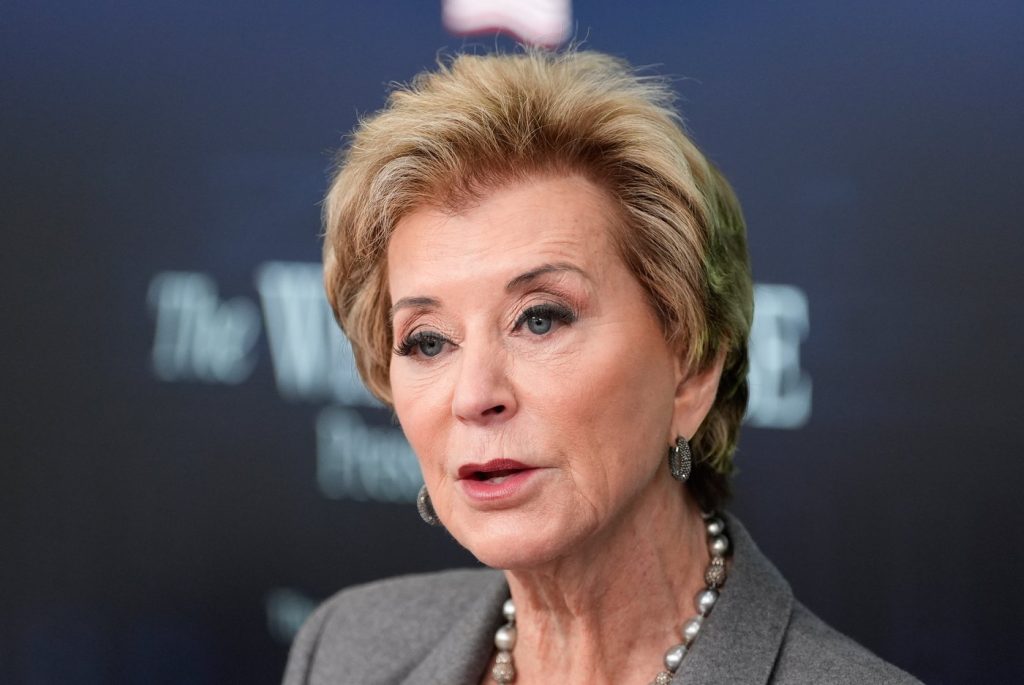
The Trump administration has granted Iowa increased authority over its federal education funding, marking a significant shift in how education dollars are allocated. This move aligns with a broader initiative by conservative states seeking greater flexibility from federal regulations, echoing President Trump's commitment to "return education to the states." Iowa's request was the first approved under this new directive from Education Secretary Linda McMahon, who began inviting states to pursue exemptions from federal rules last year.
Iowa's application for a waiver aimed to combine funds from multiple federal programs into a single block grant, offering the state more leeway in how to use these resources. McMahon officially endorsed Iowa's plan during a visit to the state, emphasizing the newfound flexibility that allows states to focus on their educational priorities without the burden of extensive federal compliance. Other states such as Indiana and Kansas have also shown interest in obtaining similar waivers.
Under the approved waiver, Iowa can merge approximately $9.5 million from four federal education programs related to teacher training, English learners, after-school initiatives, and academic enrichment. This consolidation allows state officials to allocate funds according to local priorities, potentially enhancing programs such as literacy and teacher training. McMahon stated that reducing compliance requirements is "incredibly helpful" for states, allowing federal money to flow directly without having to navigate Department of Education regulations.
Notably, the waiver only affects federal funds managed by Iowa's education agency and does not extend to the significant amounts distributed across the state's over 300 public school districts. The plan retains Title I funding, which is crucial for schools serving large populations of low-income students, following concerns raised by Democrats about the potential misallocation of resources. Critics argue that block grants might divert funds from disadvantaged students, undermining the intended support offered by federal programs.
Iowa's waiver represents a narrower approach than an earlier proposal that sought to merge ten funding sources. This initial request included Title I, which delivers over $100 million to assist schools with significant low-income enrollment. Education Department officials noted that Iowa's current waiver reflects existing legal flexibility, although McMahon has called for a comprehensive federal education budget that consolidates numerous funding sources into a single block grant at the national level.
McMahon hailed Iowa's proposal as a "first-in-the-nation" initiative to restore educational authority to the states, balancing flexibility while adhering to the overall intent of federal legislation. This latest move highlights the Republican administration's effort to reshape education policy by reducing federal influence, a departure from past practices wherein states typically sought waivers for specific educational initiatives aimed at enhancing student achievement.
McMahon has utilized various bureaucratic methods to streamline her agency's operations, including interagency agreements to allocate responsibilities typically designated for smaller tasks. Meanwhile, President Trump has promised to downsize the Education Department, which he claims is laden with liberal ideologies. Although Congress retains the authority to eliminate the agency, Trump has instructed McMahon to minimize its reach within legal confines. As a result, the Department has halved its workforce while transferring major grant programs to other federal entities. This ongoing transformation has faced opposition in the courts, but a July Supreme Court ruling has permitted the dismantling efforts to advance.








