

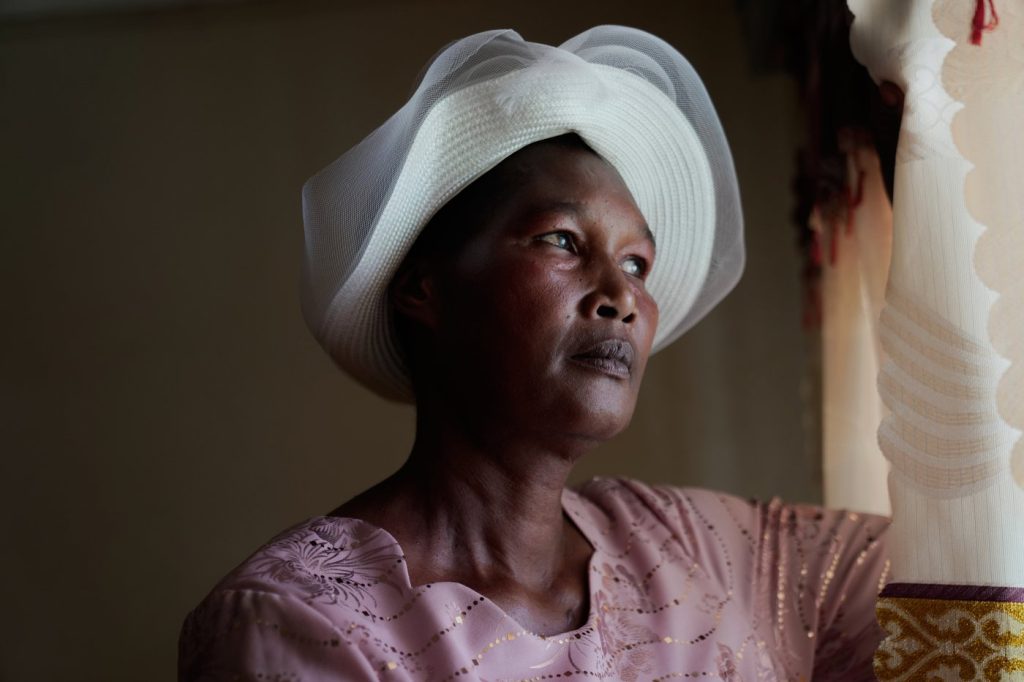
In Siaya, Kenya, 70-year-old Rebecca Anyango stands outside her home, built over 26 years, grappling with the uncertainty of eviction. As a widow, she faces threats from her deceased husband's family, who assert that she holds no inheritance rights. This year, they initiated a lawsuit against her, and without legal representation, Anyango feels vulnerable. Just steps away from her home lies the grave of her husband, prompting her to question, "Where do I take the grave?"
Anyango’s plight is not unique but rather part of a larger issue affecting thousands of widows in western Kenya, many of whom reside in rural areas with limited education and are often unaware of their legal rights. Following the death of their husbands, these women frequently encounter attempts at disinheritance. Cultural expectations surrounding widowhood, particularly among the Luo, Luhya, and Kisii ethnic groups, exacerbate their vulnerabilities. Practices such as "sexual cleansing," where a widow is expected to engage with another man, often a brother-in-law, and "wife inheritance," where a widow may be taken as a wife by her deceased husband's brother, challenge women's autonomy and violate legal protections.
Currently, women like Anyango risk losing their land and homes due to their lack of knowledge about the constitutional guarantees in Kenya, which ensure land ownership for all citizens. Simiyu Waddimba, an anthropology lecturer at the University of Nairobi, notes, "If the woman is not aware of what protects her, then she will be disinherited." However, there is hope with the recent passage of the Widows Protection Bill by the local assembly in Siaya County. If enacted, this law will criminalize forced disinheritance and remarriage, providing much-needed protection for widows.
This legislative effort was led by Scholastica Madowo, a widow and a prominent county legislator. Her experiences and observations of the atrocities faced by widows drove her to champion this bill, asserting that "those cultural practices are actually a violation of their rights unless the woman does it willingly." Madowo’s proposed legislation aims to form welfare committees that will assist widows in accessing legal aid to fight disinheritance.
In neighboring Kisii County, a similar narrative plays out, as illustrated by Anne Bonareri, who was dispossessed of her home and commercial property following her husband's death in 1997. Her in-laws claimed her husband's belongings immediately after his passing, leaving her with two small children and another on the way. Bonareri’s refusal to be inherited by her husband's elder brother resulted in violent threats against her. Despite these challenges, she persevered and eventually acquired land and built a new home, thanks to her determination and hard work.
Bonareri’s daughter, Emma Mong'ute, established the Amandla MEK Foundation in 2019 to provide legal support for women facing similar circumstances. The foundation has achieved some success in helping women retain their land rights. Mong'ute emphasizes that the disinheritance of widows perpetuates a cycle of poverty for children in Kenya. Considering the recent legislative changes in Siaya County, her organization looks into advocating for similar laws in their area.
The issue of widow inheritance isn't confined to Kenya. Across Africa, many widows grapple with the tension between customary practices and legal protections concerning inheritance. Misheck Dube, a researcher from South Africa, explains how general laws preserve the rights of surviving spouses and children, while customary practices often marginalize widows.
To combat these injustices, initiatives exist to empower widows with knowledge regarding land succession laws, which recognize them as rightful heirs. Organizations such as the Kenya Female Advisory Organization offer legal training, equipping women to advocate for themselves. There have been instances where women have successfully represented themselves in court, challenging disinheritance attempts.
Resilient widows in western Kenya, like Marie Owino, an 87-year-old former teacher, exemplify the impact of legal awareness. She confidently asserts her rights and remains in possession of her land and home, having established boundaries that earned her respect within her community. Owino’s experience underscores the importance of financial independence and legal knowledge in protecting women's rights.








