

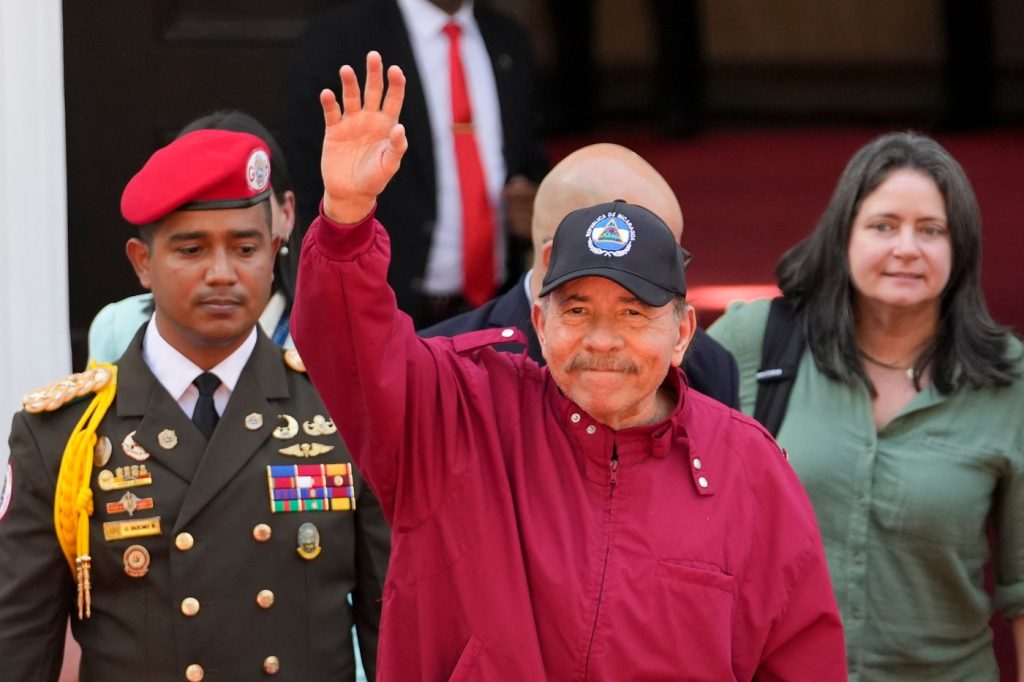
MEXICO CITY (AP) – Nicaragua’s Interior Ministry announced on Saturday that the country would release dozens of prisoners amid intensified U.S. pressure on President Daniel Ortega. This announcement follows the U.S. Embassy's comments regarding Venezuela's recent move to release political prisoners, highlighting that over 60 individuals remain unjustly detained or missing in Nicaragua. Among those affected are pastors, elderly citizens, and religious workers.
The Interior Ministry's statement confirmed that “dozens of people who were in the National Penitentiary System are returning to their homes and families.” However, specific details regarding the identities of those released and the conditions of their freedom were not immediately made clear, as Nicaragua's government has not responded to requests for commentary.
Nicaragua has been experiencing an ongoing crackdown on dissent since 2018, when mass protests erupted against Ortega’s government. These protests were met with violent repression, during which adversaries, journalists, and religious leaders were imprisoned or exiled. The government has stripped hundreds of individuals of their Nicaraguan citizenship, closing over 5,000 organizations, primarily religious, and forcing thousands to flee the country. Critics and opponents of the regime have been frequently accused of plotting against the government.
In recent years, Ortega’s government has released numerous political opponents, critics, and activists from prison, often stripping them of their citizenship and expelling them to countries like the U.S. and Guatemala. This strategy has drawn accusations that the government is attempting to distance itself from its opposition while mitigating international criticism concerning human rights violations. Many of these individuals have ended up in situations of “statelessness” as a result of this crackdown.
On Saturday, the U.S. State Department’s Bureau of Western Hemisphere Affairs reiterated its critical stance toward Nicaragua, stating, “Nicaraguans voted for a president in 2006, not for an illegitimate lifelong dynasty.” The statement condemned the government’s actions to rewrite the Constitution and suppress dissent, asserting that such moves cannot erase the Nicaraguan people’s desire for freedom from tyranny.
Danny Ramírez-Ayérdiz, the executive secretary of the Nicaraguan human rights organization CADILH, expressed ambivalence regarding the announced prisoner releases. He stated, “On the one hand, I’m glad. All political prisoners suffer some form of torture. But on the other hand, I know these people will continue to be harassed, surveilled, and monitored by the police, and so will their families.” Ramírez-Ayérdiz suggested that the release of prisoners may be a reaction to U.S. pressure, implying a fear within the Ortega regime regarding potential further actions from the United States aimed at dismantling it.
In conclusion, the developments surrounding the release of prisoners in Nicaragua signify ongoing political tensions and the government's precarious position amid external pressures. The release may offer a glimmer of hope for some families, but it also raises concerns about the safety and future of those released and their loved ones, who may continue to face government scrutiny.








