

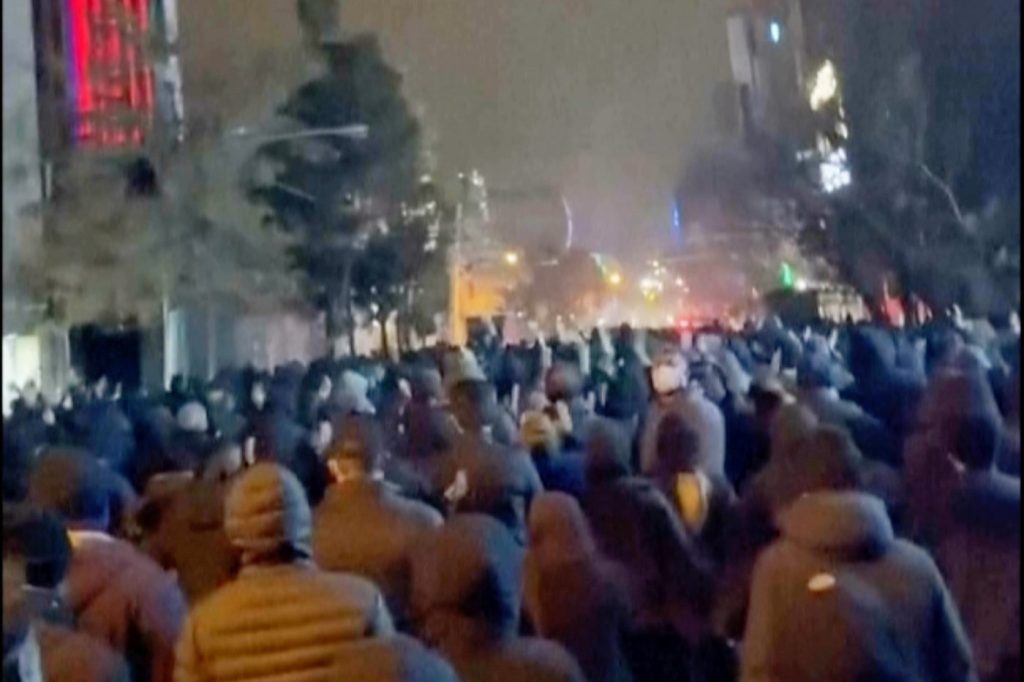
DUBAI, United Arab Emirates (AP) — Nationwide protests challenging Iran's theocracy continued into Sunday, marking over two weeks of demonstrations that have resulted in the deaths of at least 116 people, according to activists. As violence escalates, reports indicate that around 2,600 individuals have been detained during the protests, noted by the U.S.-based Human Rights Activists News Agency.
Amid an internet blackout in Iran and disrupted phone lines, monitoring the protests from abroad has become increasingly challenging. However, the rising death toll and detentions underscore the severity of the situation. Iranian parliament speaker Mohammad Bagher Qalibaf issued a stark warning that the U.S. military and Israel could be considered "legitimate targets" in the event of an American strike against Iran, as alluded to by President Donald Trump.
Protesters around the globe express concern that the information blackout could embolden hard-liners within Iran's security forces to initiate a violent crackdown on demonstrators. In contrast, Trump has vocalized support for the protesters on social media, stating that “Iran is looking at FREEDOM, perhaps like never before,” and that the U.S. is ready to assist.
During a recent parliament session, aired live by Iranian state television, Qalibaf lauded the police and the Revolutionary Guard for their “firm” stance during the protests while threatening severe repercussions for those detained. He also directed warnings at Israel and threatened preemptive actions against U.S. military assets in the region, indicating that Iran would not wait for an attack to respond.
Despite ongoing tensions, the potential for military escalation remains uncertain, especially considering Iran's recent military losses, notably during a 12-day conflict with Israel in June. Any imminent decision regarding military action would rely heavily on Iran's Supreme Leader Ayatollah Ali Khamenei.
The U.S. military has reiterated its readiness in the Middle East, positioning forces capable of defending American interests, allies, and partners. Iran had previously targeted U.S. forces stationed at Al Udeid Air Base in Qatar, highlighting the ongoing tensions in the region.
As demonstrations unfolded in Tehran and its second-largest city, Mashhad, footage allegedly captured protesters gathering in various neighborhoods, with demonstrators waving their mobile phone lights and creating noise with metal objects, signaling defiance against the government. Reports suggested that the government's crackdown included surveillance drones monitoring protest areas, further intensifying the environment of fear and apprehension.
Mashhad, located 725 kilometers (450 miles) northeast of Tehran and home to the Imam Reza shrine, saw significant confrontations between protesters and security forces. Many reported flames and debris in the streets, representing the intensity of discontent within the populace.
While Iranian authorities attempted to downplay the protests by showcasing calm areas of various cities, they indicated a tightening grip on dissent. Iranian Attorney General Mohammad Movahedi Azad warned that individuals participating in protests could be deemed “enemies of God,” thus facing the death penalty. This declaration heightened fears of severe crackdowns on dissenters.
As the Iranian government disabled internet access and disrupted international communication on Thursday, foreign outlets faced difficulties reporting on the situation. Qatar’s state-funded Al Jazeera news network remained one of the few major foreign outlets able to broadcast from Iran. Exiled Crown Prince Reza Pahlavi urged demonstrators to take to the streets over the weekend while advising them to display national symbols from the era of the shah, representing a yearning for a return to pre-revolutionary Iran.
The wave of protests initially triggered by the collapse of the Iranian rial currency has escalated into broader calls challenging the current theocratic regime. As the Iranian economy grapples with severe sanctions linked to its nuclear program, discontent continues to simmer among the populace, suggesting that the struggle for change within Iran is far from over.








