

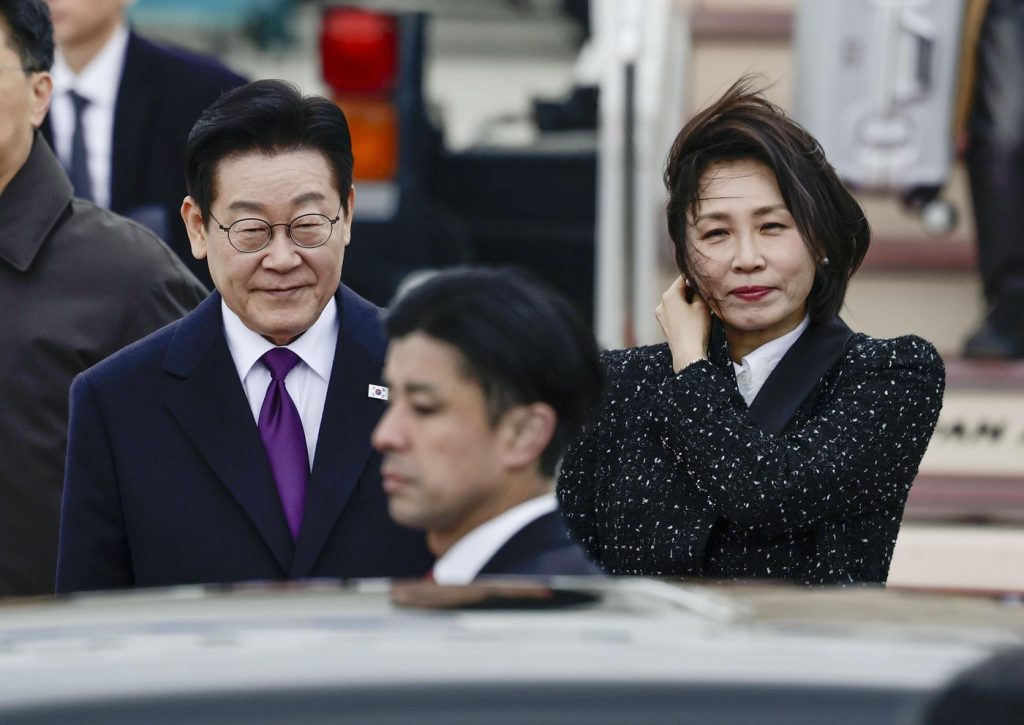
NARA, Japan (AP) — On Tuesday, South Korean President Lee Jae Myung arrived in Japan for a summit with Japanese Prime Minister Sanae Takaichi. The primary aim of this meeting is to improve the sometimes-frayed relations between the two countries, especially as Japan grapples with escalating tensions with China. Takaichi sees the summit as a potential political win at a time when she is bolstering her power following her recent election, despite her party holding a majority in only one of the two parliamentary houses.
The summit takes place in Nara, Takaichi's hometown, which is renowned for its deer and historic Buddhist temples. Takaichi plans to take Lee on a tour of Horyu Temple, a UNESCO World Heritage site with structures dating back to the late 7th or early 8th century, showcasing Japan's architectural heritage and its historical adoption of Buddhism from the Korean Peninsula.
The relationship between Japan and South Korea is deeply rooted, but it has faced numerous disruptions due to historical disputes stemming from Japan's colonial rule over Korea from 1910 to 1945. Ahead of the summit, Takaichi expressed hopes through social media to positively advance the relationship between Japan and South Korea, emphasizing the ancient capital's rich historical and cultural ties.
Trade, relations with China, and regional security issues will be key topics at Tuesday's meeting. Both Japan and South Korea, as important U.S. allies, need to navigate President Donald Trump's unpredictable diplomatic approaches while also responding to pressures from the U.S. to amplify their defense spending amidst rising threats from China and North Korea.
Lee's recent interactions with China reflect Japan's concerns. Last week, he met with Chinese President Xi Jinping, furthering efforts to manage economic and political pressures from Beijing. Lee pointed out that maintaining good relations with Japan is as crucial as with China but acknowledged the limited capacity of South Korea to mediate between the two nations.
During an interview with Japan's NHK television, Lee expressed a desire for Japan's backing on South Korea's entry into the Comprehensive and Progressive Agreement for Trans-Pacific Partnership. However, there might be challenges ahead, particularly regarding lifting the ban on imports from Fukushima and surrounding areas, imposed in the wake of the 2011 Fukushima Daiichi nuclear disaster.
Leaders from both countries have begun to see the importance of collaboration in addressing shared challenges, like the competition between the U.S. and China and North Korea's nuclear ambitions. Reports indicate that, despite initial skepticism regarding Takaichi's willingness to work with the left-leaning South Korean leader, both have managed to put aside their differences so far.
While historical disputes are expected to remain off the table during their discussions, there may be dialogue surrounding humanitarian efforts related to the recovery of remains from a 1942 mining accident in Japan that claimed the lives of many Korean forced laborers.
The meeting represents a pivotal step in easing diplomatic tensions and fostering understanding between Japan and South Korea, underscoring their common interests in security, trade, and regional stability.








