

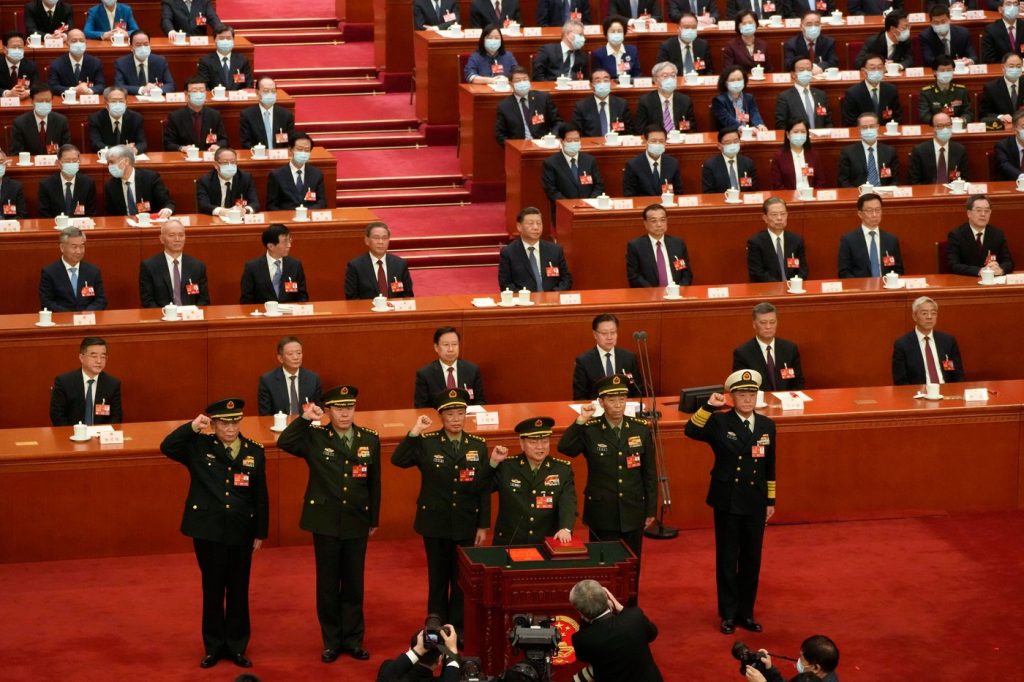
BEIJING (AP) — China's legislature, the National People's Congress (NPC), has officially dismissed 19 of its members, including nine military officers, just a week before its annual meeting is set to commence. The abrupt dismissals were announced late Thursday, but the reasons behind the removals were not specified. Historically, such dismissals are often linked to ongoing corruption investigations.
Under the leadership of President Xi Jinping, China has been intensifying its anti-corruption campaign, which has persisted for over a decade. Recently, the military has come under scrutiny, highlighted by the removal of its top general just last month. This initiative is part of Xi's broader efforts to reform and modernize the armed forces, ensuring that they remain aligned with the Communist Party's objectives.
Analysts suggest that the ongoing anti-corruption campaign serves dual purposes for Xi. Not only does it aim to eradicate corruption within the ranks, but it also allows Xi to eliminate potential rivals and solidify loyalty among his subordinates as he enters his 14th year in power.
The impact of these dismissals on the upcoming NPC meeting, which opens next Thursday and is expected to continue for a week, is likely to be minimal. The NPC typically functions as a rubber-stamp legislature, endorsing decisions that have already been made by the ruling Communist Party. Leaving the congress with a total of 2,878 members, the removed officers include two individuals under the Central Military Commission, the military's highest body, in addition to others from various branches, such as the army, navy, air force, and rocket force. Notably, three of the dismissed members held the rank of general. The rocket force, responsible for managing China's nuclear arsenal, has been an early focus of military purges.
In addition to the dismissals, the NPC's Standing Committee, which is a smaller, more influential group that convenes throughout the year to discuss legislation, also terminated the appointments of two other officials. Among them was the president of the military court and Emergency Management Minister Wang Xiangxi, who was announced to be undergoing a corruption investigation last month.
The heightened scrutiny within the military and the ongoing anti-corruption operations signify a continued commitment by Xi Jinping's administration to enforce discipline and loyalty within both governmental and military ranks. This trend may reshape the landscape of leadership within the Communist Party and its aligned institutions, as Xi remains vigilant against potential threats to his authority.








