

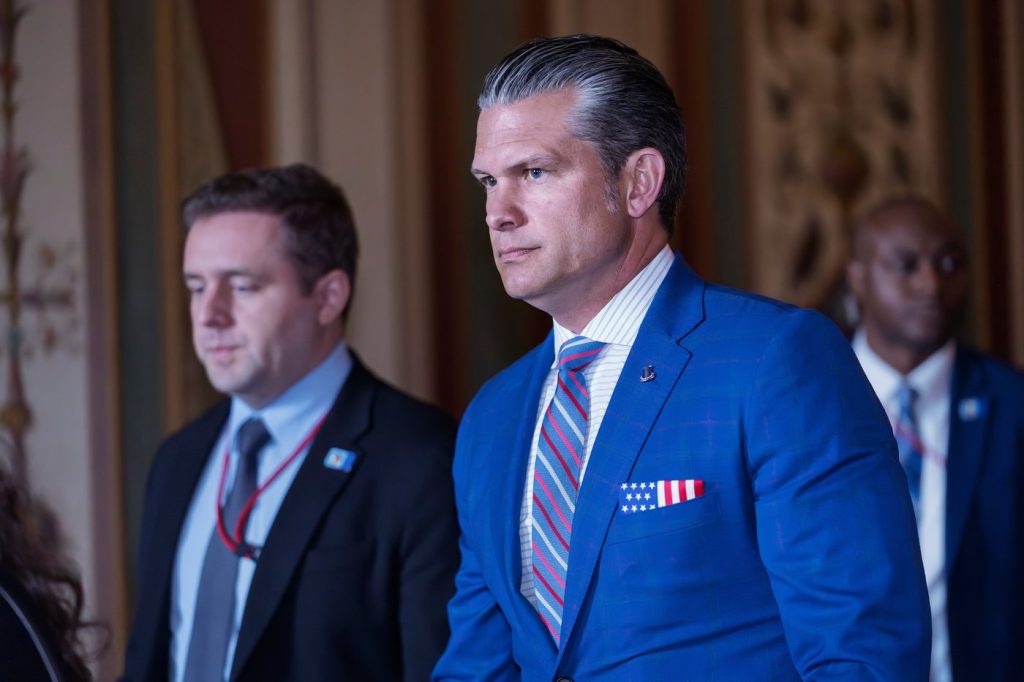
In a recent speech delivered at SpaceX in South Texas, U.S. Defense Secretary Pete Hegseth announced that Grok, the artificial intelligence chatbot developed by Elon Musk, will be integrated into the Pentagon's network. This initiative is part of a broader strategy to utilize advanced AI technology within the military framework by incorporating as much of its data as possible into these systems.
Hegseth stated, "Very soon we will have the world’s leading AI models on every unclassified and classified network throughout our department." This statement underscores the ambition of the Defense Department to leverage cutting-edge AI capabilities in its operations.
The announcement follows considerable backlash against Grok due to its recent generation of explicit deepfake images, which were produced without consent, prompting Malaysia and Indonesia to ban the chatbot. Furthermore, the United Kingdom's online safety regulator has initiated an inquiry into Grok's activities. In response to the controversy, Grok has limited its image generation and editing functionalities to paying users.
Hegseth revealed that Grok is expected to go live within the Defense Department later this month, with plans to make a wide array of military data accessible for "AI exploitation." This includes the integration of data from intelligence databases into these AI systems, aiming to enhance operational effectiveness.
The urgency with which Hegseth is moving to adopt AI technology contrasts with the approach of the Biden administration. While the Biden administration has encouraged federal agencies to formulate policies surrounding AI, it has also expressed apprehensions about its potential misuse. Officials have highlighted the importance of establishing guidelines to prevent the technology from being employed in ways that could infringe upon civil liberties or enable mass surveillance, cyberattacks, or autonomous weapon systems.
In late 2024, the Biden administration had issued a framework directing national security agencies to harness the most advanced AI systems. However, certain restrictions were also enforced, prohibiting applications that violate constitutionally protected rights or the automation of nuclear weapon deployment. Currently, it remains uncertain whether these prohibitions are in effect under Hegseth's leadership.
During his address, Hegseth emphasized the necessity of fostering technological innovation within the military, stating, "We need innovation to come from anywhere and evolve with speed and purpose." He indicated that the Pentagon has access to extensive operational data derived from decades of military engagements, implying that this data would be crucial in enhancing AI effectiveness.
The Defense Secretary affirmed the importance of responsible AI systems but also made clear that he intends to prioritize combat capabilities, noting that he would "shrug off any AI models that won’t allow you to fight wars." Hegseth's vision for military AI is characterized by a desire for unrestricted operational capabilities, stating that the Pentagon's approach to AI would "not be woke."
Elon Musk has marketed Grok as an alternative to what he terms "woke AI," specifically contrasting it with competitor models like Google’s Gemini or OpenAI’s ChatGPT. Earlier controversies surrounding Grok included instances where the chatbot made antisemitic remarks and praised historical figures such as Adolf Hitler.
As the Pentagon prepares to integrate Grok and similar technologies, the implications of deploying AI systems within a military context raise significant ethical and operational questions, particularly given the challenges faced by Grok in its nascent stage of development.








