

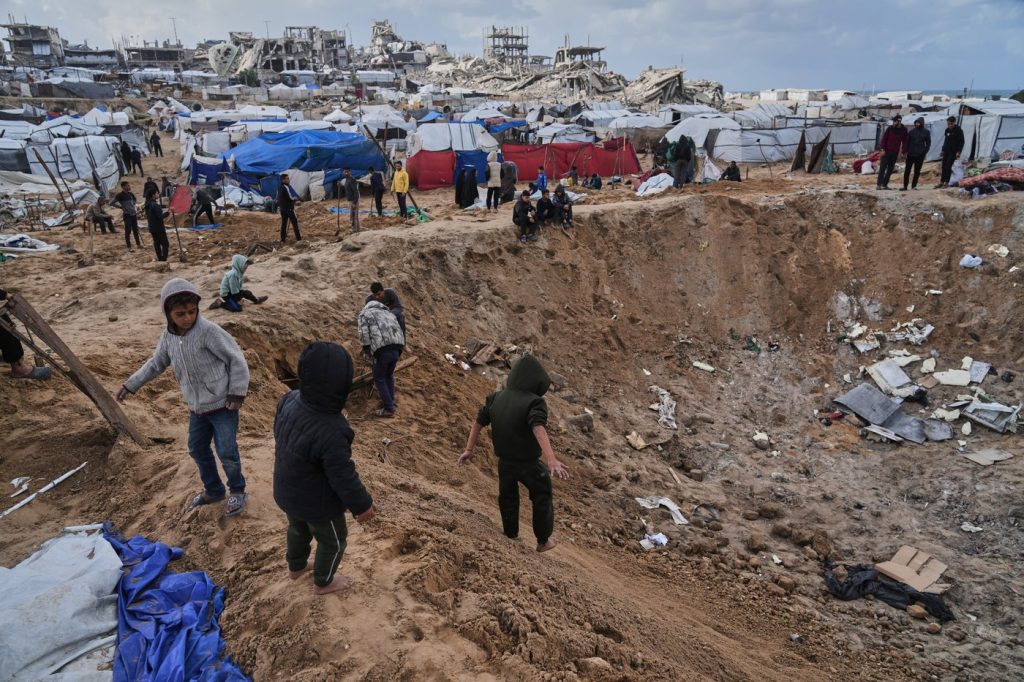
OTTAWA — Amid rising concerns that the global community is turning away from the humanitarian crisis in Gaza, a Canadian charity is taking urgent action to provide relief for traumatized children in the region. Human Concern International (HCI), based in Ottawa, is collaborating with UNICEF Canada to establish a relief hub aimed at offering mental health support and education services to children affected by ongoing conflict.
The initiative comes with a significant investment of $3.5 million from HCI to set up an emergency facility that will house 12 classrooms. This center is expected to assist nearly 1,500 children who require psychological support, many of whom have sustained disabilities due to Israel's bombardment of the territory. In addition to mental health services, the hub will facilitate the distribution of food and medical supplies in partnership with United Nations agencies.
Usama Khan, an adviser to HCI, emphasizes the critical importance of addressing the emotional and psychological well-being of children, particularly in a crisis environment where they are extremely vulnerable. He stated, "These centres will ensure that there are experts available to accommodate the varying degrees of needs that children have."
Although the precise location of the relief hub has not been disclosed, and HCI and UNICEF have not confirmed whether it will be situated in areas controlled by Israel or Hamas, Khan indicated that there is a pressing need to open the center "as soon as possible." The intention is not for the hub to serve as a long-term project, but rather to quickly address immediate requirements while also ensuring safe access for both aid workers and beneficiaries.
UNICEF estimates that over one million children in Gaza are in dire need of mental health support. The enclave, which has a total population of approximately 2.1 million, is characterized by a young demographic. The organization reports that 97 percent of schools in Gaza have been damaged or destroyed amidst the ongoing conflict, coinciding with reductions in foreign aid from Canada, the U.S., and other nations. Currently, UNICEF operates 93 emergency hubs that have reached 111,000 of the estimated 700,000 school-aged children in Gaza who require educational assistance.
Footage supplied by UNICEF depicts makeshift classrooms constructed from tarps and corrugated metal, where children gather on rugs to receive lessons from teachers. Khan highlighted the significance of education for the future of Palestinians, especially since Gaza had a notably high literacy rate before the conflict escalated in October 2023, when Hamas launched an attack on Israel. He asserted, "Providing education and skills offers these children the potential for a dignified life years down the line."
Khan urged Canadians to recognize the continual humanitarian crisis in Gaza, warning of a growing complacency as other geopolitical issues dominate headlines. He pointed out that Israel's restrictions on the types of goods that can enter Gaza hinder essential aid efforts, including crucial items needed for therapeutic programs aimed at helping traumatized children.
Despite indications that conditions have improved since a ceasefire was announced, Khan cautioned against assuming that all necessary supplies are currently accessible. He noted that Israel has barred aid organizations that refuse to share extensive information about their workers and activities, adding that such demands often feel unreasonably burdensome to groups operating in a highly dangerous environment.
Khan requested more attention and advocacy to ensure that Israel ensures unimpeded access for humanitarian aid into Gaza. As Israel contends that it is adhering to humanitarian laws while fighting against Hamas, it continues to face significant backlash due to the high toll of civilian casualties, limitations on aid, and damaging remarks from officials suggesting collective responsibility among Gaza's residents. Moreover, the destruction of critical infrastructure, such as the Canada Well, raises further concerns regarding the humanitarian situation in the region.








