

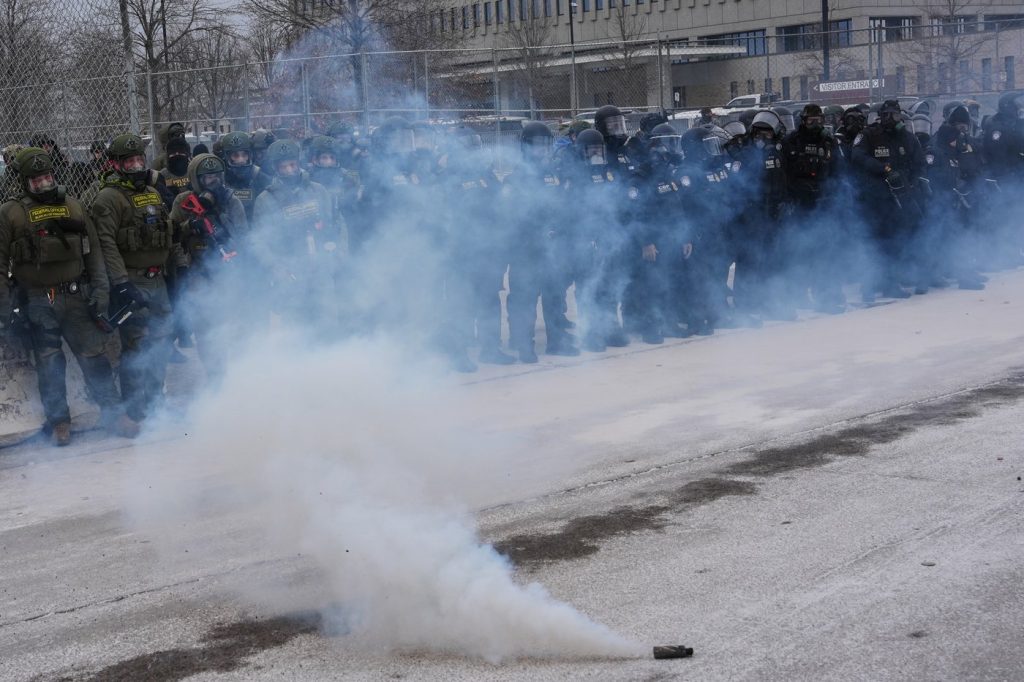
MINNEAPOLIS (AP) – A federal judge in Minnesota has ruled that officers with federal immigration agencies in the Minneapolis area cannot detain or use tear gas against peaceful protesters who are not obstructing law enforcement activities. This decision, made by U.S. District Judge Kate Menendez on a Friday, addresses a case involving six activists who have been observing the immigration enforcement operations carried out by Immigration and Customs Enforcement (ICE) and Border Patrol in the Minneapolis-St. Paul area since the beginning of a crackdown initiated by the Trump administration.
Since this crackdown commenced, federal agents and local demonstrators have faced numerous confrontations. Tensions escalated following the fatal shooting of Renee Good by an immigration agent on January 7, 2026, which was recorded on video from various angles. This incident occurred as Good was leaving a scene in Minneapolis. In response to the increased enforcement measures, numerous arrests and brief detentions have taken place across the Twin Cities.
The American Civil Liberties Union (ACLU) of Minnesota is representing the six activists, arguing that federal officers have violated the constitutional rights of individuals in the area. After the ruling, U.S. Department of Homeland Security Assistant Secretary Tricia McLaughlin emphasized that her agency is taking "appropriate and constitutional measures" to uphold the law and protect both officers and the public from actions considered dangerous, such as rioting or obstructing law enforcement operations.
McLaughlin's statement noted that there have been incidents of assaults on officers, vandalism of federal property, and attempts to disrupt the officers' work. She reminded the public that obstructing law enforcement is a federal crime and that assaulting officers is a felony.
The ruling by Judge Menendez specifically prohibits federal agents from detaining drivers and passengers unless there is reasonable suspicion that they are interfering with law enforcement activities. According to the ruling, merely following the agents at a safe distance does not constitute reasonable suspicion for a vehicle stop. Furthermore, Judge Menendez stated that agents may not arrest individuals without probable cause or suspicion of a crime.
Menendez is also presiding over another lawsuit initiated by the state of Minnesota, along with the cities of Minneapolis and St. Paul, which seeks to suspend the ongoing enforcement crackdown. Issues raised in both cases intersect, and during a previous hearing, Menendez declined the state’s request for an immediate temporary restraining order. Assistant Attorney General Brian Carter argued that a pause in enforcement activities is necessary to reduce tensions.
Judge Menendez acknowledged the significance of the issues presented in this case but noted the complexity of the constitutional matters involved, indicating that there are few precedents to guide these legal questions. She has ordered both parties to submit additional briefs in the coming week to clarify the legal standing and implications of the ongoing enforcement actions.
The prolonged legal struggle surrounding federal immigration enforcement practices in Minnesota highlights a contentious intersection of civil rights, law enforcement, and public policy, reflecting larger national debates about immigration and public safety.








