

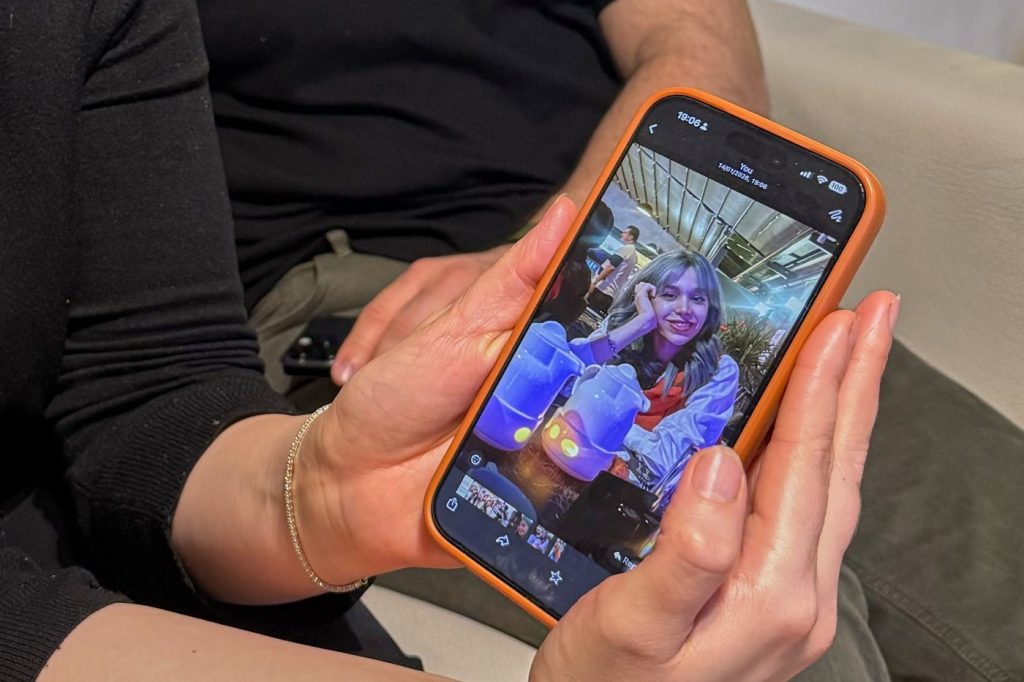
BEIRUT (AP) – Robina Aminian, a university student in Tehran, was reportedly killed by a bullet fired by Iranian security forces at close range, according to her family. Her tragic death during nationwide protests against the Islamic Republic's theocracy marked only the beginning of her family's distress. Following the incident, Aminian's mother was forced to search through numerous bloodied corpses in order to locate her daughter's body. Faced with the threat of authorities demanding payment for its release, the family hurriedly buried Aminian's remains in an unmarked roadside grave.
This harrowing experience highlights the aftermath of Iran's violent crackdown on protesters, which has left many families in anguish as they search for their loved ones in overcrowded morgues. For these families, mourning and conducting a dignified burial has become nearly impossible. More than a week after her death, Aminian's family still had not held a funeral for the 23-year-old Kurdish woman who aspired to become a fashion designer.
"She wanted a bright future for herself," Aminian's uncle, Nezar Minoei, expressed from Oslo. "But unfortunately, the future has been stolen from her."
Details surrounding Aminian’s death remain murky. After the incident, her mother conversed with relatives abroad and shared the information relayed to her by Aminian's friends who were present when she was shot. A report from the Oslo-based human rights organization Iran Human Rights corroborated witness accounts that a shooting occurred on the night of January 8 near the Shariati Technical and Vocational College for Girls.
Due to severely limited communication within Iran, the Associated Press was unable to independently verify the family's claims regarding Aminian’s injuries or the specific location of her death. The Iranian mission to the United Nations in New York did not respond to inquiries about the case.
According to the U.S.-based Human Rights Activists News Agency, at least 3,090 individuals have been killed amidst the unrest, though the Iranian government has not provided any confirmed casualty figures.
Aminian's relatives learned about her death through her mother, Amina Norei. On January 8, Aminian's friends called Norei, informing her that her daughter had been shot while attending a protest. The friends recounted that they had joined the demonstration after leaving the campus in Tehran after dark. Norei was told that a bullet struck the back of Aminian’s head.
Videos circulating on social media and verified by the AP, along with statements from rights organizations, indicate that Iranian agents have employed rifles and shotguns to disperse protesters nationwide. The Iranian regime has frequently labeled demonstrators as "terrorists," with no evidence suggesting that anyone was armed near Aminian at the time of her death. Relatives affirm that she was not involved in politics or activism.
Amina Norei was in Kermanshah, a city located approximately 460 kilometers from Tehran, when she discovered her daughter's death. She hurried to Tehran at night and faced the harrowing task of identifying her daughter among countless corpses. "She looked through so many beautiful faces, trying to find her girl," Aminian’s aunt, Hali Norei, recounted from Oslo. "And what is so horrifying for me is imagining what my sister feels as she searches for her daughter."
Amnesty International has reported that many families are sifting through overflowing morgues for missing relatives, where bodies have accumulated in trucks and warehouses. Upon locating her daughter, Norei and her family left with the body in fear of governmental obstruction and potential extortion for its release.
Minoei described the family's escape, stating, "She actually stole the body." The Center for Human Rights in Iran has reported numerous accounts of intelligence forces demanding fees from families for the return of deceased loved ones, labeling this as a standard practice aimed at discouraging public mourning.
In a recent statement, Iranian state television asserted that mortuary and burial services are provided free of charge, responding to ongoing allegations of financial exploitation. Minoei recounted that Norei and her oldest daughter held Aminian's body tightly during the seven-hour return journey, each drop of blood symbolizing their profound grief. Upon arriving home, they discovered their house surrounded by security forces.
Faced with limited options, the family drove to a remote location, dug a grave by the roadside, and buried Aminian there. To this day, she is believed to rest in an unmarked grave, and Norei and her relatives have reportedly lost communication since the burial.








