

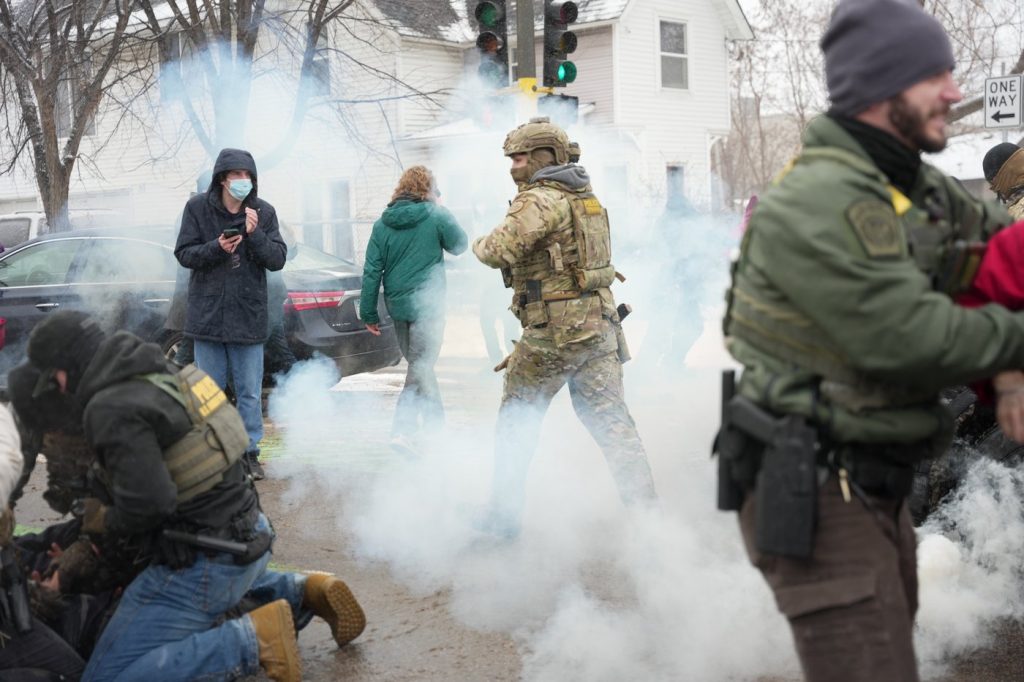
WASHINGTON (AP) — The U.S. Army has activated prepare-to-deploy orders for several dozen additional active-duty soldiers in response to ongoing protests in Minneapolis related to the Trump administration's immigration enforcement policies. A defense official, speaking under anonymity, revealed that members of an Army military police brigade stationed at Fort Bragg in North Carolina have received these orders in anticipation of a possible deployment.
Should deployment occur, the soldiers would likely support civil authorities in Minneapolis. However, the defense official clarified that such standby orders are a routine procedure and do not guarantee actual deployment of the troops. Furthermore, about 1,500 active-duty soldiers from the Army's 11th Airborne Division based in Alaska received similar standby orders, reflecting the heightened state of readiness amid the escalating situation.
President Donald Trump has expressed the possibility of invoking the Insurrection Act, a rarely utilized 19th-century law which allows for the deployment of active-duty troops in a law enforcement capacity. This threat to deploy troops follows protests in Minneapolis after the death of resident Renee Good, who was killed by a federal immigration officer on January 7. Although Trump initially indicated a willingness to use the Insurrection Act, he later backtracked, stating that there was no current need to invoke it.
Regarding the latest orders, the Pentagon has refrained from commenting. Minnesota Governor Tim Walz, a Democrat who has been frequently criticized by Trump, has publicly urged the president to refrain from deploying additional troops to the state. In a statement released on Tuesday, Walz invited Trump to visit Minnesota to help "restore calm and order" and emphasized the importance of public safety built on trust and respect.
Throughout his presidency, Trump has increasingly blurred the lines concerning the use of military troops in American urban areas, often overriding local officials' objections. His administration previously deployed federalized National Guard troops to Los Angeles in June 2020 in response to protests against immigration arrests, utilizing approximately 4,000 Guard members and 700 active-duty Marines to protect federal properties and agents performing immigration enforcement.
Similar mobilizations occurred in cities like Chicago and Portland, Oregon, although Trump has faced legal challenges related to these actions. In December, he announced that he would temporarily cease his push to deploy National Guard troops to cities, reflecting the complexities of federal interventions amidst local unrest.
The ongoing situation in Minneapolis, underscored by these developments, highlights the significant tensions surrounding immigration enforcement and the potential military response to civil unrest, indicative of the broader challenges faced by local and federal leaders in navigating these sensitive issues.








