

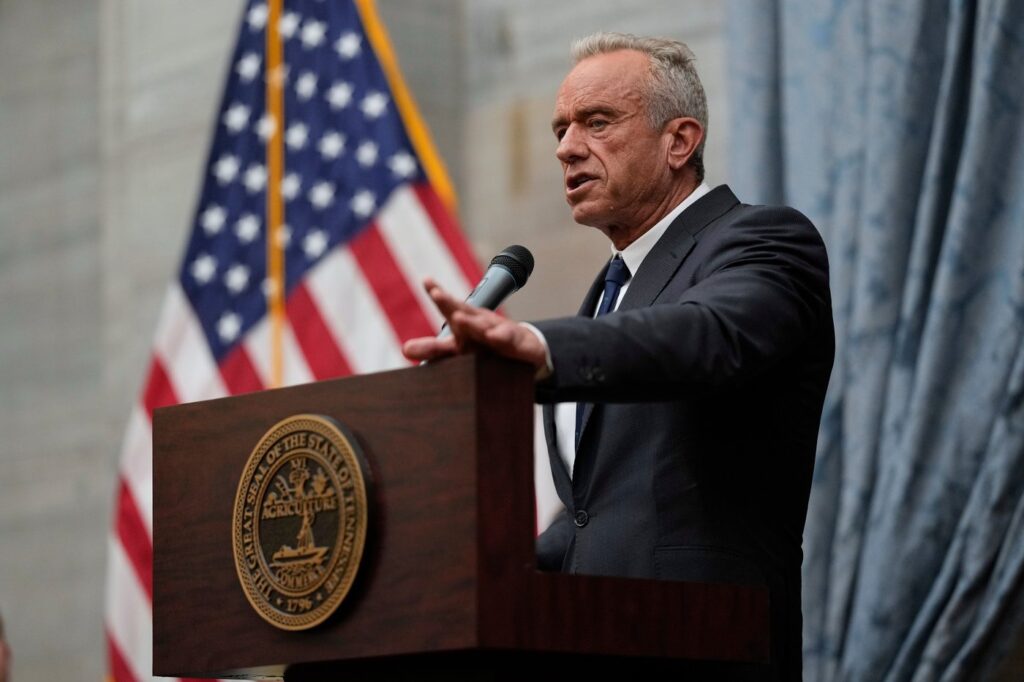
PORTLAND, Ore. (AP) - In a significant ruling, a federal judge has determined that the U.S. government, specifically Secretary of Health and Human Services Robert F. Kennedy Jr., overstepped its authority by issuing a declaration labeling treatments such as puberty blockers and gender-affirming surgeries as unsafe and ineffective for minors experiencing gender dysphoria. This ruling was delivered on Thursday in Oregon by Judge Mustafa Kasubhai.
The crux of the ruling was based on the argument that Secretary Kennedy did not follow the appropriate administrative procedures when issuing the controversial declaration in December. This declaration also included warnings for doctors, indicating that they could face exclusion from federal health programs like Medicare and Medicaid if they chose to provide these treatments.
Furthermore, the judge rejected the defendants’ motion to dismiss the case, underscoring the court's willingness to address the claims made against the government. The ruling followed an extensive six-hour hearing and will be followed by a more detailed written decision.
New York Attorney General Letitia James, a key figure in the lawsuit, expressed her satisfaction with the ruling, stating, "Today's win breaks through the noise and gives some needed clarity to patients, families, and providers." She emphasized that healthcare services for transgender youth are still legal and that the federal government cannot intimidate or penalize providers who offer these essential treatments.
A spokesperson for the Department of Health and Human Services (HHS) did not respond immediately when contacted for comments regarding the ruling. The New York Times noted that during the proceedings, Judge Kasubhai elaborated on the broader implications of the case, particularly how it relates to democratic principles.
The judge warned against a governance approach characterized by unilateral declarations, underscoring that such actions violate the rule of law that is foundational to a democratic republic.
This ruling marks the second considerable legal setback for Kennedy and HHS within a week. Earlier, a federal judge in Boston temporarily blocked several of Kennedy's vaccine policy changes, suggesting that he likely violated federal procedures concerning the revamping of a key vaccine advisory committee. This committee had not provided input on changes to the childhood vaccine schedule, prompting federal officials to consider an appeal of that ruling.
In December, a coalition comprising 19 states and the District of Columbia initiated a lawsuit against HHS, Secretary Kennedy, and the department's inspector general. The coalition claimed that the declaration was both inaccurate and unlawful, seeking to prevent its enforcement. They argued that the HHS's declaration coerced healthcare providers into refraining from offering gender-affirming care and bypassed legal requirements needing public notice and comment prior to making substantial changes in health policy.
The HHS's declaration was purportedly based on a peer-reviewed report from the department, which recommended a greater reliance on behavioral therapy instead of broad gender-affirming healthcare for youth facing gender dysphoria. The report raised questions regarding treatment standards endorsed by the World Professional Association for Transgender Health and expressed concerns about adolescents being too young to provide informed consent for treatments that could lead to future infertility.
This peer-reviewed report has faced heavy criticism from major medical associations and healthcare professionals who specialize in transgender care, and many leading U.S. medical organizations, including the American Medical Association, continue to oppose any restrictions on transgender healthcare and services for young individuals.








