

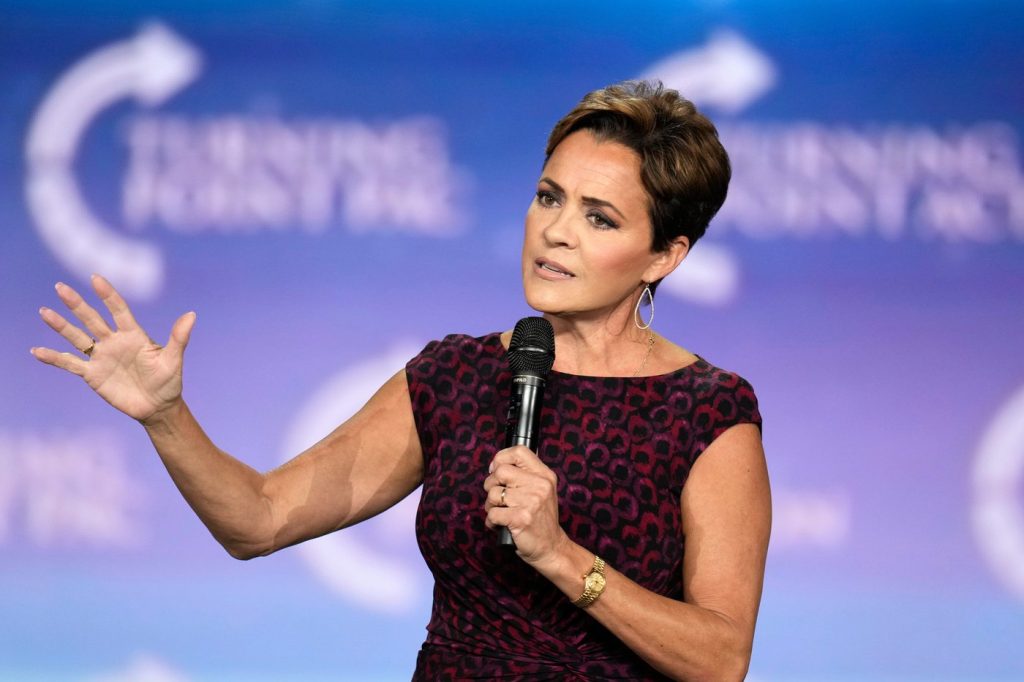
A federal judge recently ruled that Kari Lake, appointed by former President Donald Trump to lead the U.S. Agency for Global Media (USAGM), lacks the legal authority to implement significant changes at the Voice of America (VOA). This decision, made by U.S. District Court Judge Royce C. Lamberth, comes in the aftermath of Lake's efforts to dismantle many of the agency's operations, leaving the VOA with a limited staff and functionality. The immediate implications of this ruling on the VOA's operations remain unclear.
In response to the ruling, Lake criticized Judge Lamberth’s decision as "bogus" and announced plans to appeal. The case centers on the legal boundaries of Lake's authority, as she has not received Senate confirmation for her position. Judge Lamberth stated that Lake does not satisfy the requirements set forth in either the Appointments Clause or the Vacancies Act, which detail the qualifications necessary for service as a principal officer of the agency.
The lawsuit challenging Lake's actions was brought forth by Patsy Widakuswara, the White House bureau chief for Voice of America, alongside colleagues Kate Neeper and Jessica Jerreat. All three were among the employees laid off during Lake's tenure, and they expressed gratitude for the court's ruling, viewing it as a crucial step toward restoring the VOA's integrity and function. They also mentioned their ongoing concerns regarding the future status of their colleagues whose careers have been affected by the layoffs.
The Voice of America has been a crucial source of news and information for audiences in various countries, particularly where government censorship affects media freedom. Proponents of the VOA regard it as an example of the United States' "soft power," offering reliable news coverage globally. Conversely, Lake has claimed that government-run media outlets are inefficient and should align more closely with the perspectives of the current administration.
International advocacy organization Reporters Without Borders supported the ruling, asserting that it reinforced their belief that Lake's administration acted unlawfully in its attempt to dismantle the VOA. Clayton Weimers, the executive director of Reporters Without Borders in North America, highlighted the importance of this case as a testament to the significance of press freedom and the necessity of safeguarding journalists' roles within the VOA.
In her statement, Lake expressed strong disagreement with the court's verdict. She claimed that the ruling undermines the American people’s mandate given to Trump to reduce government inefficiencies and called Lamberth an "activist judge" trying to obstruct these efforts at USAGM. Lake’s rhetoric suggests an ongoing contentious relationship between her administration’s goals and the judicial oversight of government appointments and actions.
This ruling represents a significant moment for the Voice of America and highlights the tension between appointed officials and legal frameworks governing their authority. As the appeal process unfolds, the future of both the agency and its employees hangs in the balance, underscoring the repercussions of political decisions on public service institutions.
David Bauder is a journalist covering media and entertainment topics for the Associated Press. You can follow his updates on Twitter.








