

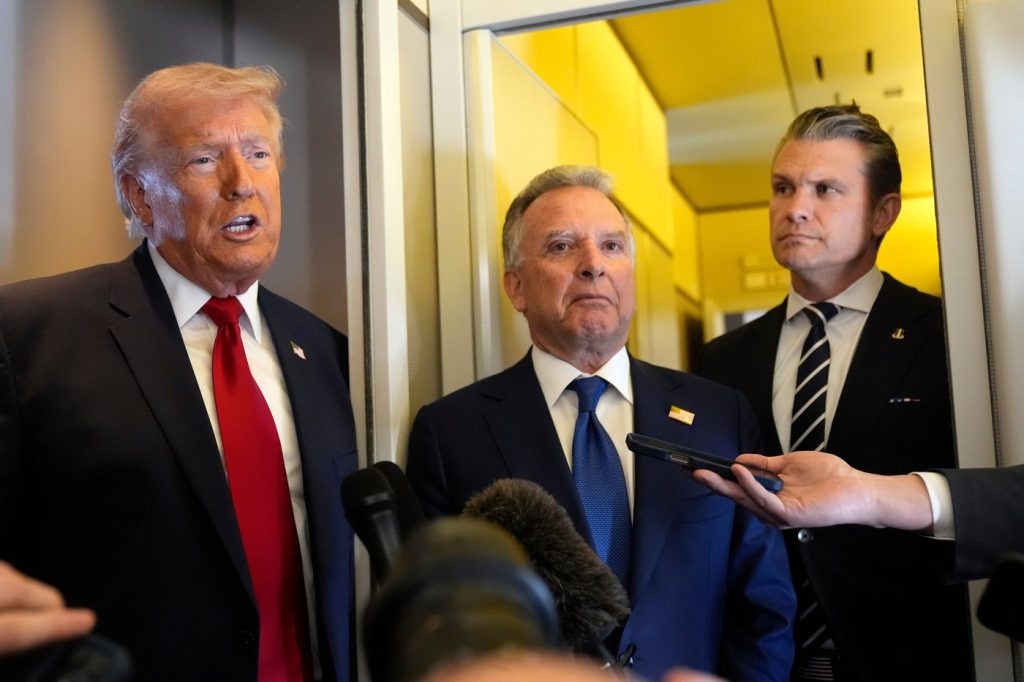
DORAL, Fla. (AP) — President Donald Trump stated on Saturday that the sharing of targeting information between Russia and Iran to aid Tehran in identifying U.S. military personnel and assets in the Middle East is not of significant concern as the ongoing conflict intensifies. His remarks followed his participation in the dignified transfer ceremony for six Army reservists who lost their lives in a drone strike in Kuwait, which occurred shortly after the U.S. and Israel initiated hostilities against Iran, stirring global economic anxieties.
While Trump refrained from directly confirming reports from The Associated Press and other outlets suggesting that U.S. intelligence officials believe Russia is providing Iran with such intelligence, he implied that if this is indeed the case, Iran does not seem to benefit from it. “If you take a look at what’s happened to Iran in the last week, if they’re getting information, it’s not helping them much,” he told reporters aboard Air Force One en route to Miami.
When questioned about the implications of Russia's assistance to Iran on the U.S.-Russia relationship, Trump downplayed its importance, suggesting that Russia might accuse the U.S. of similar actions against them. He pointed out that Ukraine has received U.S. intelligence to defend against Russian missiles and to target specific Russian assets since its invasion by Russia in 2022.
Trump's comments came after the U.S. Treasury Department announced a temporary allowance for India to continue purchasing crude oil and other petroleum products from Russia until April 4. This exemption, granted in the context of escalating global oil prices and concerns regarding the longevity of the Iran conflict, faced criticism from various quarters. Critics argued that this decision effectively aids Russia financially as it seeks support for its military endeavors.
Republican Representative Don Bacon criticized the move as “appalling weakness towards Russia,” while Democratic Representative Ted Lieu urged for the reversal of the decision, labeling it “traitorous conduct” that indirectly benefits Russia as it aids Iran in threatening American troops.
In response to global oil price surges, Trump has opted to allow India more flexibility in its oil purchases from Russia, coinciding with earlier tariff cuts on imports from India aimed at reducing its dependence on Russian crude oil. India capitalized on the discounts offered by Russia even as the global community sought to isolate Moscow following its military actions in Ukraine.
As the Iran war continues to unfold, oil prices have spiked with no indication of stabilizing a week into the latest hostilities between the U.S., Israel, and Iran. Shipping lanes through the Strait of Hormuz—critical for global oil transport—are heavily affected, with significant shipping delays reported as Iranian retaliation poses risks to vessels in the region.
In light of the rising oil prices and the ongoing geopolitical tensions, Trump was asked about potential measures he might consider to alleviate these prices. While he acknowledged the possibility of taking action, he appeared to defer any immediate plans, expressing confidence in the U.S. oil reserves. The Strategic Petroleum Reserve, touted as a buffer for emergencies, had over 415 million barrels available at the end of last month, an increase from around 395 million barrels the previous year. Trump emphasized that the U.S. possesses substantial oil reserves, indicating that market pressures would soon stabilize.
As the situation in the Middle East continues to evolve with U.S. and Israeli forces engaging in conflict with Iran, the implications for energy markets and international relations remain profound and complex.








