

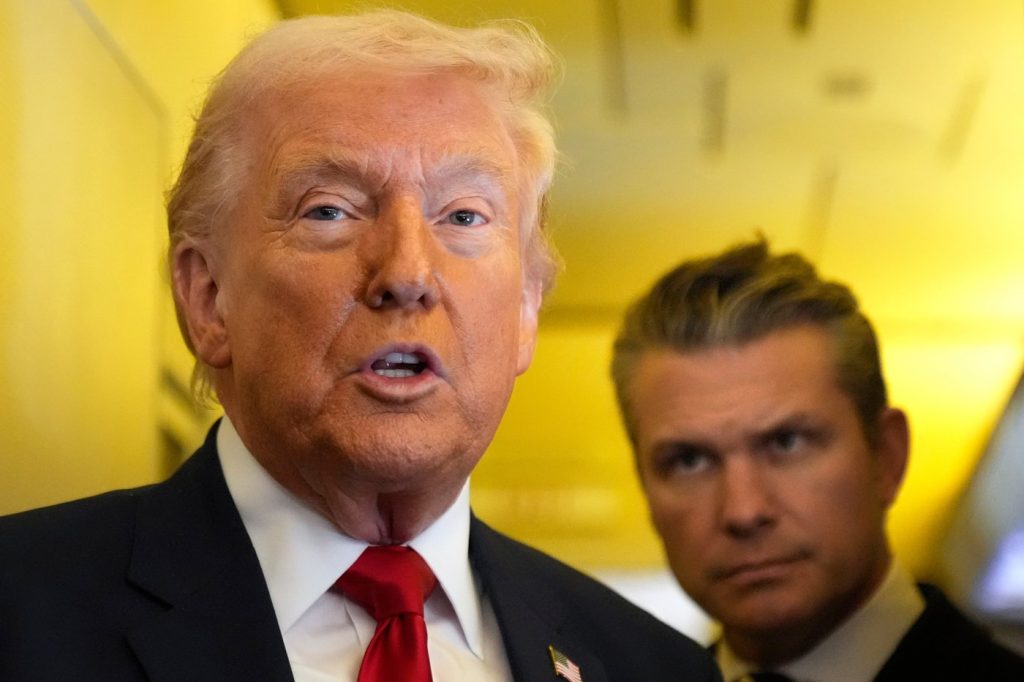
NEW YORK (AP) — In the wake of the recent military conflict involving the U.S. and Israel against Iran, oil prices have surged significantly. President Donald Trump, while aboard Air Force One on Saturday, dampened speculation regarding the possibility of utilizing the Strategic Petroleum Reserve (SPR) to mitigate the rising energy costs. With escalating tensions across the Middle East, particularly in regions crucial for oil production and transportation, the global energy sector is experiencing considerable strain, resulting in higher gas prices for American consumers.
During an interaction with reporters, Trump emphasized the abundance of oil within the United States, stating, “We’ve got a lot of oil. Our country has a tremendous amount. There’s a lot of oil out there. That’ll get healed very quickly.” As the pressure builds ahead of the November midterm elections, the Republican Party finds itself navigating the issue of affordability amidst rising prices.
The Strategic Petroleum Reserve, established post-1970s Arab oil embargo, resides in underground salt caverns located in Texas and Louisiana, with the capacity exceeding 700 million barrels. As of the end of last month, the reserve contained more than 415 million barrels, a figure that has increased from approximately 395 million barrels at the same time in 2025, according to U.S. Energy Department data.
The SPR has been strategically tapped in various situations over the years, including in response to natural disasters and geopolitical conflicts. For instance, President Joe Biden significantly withdrew from the reserve in 2022 after Russia invaded Ukraine, resulting in the lowest stockpile levels since the 1980s. Previous withdrawals include nearly 34 million barrels authorized by President George H.W. Bush during the Gulf War and 30 million barrels by President Barack Obama to counteract supply disruptions from Libya in 2011.
Despite soaring oil prices, which have risen to their highest level since 2023 with Brent crude reaching $92.69 per barrel and U.S. crude at $90.90 per barrel, Trump has opted not to tap the SPR currently. Instead, he pointed out the potential of the U.S. oil supply to stabilize prices and criticized Biden for depleting the reserves. Trump mentioned he would consider refilling the SPR at “the appropriate time,” relying on his instincts for decision-making.
The implications of tapping the SPR for lowering gas prices are multifaceted. Gasoline prices have already surged, with the national average at about $3.41 per gallon—a 43-cent increase in just one week. Refineries typically purchase crude oil in advance, meaning that any immediate withdrawal from the SPR may not lead to an instant decrease in consumer prices. Additionally, regional variations in gas prices are influenced by local refinery supplies, tax rates, and fuel specifications, with California observing the highest average at nearly $5.08 per gallon and Kansas the lowest at around $2.90 per gallon.
The burden of rising gas prices predominantly affects lower-income individuals who spend a larger portion of their income on fuel compared to wealthier citizens. As oil is buoyant, to extract it from the SPR, water is pumped into the underground caverns, causing the oil to float to the surface before being transported to refineries via pipelines.
As the geopolitical landscape continues to evolve and the U.S. navigates its energy policies in response to international conflicts, the discussion surrounding the Strategic Petroleum Reserve remains a pertinent topic among lawmakers and economists alike, particularly as the nation heads toward critical midterm elections.








