

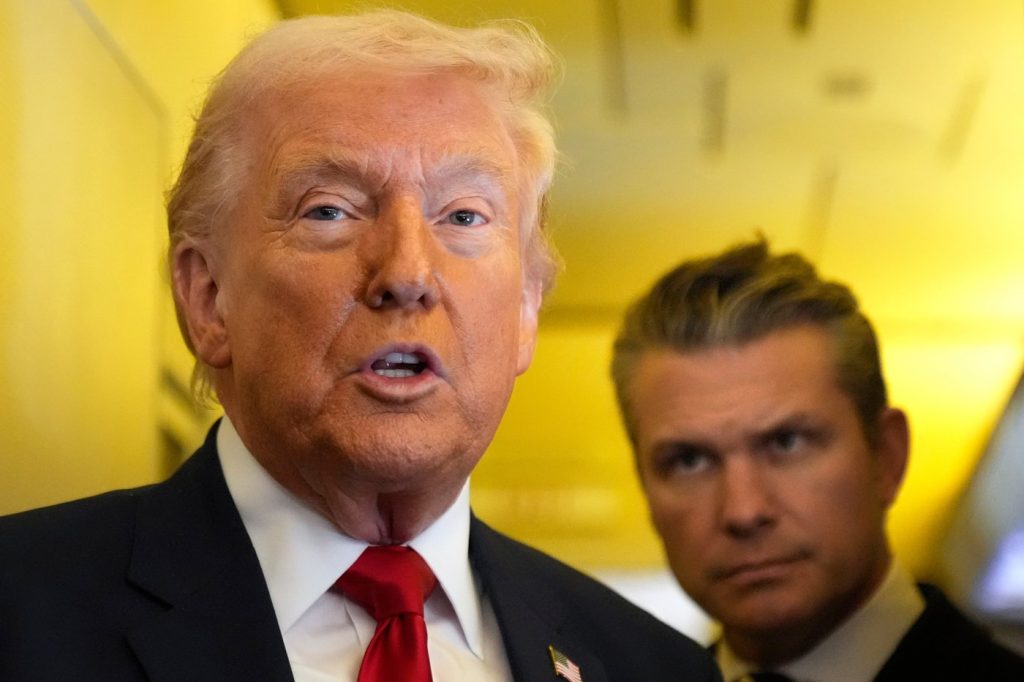
NEW YORK (AP) — Oil prices have surged following the escalation of conflict in the Middle East due to the war initiated by the U.S. and Israel against Iran. Despite this, President Donald Trump, while speaking to reporters aboard Air Force One, downplayed the need to utilize America's Strategic Petroleum Reserve (SPR) to mitigate rising fuel costs affecting consumers.
Rising tensions in the region, especially in areas significant for oil and gas production, have contributed to global energy market strain. In the United States, gas prices have already seen an increase, becoming a prominent concern for everyday consumers. Trump emphasized the abundance of oil in the U.S., suggesting that the situation would stabilize soon. "We've got a lot of oil. Our country has a tremendous amount," he stated, indicating confidence in the country’s oil supply.
As the November midterm elections approach, the Republican Party is feeling pressure to address affordability issues. The SPR, which consists of underground salt caverns in Texas and Louisiana designed to store surplus oil for emergency situations, offers one of the few immediate tools a president might use to influence oil prices. Currently, the SPR contains over 415 million barrels of oil, down from a peak of more than 726 million barrels some years ago.
The SPR was established in the aftermath of the 1970s Arab oil embargo to provide an emergency supply, and it has been tapped various times throughout history during significant supply disruptions. Recent withdrawals have been notable; for instance, President Joe Biden released large quantities from the SPR in 2022 following Russia's invasion of Ukraine, which resulted in the reserve's levels dropping to lows not seen since the 1980s. Comparatively, President George H.W. Bush authorized the withdrawal of nearly 34 million barrels during the Gulf War, and President Barack Obama released 30 million barrels in 2011 due to supply disruptions from Libya.
Despite the recent spike in oil prices, which saw Brent crude rise to $92.69 per barrel and U.S. crude hit $90.90, Trump has chosen not to tap into the SPR. His administration took some action last week by granting India a waiver to purchase Russian crude oil and petroleum products until April 2024 in an effort to alleviate market pressures. However, during discussions about other potential actions, including utilizing the reserve, Trump reiterated that he perceives no immediate need, focusing instead on criticisms of Biden's previous withdrawals from the reserve.
Currently, the average gasoline price across the U.S. has seen an upward trend, reaching approximately $3.41 per gallon, a substantial increase from recent weeks. California recorded the highest state average at nearly $5.08, while Kansas had the lowest at about $2.90 per gallon. The regressive nature of gas prices affects lower-income individuals disproportionately, as they tend to spend a higher percentage of their income on fuel, making rising costs particularly burdensome for them.
To extract oil from the SPR, a process involves pumping water into the salt caverns, allowing the crude oil to float to the surface. The oil is then transported through pipelines to various refineries across the nation. Given the complexities of global markets and the nature of fuel pricing, even tapping into the SPR might not yield immediate relief at the pump, as refineries usually operate with pre-purchased supplies that reflect older market prices.
The ongoing conflict and its impact on oil markets remain a critical economic and political issue as election season approaches, with representatives from both parties navigating a landscape increasingly influenced by energy prices and consumer affordability.








