

A judge is expected to sentence Purdue Pharma, the maker of OxyContin, to forfeit $225 million to the Justice Department on Tuesday. This ruling may facilitate the company's finalization of a settlement that addresses thousands of lawsuits concerning its involvement in the opioid crisis. This penalty was established in a 2020 agreement aimed at resolving federal civil and criminal investigations the company was facing. Should the judge approve the sentencing, Purdue would be exempt from other penalties, paving the way for the settlement of additional lawsuits.
After enduring years of legal complications, the settlement received approval from another judge last year and is set to take effect on May 1. The agreement mandates members of the Sackler family, who own Purdue, to contribute up to $7 billion to various state, local, and Native American tribal governments, as well as to individual victims and others affected by the crisis.
Purdue Pharma pleaded guilty to three federal criminal charges in November 2020. The Stamford, Connecticut-based company admitted that it lacked an effective system to prevent the diversion of its potent prescription painkillers to the black market, despite assurances to the U.S. Drug Enforcement Administration (DEA). Additionally, it was acknowledged that Purdue engaged in practices such as compensating doctors through a speakers program to promote prescriptions and paying an electronic medical records company to disseminate patient information that encouraged more opioid prescriptions.
While Purdue produced only a fraction of the opioid pills that contributed to the market saturation during the 2000s, its aggressive marketing of OxyContin has been seen as pivotal in the opioid crisis. Richard Sackler, a prominent Purdue executive at the time, famously referred to a "blizzard of prescriptions" at a sales rally in 1996, highlighting the company's push for more prescribing of opioids.
The $225 million payout is part of a broader settlement where the government has agreed not to pursue $5.3 billion in criminal forfeitures and fines, along with $2.8 billion in civil liabilities. Instead, these amounts are integrated into the overall settlement, allowing the federal government to receive a minor portion as part of the resolve.
In addition, members of the Sackler family are set to pay up to $7 billion over the next 15 years, primarily aimed at combating the opioid epidemic. This settlement is among the largest in a series of recent agreements involving drug manufacturers, distributors, and pharmacies, and is notably the only one to include payments to individual victims or their families. Collectively, these settlements total over $50 billion, with the majority designated for initiatives to address the overdose crisis.
Under the proposed settlement, the Sackler family would be protected from legal action related to opioids by those accepting the payments. Additionally, Purdue Pharma would cease to exist and be replaced by a new entity, Knoa Pharma, designed to serve the public interest, with its board appointed by various states.
The reorganization of Purdue Pharma is characterized as one of the most complex in legal history, with the company having expended more than $1 billion on legal fees and professional services associated with the case by the end of last year.
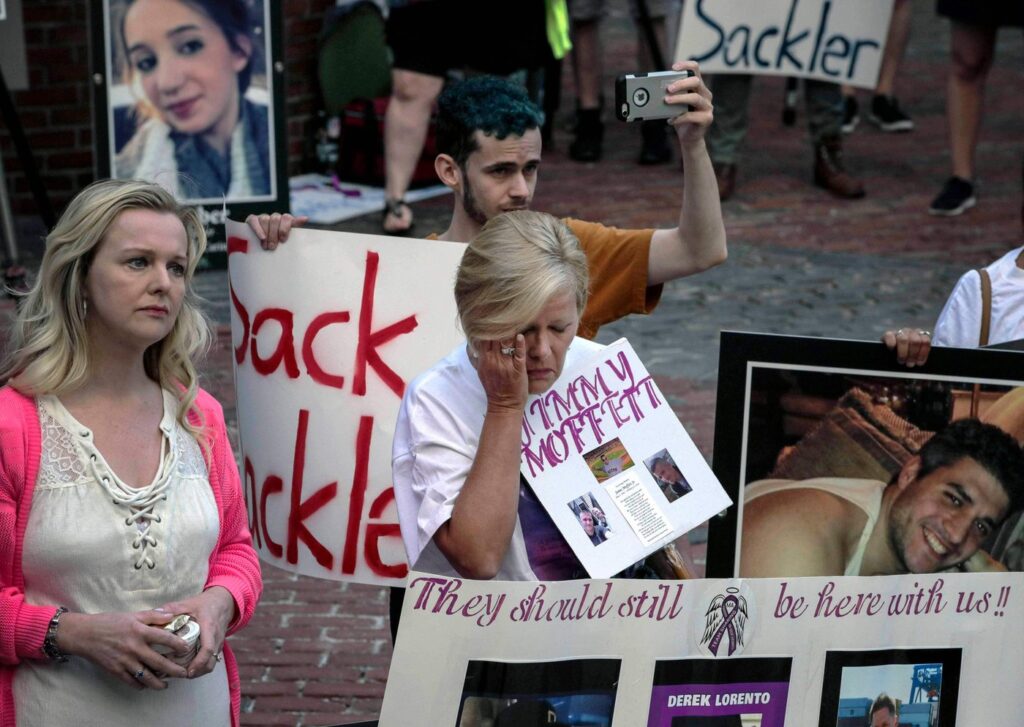
Despite the ongoing proceedings, the Sackler family has been vilified for their role in the opioid crisis, accused of prioritizing profits even as addiction and overdoses rose. However, no family members have faced criminal charges. Reports indicate that they received $10.7 billion from Purdue between 2008 and 2018 and have not drawn compensation since then, with the last family member exiting Purdue's board in 2019.
Many victims are advocating for more accountability, emphasizing that the settlement and guilty plea do not achieve justice for those affected by the opioid crisis, which has been linked to approximately 900,000 deaths in the U.S. since 1999. Susan Ousterman, whose son Tyler Cordiero died from an overdose in 2020, has taken action by organizing victim impact statements for the court in hopes of persuading the judge to reject the plea deal and press for criminal charges against individuals, including members of the Sackler family. Ousterman argues that the settlement money should be directed toward victims rather than government entities, as many have not utilized the funds effectively to combat the crisis.








