

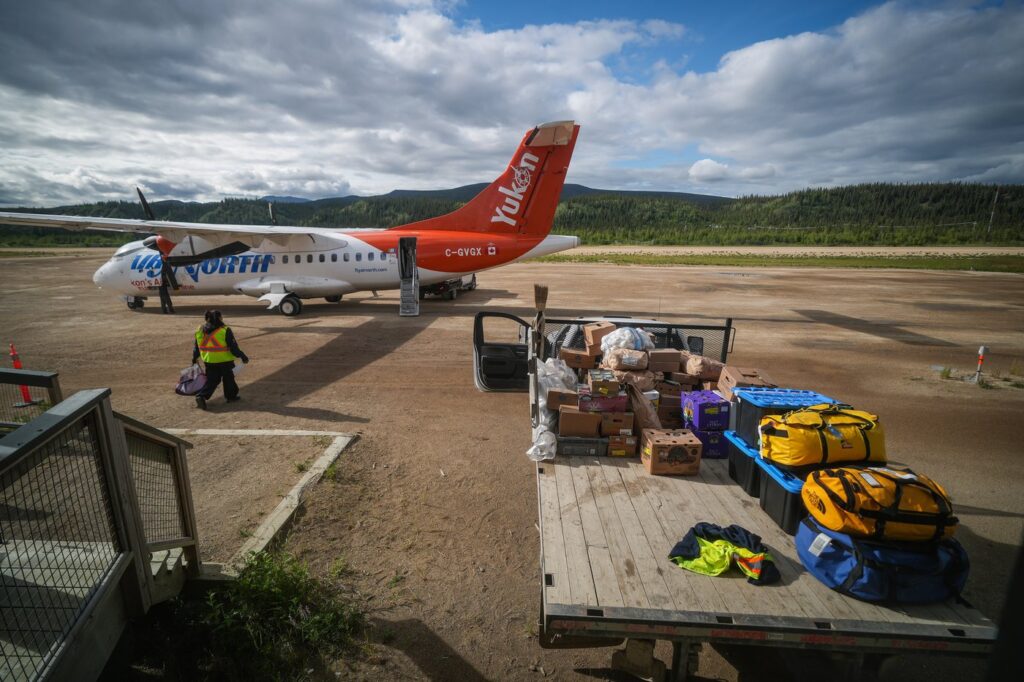
The journey of food items to grocery stores in Canada often involves lengthy distances, especially for communities in the Far North. Products like Florida oranges and Colombian coffee are typically transported by truck to major launch points in cities such as Ottawa or Winnipeg before being shipped north by air or sea. This complicated supply chain contributes to significantly higher prices for groceries, particularly for fresh produce, in remote northern communities compared to southern urban areas.
The impact of rising costs is amplified by the ongoing food inflation driven by high oil and gas prices. Grocers in the North are not only facing increased prices from suppliers but also soaring fuel costs required for transportation. Nicholas Li, an economics professor at the Toronto Metropolitan University, noted that air freight, which is essential for transporting perishable goods, constitutes a substantial part of food prices and disproportionately affects lower-priced items like fruits and vegetables.
A 2022 survey revealed that the average cost of a food basket containing 24 items in a Nunavut grocery store was $198.75, starkly higher than the $132.44 observed for the same items in Ottawa. Factors like fluctuating jet fuel prices — which have doubled since Iran's recent geopolitical actions — are contributing to escalated shipping costs, thereby increasing prices for consumers further north.
The North West Co., which operates various retail stores including North Mart and Giant Tiger, is experiencing significant fuel surcharges on air freight, ranging from 20 to 50 cents per pound for cargo bound for northern regions. This can translate into price increases of $2 to $5 for staple items like milk, which weighs 10 pounds in a four-litre jug — an increase many Canadians may not typically anticipate.
To date, North West has refrained from raising prices on essential goods such as milk, bread, eggs, and baby formula, although non-essential items have seen price hikes. Mike Beaulieu, vice-president of Canadian store operations at North West, indicated that unavoidable costs are already affecting consumers, hinting at potential future price increases.
Arctic Co-operatives Ltd., which oversees a network of 32 grocery co-ops in Nunavut, Northwest Territories, and Yukon, is also beginning to feel the pressure from soaring fuel prices. Duane Wilson, vice-president of stakeholder relations for Arctic Co-op, explained that although the Nunavut government typically purchases fuel annually at fixed prices, current fuel costs and subsequent price increases are something to watch for as existing reserves run out and renewals take place.
Wilson also explained that while local flights are purchasing fuel at market prices, the impact has not yet been felt due to existing contracts with air carriers like Air Inuit and Canadian North. These carriers have begun implementing fuel surcharges but expect those costs to rise in light of current market volatility. Furthermore, if oil prices remain high, the Nunavut government will be forced to buy fuel at elevated rates in the upcoming year, perpetuating higher costs for consumers.
As Arctic Co-op moves toward its annual replenishment of stock, it faces increased shipping costs due to dramatic rises in bunker oil prices, which are used for maritime transportation. Wilson expressed concerns about the long-term viability of these co-op businesses, emphasizing that members not only face the burden of increased operational costs but also the direct impact of inflated food prices.
Despite initiatives like Nutrition North Canada, which offers federal subsidies to alleviate some costs associated with shipping food to northern regions, Wilson suggests that these efforts have struggled to keep pace with inflation, particularly due to the price surges seen in the aftermath of the COVID-19 pandemic. The effectiveness of these subsidies is diminishing over time, posing an ongoing challenge for food accessibility in northern communities.








