

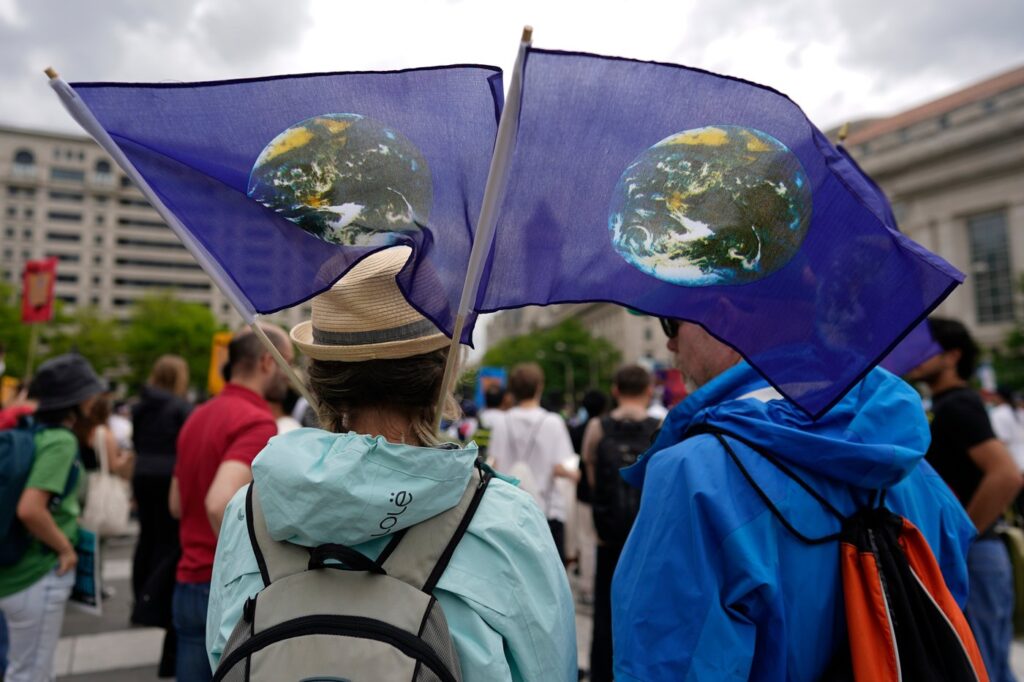
Millions of people around the world will pause on April 22 to mark Earth Day, an annual event that aims to inspire activism to clean up and preserve the planet, now home to approximately 8 billion humans and trillions of other organisms.
Earth Day has its roots in the escalating concerns over pollution that emerged during the 1960s. The publication of Rachel Carson's influential 1962 book, "Silent Spring," highlighted the harmful effects of pesticides like DDT on the food chain and raised awareness about the fragile balance of nature.
It was U.S. Senator Gaylord Nelson from Wisconsin who conceived the idea of Earth Day. Following a devastating offshore oil spill in Southern California in 1969 that released millions of gallons of oil, Nelson, already an environmental advocate, was inspired to launch a national "teach-in" focused on environmental issues. This initiative drew inspiration from college campus events centered around opposition to the Vietnam War.
Nelson collaborated with activists, including Denis Hayes, to broaden the scope of the event beyond academic institutions, resulting in events held across the United States and coining the name "Earth Day."
The date of April 22 was specifically chosen for the first Earth Day in 1970 because it fell on a weekday that was strategically placed between spring break and final exams, thereby maximizing student participation.
While Earth Day is not classified as a federal holiday, numerous organizations and community groups take the opportunity to organize volunteer activities focused on environmental preservation, such as cleanups of natural areas. Interested individuals can register or find a list of events globally at EarthDay.org.
The inaugural Earth Day was met with overwhelming public enthusiasm and is credited with prompting significant legislative action in the U.S. Congress aimed at addressing pollution. This resulted in the passage of landmark environmental laws, including the Clean Air Act and the Clean Water Act. Subsequently, Earth Day became recognized as a key milestone in the birth of the modern environmental movement.
Over the years, Earth Day has evolved into a global event, with participation documented in more than 192 countries. In the year 2000, the initiative expanded its focus to specifically address the pressing issue of climate change, a challenge that has only intensified in recent years.
The theme for this year's Earth Day is "Our Power, Our Planet," encouraging collective action in response to environmental challenges.
As Earth Day approaches, individuals are reminded of the importance of environmental stewardship and the potential for collective action to foster positive change for the planet.








