

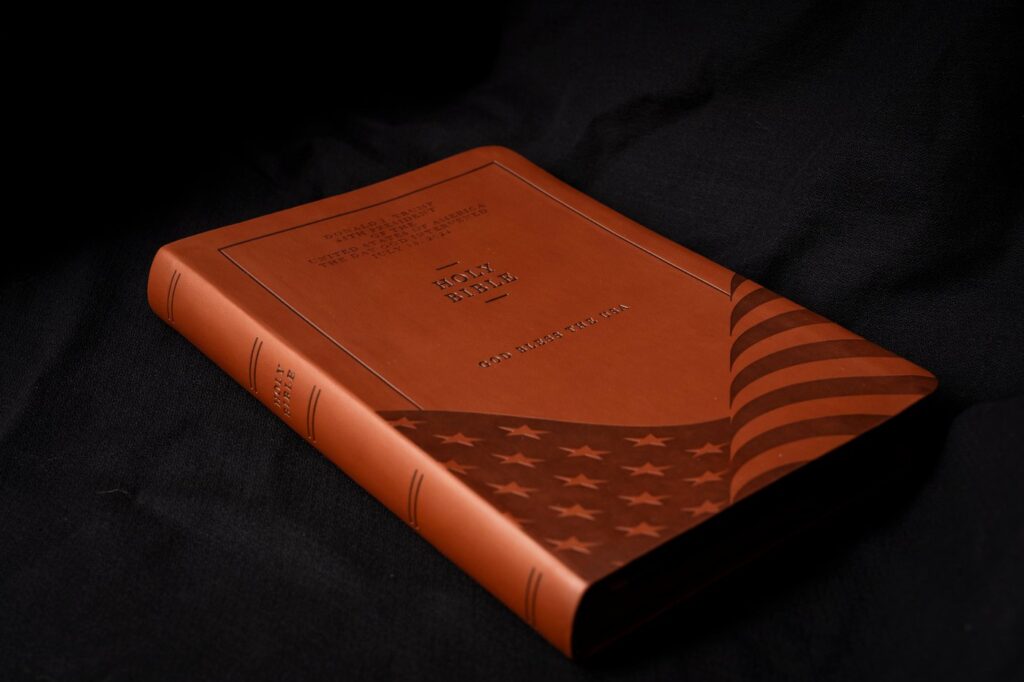
The upcoming Bible-reading marathon organized by the America Reads the Bible initiative will feature former President Donald Trump, who is set to read a significant scriptural passage during a livestreamed event. The excerpt from the seventh chapter of 2 Chronicles holds a special relevance in today's religious and political landscape, often cited by those who argue that America was established as a Christian nation.
The prominent 14th verse of this passage states: “If my people, which are called by my name, shall humble themselves, and pray, and seek my face, and turn from their wicked ways; then will I hear from heaven, and will forgive their sin, and will heal their land.” This verse has served as a rallying call at National Day of Prayer events and has long been associated with a belief in America's divine mandate and need for repentance.
This biblical context derives from a moment during the reign of King Solomon in ancient Israel, dating back approximately 3,000 years. Solomon, during the dedication of the first temple in Jerusalem, prays for future generations that may sin and face divine punishment. In response, God promises restoration upon their repentance.
Despite its historic significance, the contemporary application of this verse has garnered criticism. Critics argue that the use of this scripture is often manipulated by Christian nationalists, particularly in a divisive political landscape. Brian Kaylor, a Baptist pastor and president of Word&Way, contends that the verse is being taken out of context. He emphasizes that it was a specific promise to a particular people, which makes its application to the modern USA questionable.
Historically, the verse has been utilized by U.S. presidents, with President Dwight D. Eisenhower taking his oath of office in 1953 with his hand on a Bible opened to this passage. President Ronald Reagan referred to it in a proclamation for the National Day of Prayer in 1984, demonstrating the verse's resonance with political leaders over the decades.
The National Day of Prayer, while intended to be nonsectarian, has primarily attracted evangelical Christians. Many of these events often feature the “If my people” passage, cementing its role in religious and national discourse. Trump’s involvement in the reading marathon reflects the strong support he enjoys from evangelical voters, a crucial part of his political base.
Alongside Trump, other prominent figures will participate in the Bible reading event, including politicians and celebrities, each selecting passages with personal or political significance. For example, Mike Huckabee will read from Genesis, emphasizing God's promise of blessings to those who support Abraham, a notion well-received among evangelical communities advocating for strong U.S.-Israel relations. In addition, David Barton, known for promoting the idea of America as a Christian nation through his organization Wallbuilders, will read a passage about Nehemiah’s rebuilding efforts in Jerusalem.
As the marathon unfolds, the choice of scripture and its implications will likely continue to spark discussions surrounding its relevance and interpretation in contemporary American society. This event illustrates the intertwining of faith and politics as various leaders and participants seek to relate biblical teachings to current national issues.








