

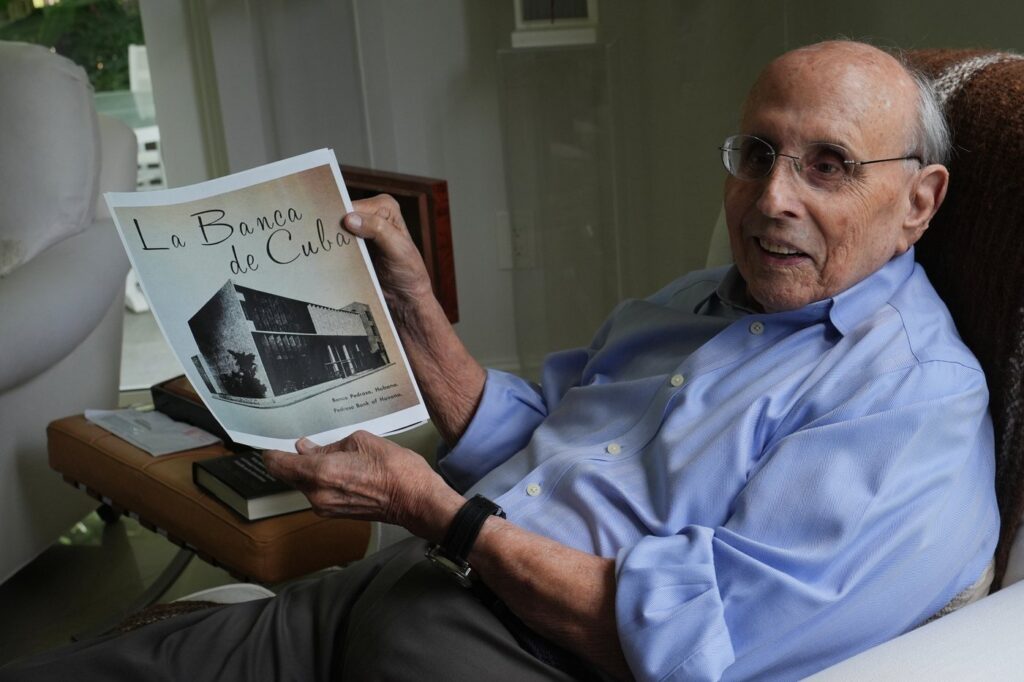
Deeply ingrained in Raul Valdes-Fauli's family lore is a traumatic episode from November 1960, when an agent of Fidel Castro's revolution brandished a machine gun at his family's Pedroso Bank in Havana and demanded they vacate the premises. This incident marked the moment when Valdes-Fauli's family, who had settled in Cuba from Spain in the 16th century, lost their ancestral bank. The agent derogatorily referred to Valdes-Fauli's father and uncle as "gusanos," a Spanish term coined by Castro to disparage those fleeing the island. The revolution's seizure of property left the family unable to take even family photographs from their office. Valdes-Fauli, an attorney and former mayor of Coral Gables, has long carried the weight of this memory.
Fast forward seven decades, and such traumatic histories are resurfacing amid rising tensions and political negotiations. Under President Donald Trump, military intervention threats and a naval blockade have left Cuba's struggling economy on the brink of collapse. Cuban Americans, buoyed by the possibility of regime change in Cuba by 2026, are filled with cautious optimism. However, there is a prevailing concern that they might be marginalized in any negotiations, paralleling the situation in Venezuela, where Trump previously allied with former adversaries, sidelining demands for democracy in favor of oil interests.
Nick Gutiérrez, president of the National Association of Cuban Landowners in Exile, holds a collection of fading land titles and photographs, reflecting generations of family ownership before the revolution. Gutiérrez has spent decades advising Cuban exile families on how to seek compensation for property lost to the revolution. For a long time, the lack of hope regarding restitution made this mission seem futile. However, as speculation about regime change rises, interest in restitution claims has surged, especially among younger Cuban American entrepreneurs eager to reconnect with their heritage and contribute to rebuilding a country they hardly know.
The complexities of resolving these claims are likened to battling a multi-headed hydra by Robert Muse, a Washington attorney specializing in U.S.-Cuba relations. In a hierarchical context, the strongest claims belong to the 5,913 cases certified by the Justice Department in 1972, valued at $1.9 billion. These include corporate giants like ExxonMobil and Marriott International, whose assets were nationalized during Castro's regime. Under U.S. law, these claims, now worth approximately $10 billion, must be addressed for a full restoration of diplomatic relations. However, the executive branch has the power to control private losses and settle disputes as part of broader agreements with Havana.
For the first time, Cuba has indicated a readiness to discuss compensation for the losses of Cuban property owners alongside its demands for reparations due to the U.S. trade embargo instituted in 1962. Another contentious issue arises from Title III of the Helms-Burton Act of 1996, which permits exiles to sue entities considered to be "trafficking" in confiscated property. Past U.S. presidents suspended the law due to concerns from allies engaged in business with Cuba, rendering it ineffective. However, Trump's administration lifted the suspension in 2019, leading to approximately 50 lawsuits being filed. Recent cases before the U.S. Supreme Court, including those brought by Exxon and Havana Docks, could potentially open the floodgates for further claims.
Muse describes the legal impediments to business in Cuba as akin to a "stalactite," suggesting that decades of inaction have created significant deterrents to investment and political cooperation. The practicality of compensating hundreds of thousands of claimants seems unfeasible, yet if Cuba is genuinely interested in attracting foreign capital, it may find value in negotiating with Cuban Americans, similar to the compensation strategies employed by former Communist states in Eastern Europe after the Cold War. Trump, characterized by his business acumen and desire for historical milestones, may navigate this intricate maze of legalities with an eye on securing a deal that could reshape U.S.-Cuba relations.
As the political landscape evolves, Gutiérrez holds mixed feelings about Trump's potential trajectory, expressing hope that he won’t replicate the Venezuelan model, where deal-making superseded democratic advocacy. Nonetheless, Gutiérrez finds some comfort in Trump’s established relationship with the Cuban American community, suggesting that the president understands the significance of these historical claims to his supporters.








