

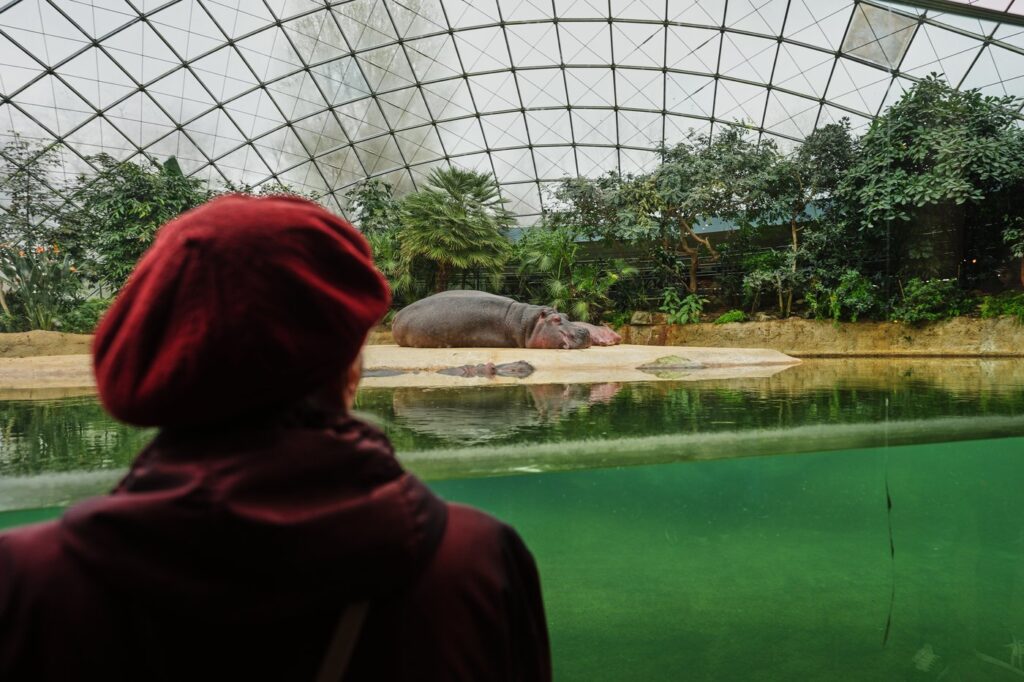
In Berlin, a specialized zoo tour for individuals living with dementia was conducted last month, organized by Malteser Deutschland, part of the Malteser Order of Malta. Among the participants were 86-year-old Christel Krueger and her daughter, who were captivated by a mother hippopotamus and her baby resting on a sandbar. Other attendees included 85-year-old Monika Jansen, who eagerly sought a glimpse of a rhinoceros, and Ingrid Barkow, who observed from her wheelchair while elephants roamed nearby. This unique initiative aims to create engaging, accessible experiences for the estimated 1.6 million people living with dementia in Germany, a number anticipated to rise to 2.8 million by 2050.
Across the globe, cultural institutions such as museums and zoos are increasingly recognizing the need for specialized tours. For example, various programs have been developed for different communities, including sign-language tours for the deaf and hard of hearing, touch-based events for individuals with blindness or low vision, and tailored experiences for those on the autism spectrum. The Berlin chapter of Malteser Deutschland has specifically designed cultural initiatives for individuals with dementia, addressing the significant barriers they face in participating in society.
Project coordinator Christine Gruschka emphasized the social invisibility of people with dementia, highlighting the need for their continued integration into society. She noted that individuals with dementia have the same rights as anyone else to participate in cultural and social activities. Dementia represents a progressive decline in cognitive abilities, often affecting memory, reasoning, and emotional control, with Alzheimer’s disease being the most recognized form among the various types.
The dementia-specific tours organized by Malteser Berlin take place at notable locations, including the Berlin Zoo, the Museum of Natural History, Britzer Garden, and Charlottenburg Palace, with ambitions to expand further. Gruschka pointed out that conventional tours can often overwhelm individuals living with dementia due to their pace and distractions. Hence, the specialized tours are crafted to ensure participants feel seen and comfortable, promoting engagement and interaction with their environment.
During the Berlin Zoo tour, Krueger, Jansen, and Barkow followed tour coordinator Carola Tembrink, who carefully selected specific animal habitats to prevent fatigue and overstimulation. Tembrink highlighted the zoo's significance for reminiscence therapy, as many participants often recall childhood visits, triggered by familiar sights and smells. This approach not only enhances the experience for those living with dementia but also provides essential support for their caregivers and families.
Caregivers often find solace and community through these tours. Krueger's daughter, Kerstin Hoehne, observed that these experiences foster a sense of belonging among participants, as they face similar challenges. Meanwhile, Barkow's daughter, Manuela Grudda, expressed how the tour enriched their bond, allowing her mother’s attention to be engaged through shared observations of the animals, despite the communication barriers presented by dementia.
Overall, the initiative by Malteser Deutschland represents a significant stride in fostering inclusion for individuals living with dementia in Berlin, underlining the importance of creating supportive environments in cultural spaces that respect and celebrate the lives of all individuals, regardless of their cognitive challenges.








