

WASHINGTON (AP) — Okello Chatrie's cellphone played a crucial role in his arrest following a bank robbery in suburban Richmond, Virginia, where he stole $195,000. The authorities turned to an innovative technological method known as geofence warrants, which allowed them to gather location data of cellphone users present near the crime scene, to track him down.
The geofence warrant served on Google indicated that Chatrie's cellphone was one of several devices registered in the vicinity of the bank during the time of the robbery. This case is now poised to be examined by the Supreme Court, which will determine whether such geofence warrants infringe upon the Fourth Amendment's protection against unreasonable searches. This ruling is significant as it addresses how the Fourth Amendment—ratified in 1791—applies to modern technological developments unimaginable to the founding fathers.
Chatrie's appeal is among two cases set for argument. The second case involves Bayer's request to the court to block numerous state lawsuits asserting that its widely used Roundup weedkiller could be carcinogenic without proper warnings to consumers.
Geofence warrants invert traditional law enforcement practices. Generally, police begin with identifying a suspect and then seek a warrant to search that individual’s home or phone. In contrast, geofence warrants allow law enforcement to identify individuals based solely on their presence at a crime location, without an initial suspect.
Prosecutors credit this approach for solving cold cases and identifying suspects in serious crimes where surveillance footage did not yield identifiable images. However, privacy advocates express concerns that these warrants can lead to indiscriminate searches, affecting innocent individuals whose cellphones happened to be near a crime scene. Experts warn that a Supreme Court ruling supporting this method could create a precedent for more widespread reverse searches.
Law enforcement has utilized geofence warrants for various investigations, including identifying individuals involved in the January 6, 2021, Capitol riot and solving murder cases in multiple states, including California, Georgia, and North Carolina. An academic organization aimed at fostering collaboration between police and communities urges the court to consider a nuanced approach in the Chatrie case, rather than an all-or-nothing stance.
The Policing Project at New York University School of Law warns that the position taken by the Trump administration would allow law enforcement to make unrestricted use of geofence warrants, lacking judicial oversight and constitutional protections. Chatrie's legal representatives argue that the court should categorically prohibit the use of such warrants, asserting that they could hinder legitimate police work.
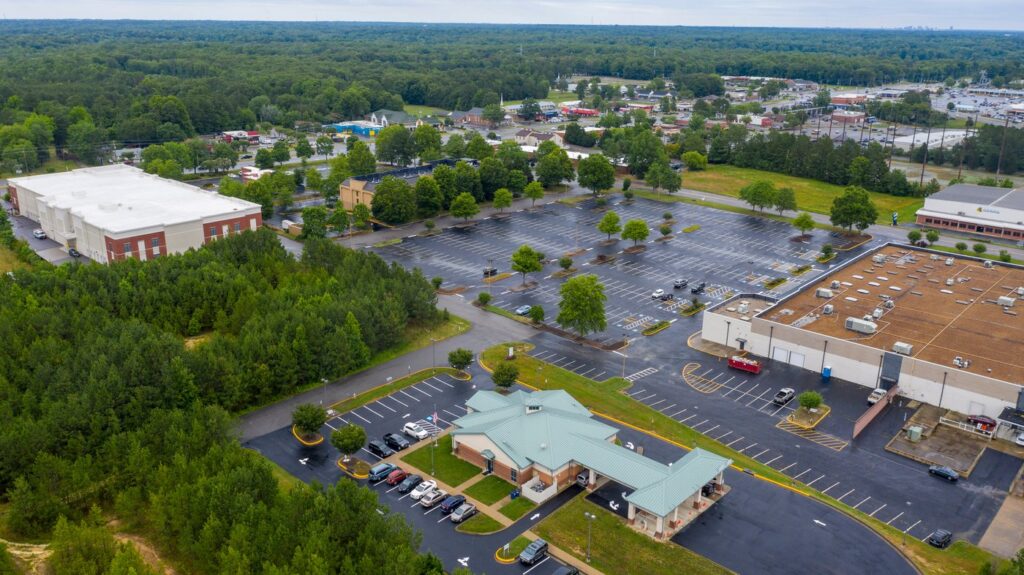
In Chatrie's instance, the geofence warrant revived an investigation that had stalled. Authorities discovered that he had been present near the Call Federal Credit Union in Midlothian around the time it was robbed in May 2019. Following this, they secured a search warrant for his residence, unearthing nearly $100,000 in cash, including bundled bills marked by the bank teller.
Chatrie ultimately pleaded guilty and received a sentence of almost 12 years in prison. His defense team contends that the evidence obtained should not have been admissible, arguing that the warrant infringed on his privacy by allowing the collection of location data from individuals without evidence linking them to the crime. Prosecutors countered that Chatrie had no reasonable expectation of privacy since he chose to use Google’s location services.
A federal judge concurred that the warrant violated Chatrie's rights yet permitted the evidence due to the officer’s reasonable belief in acting appropriately. While the federal appeals court in Richmond upheld his conviction, it delivered a fragmented ruling. Conversely, a separate federal appeals court in New Orleans deemed geofence warrants to be equivalent to general warrants, which the Fourth Amendment expressly prohibits.
The Supreme Court's previous decision regarding digital-age searches occurred in 2018. In that case, the court ruled 5-4 in favor of a defendant whose movements were tracked for nearly four months via cellphone tower data without a warrant. A key question in both that case and Chatrie’s is whether the defendant maintained an expectation of privacy that activates Fourth Amendment protections. Historically, the Supreme Court has ruled that information shared with third parties does not retain privacy protection.
Nevertheless, Chief Justice John Roberts, in the majority opinion from the earlier case, noted the impressive computing capabilities of modern mobile phones and highlighted the "seismic shifts in digital technology," referencing the extensive location data routinely accumulated by wireless carriers today.








