

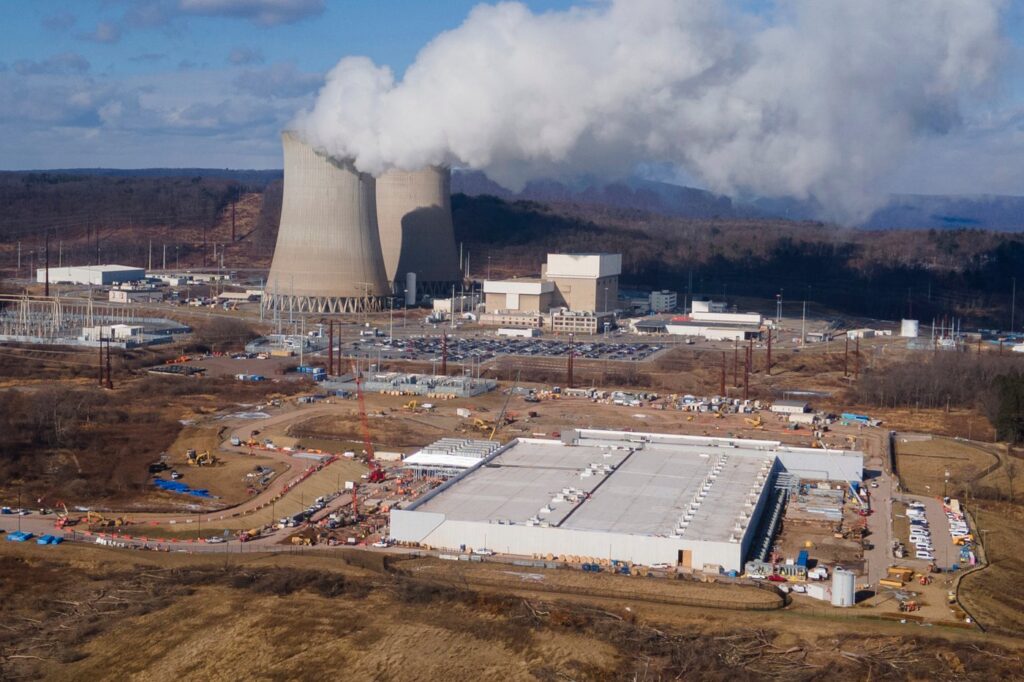
HARRISBURG, Pa. -- Building trades unions, historically perceived as the voice of American workers, are now deeply connected with some of the wealthiest corporations in the world as they contribute to the burgeoning artificial intelligence (AI) economy in the U.S. Unionized workers are heavily involved in numerous large-scale data center projects, leading to a scramble for new apprentices to meet the surging demand for skilled labor.
These unions have emerged as allies to tech companies and government officials sympathetic to the tech industry, emphasizing the national security imperative for AI dominance over China. They have played a crucial role in addressing community pushback and hostile legislative efforts, often aligning with traditional pro-business Republicans, which forces Democrats to navigate a complex political landscape dividing progressives and labor interests.
Unions have proactively confronted concerns surrounding data centers that corporate executives often overlook. Rob Bair, president of the Pennsylvania Building and Construction Trades Council, pointed out that data centers create significant construction jobs that benefit local communities, arguing that communities should negotiate benefits such as educational investments in exchange for development. "If you don’t ask, you’re never gonna get," he stated.
As the construction of data centers accelerates, building unions are experiencing unprecedented growth. Many unions are reporting soaring man hours and increased size in apprentice classes. For instance, it's estimated that data centers account for at least 40% of work hours for members of the Columbus-Central Ohio Building and Construction Trades Council and over 50% for the International Brotherhood of Electrical Workers Local 26 in Washington, D.C. The North America's Building Trades Unions noted a record number of members and apprentices in 2025, crediting this growth to the rapid expansion of data centers, power plants, and legislation under former President Joe Biden that incentivizes the construction of semiconductor and electric vehicle battery factories, among other initiatives.
The energy demands of data centers are driving a boom in power plant construction, revitalizing unions that build and maintain crucial energy infrastructure. The Boilermakers Local 154, for example, which had experienced a decline in apprentice recruitment, has rebounded impressively, now registering over 200 trainees for their current class.
Tech giants, recognizing the need for skilled workers, are investing significantly in training programs. Sam Altman, co-founder and CEO of OpenAI, remarked that skilled union workers are essential for laying the groundwork for the AI economy. Google noted that most labor for its data center projects is unionized and has backed an electrician training program with a $10 million grant aimed at increasing the workforce pipeline by 70%.
Mark McManus, general president of the United Association of Union Plumbers and Pipefitters, acknowledged the criticism of unions partnering with affluent corporations but dismissed it as impractical, asserting that data centers would continue to be built regardless of union opinions. His union maintains a strong relationship with tech firms and has seen a significant increase in membership, with members involved in over 90% of the current data center projects in the U.S.
While it’s difficult to determine the exact percentage of data center projects utilizing union labor, an Associated General Contractors of America survey suggested that this ratio reflects the overall commercial construction landscape, where approximately one-third of the workforce is unionized.
National unions have been active in negotiating labor agreements on major projects, including data center campuses for firms like Oracle and OpenAI in Michigan and Arizona. In Pennsylvania, unions have stood beside Amazon executives to announce substantial investments in data center projects, demonstrating their cooperative attitude in fostering economic development.
However, this partnership has caused friction in legislative settings, where union-backed proposals often weaken dissent against data centers. Pennsylvania state Senator Katie Muth expressed frustration in garnering Democratic support for more stringent regulations when competing with union-supported initiatives that favor development. Unions have made their voices heard at local council meetings across the U.S., at times drawing ire for their aggressive advocacy for projects.
Alicia Morales, speaking before the City Council in Joliet, Illinois, criticized union supporters for disrespectful behavior during meetings. Conversely, other union representatives drew praise for their informed perspectives at council meetings, highlighting the essential economic insights that many members of the public might lack.








