

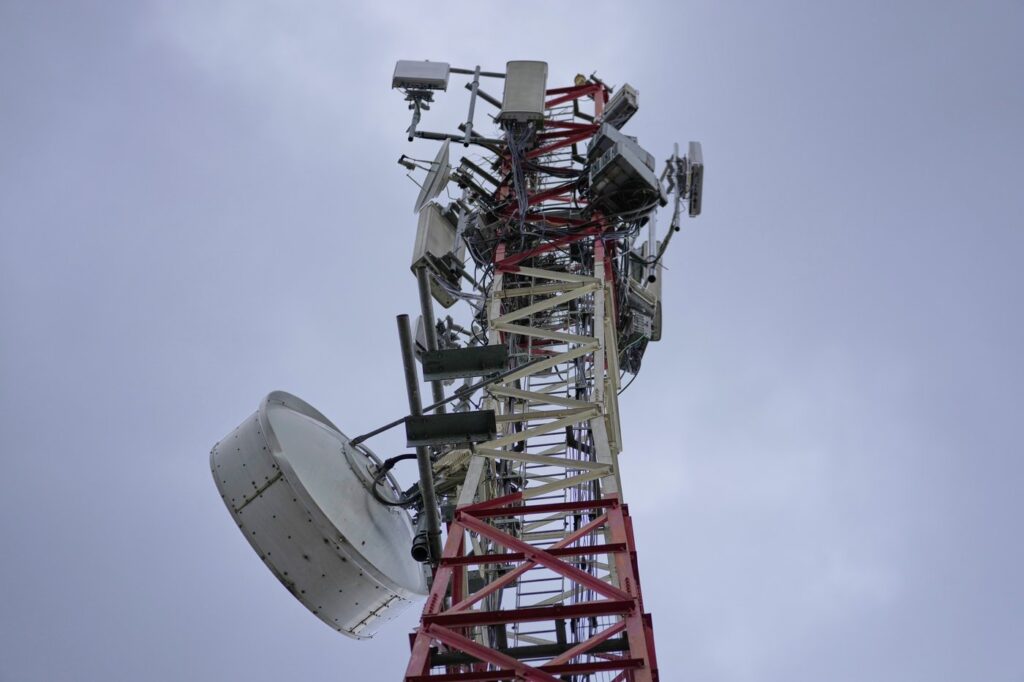
NAIROBI, Kenya — Rising diesel prices linked to the ongoing conflict in Iran are pressuring Africa to accelerate its shift from fossil fuels to solar energy for powering telecommunications towers. Diesel, which fuels the vast majority of Africa's approximately 500,000 telecom towers, has seen increased prices and reduced availability in recent weeks due to tightening global fuel markets driven by the war. This has prompted various African nations, heavily reliant on imported fuels, to reevaluate their energy strategies.
The transition to cleaner energy solutions for telecom towers was already in motion prior to the recent price surges, fueled by economic factors and climate objectives. However, the conflict in the Middle East has expedited this shift. Lande Abudu, Senior Energy Specialist for Africa at GSMA, a global industry organization for mobile operators, stated, “Diesel has always been a major cost, but recent global events have made it even more volatile. That strengthens the case for solar and hybrid solutions.”
Telecom operators across Africa are increasingly adopting hybrid systems combining solar panels, battery storage, and limited diesel backup. Some are aiming for entirely solar-powered operations, especially in rural and off-grid areas where connecting to electrical grids is prohibitively expensive. Traditionally, cellphone towers in Africa have been powered by large diesel generators, which require regular manual refueling. In contrast, solar-powered towers generate electricity through solar panels and utilize battery systems for continuous power supply.
While developed markets like the United States and India largely depend on grid electricity for telecommunications towers, with diesel generators used primarily as backups, operators in parts of Southeast Asia, including Indonesia, are also moving towards renewable energy solutions.
Last month, American-owned Atlas Tower Kenya announced a $52.5 million investment to build 300 new solar-powered telecom towers, servicing prominent operators such as Safaricom, Airtel, and Telkom Kenya. Currently, 82% of Atlas Tower's 500 towers are powered by solar energy.
The financial incentives for transitioning to solar power are increasingly significant. Energy costs can account for up to 60% of operational expenses for telecom towers in off-grid regions. With diesel prices soaring and management challenges like logistics, theft, and maintenance complicating operations, companies are seeking cleaner, more efficient energy solutions. Vodacom Africa reported a 5% rise in energy costs to $300 million in 2025 compared to the previous year, attributed to higher fuel prices and electricity tariffs. Safaricom raised $153.6 million through green bonds last year to facilitate the transformation of its towers to solar energy.
In Nigeria, the removal of fuel subsidies in 2023 led to a staggering 200% increase in diesel prices, with operators now spending $400 million annually to keep their towers operational. The recent spikes in global fuel prices, exacerbated by the Iran conflict, have only added to this financial burden. In response, telecom companies are accelerating their clean energy initiatives, with firms like iSAT Africa rolling out solar-powered towers supported by innovative financing models. Major players such as Orange, Vodacom, MTN Group, and Airtel Africa are also expanding solar and hybrid systems across their networks.
Early results indicate considerable savings: MTN operations in South Sudan achieved a 30% reduction in fuel costs after switching to solar energy, while Airtel Africa partnered with ENGIE Energy Access to halve diesel consumption at sites in Zambia and Congo. Vodacom Africa's 2025 sustainability report emphasizes integrating its towers into national grids and enhancing solar and battery solutions as pivotal components of its strategy to phase out diesel generators.
Beyond cost efficiency, the benefits of switching to solar are significant. Solar-powered towers are less susceptible to fuel shortages and generator malfunctions, which enhances reliability in underserved areas. In northern Nigeria and Congo, cellular outages caused by prior fuel shortages have disrupted essential services, including mobile banking and emergency communications. Transitioning from diesel to solar energy could also help narrow Africa’s connectivity gap, where around 65% of potential mobile internet users remain unconnected, according to GSMA.
Abudu noted that renewable energy solutions enable swifter and more cost-effective expansion into underserved areas. In rural Kenya, solar-powered towers have markedly improved service stability, granting residents more reliable access to mobile banking, education, and health resources. Martin Imwatok, a teacher in northern Kenya, shared his experience, stating, “Before this telecommunication mast was installed, we struggled with mobile money payments or calling for medical help during emergencies. When these towers go off, business and life stop.”
Africa's dependence on diesel is due to its weaker grid infrastructure, making the transition both challenging and potentially transformative. Regulators believe this shift could yield broader societal benefits; for instance, Nigeria’s telecom regulator is encouraging operators to connect towers to solar minigrids, providing electricity not only for the towers but also to local homes and businesses. Aminu Maida, head of the Nigerian Communications Commission, explained that “these telecom towers can act as anchor clients for solar minigrids, supplying electricity to themselves and nearby communities.”
As fuel prices remain unpredictable amidst global tensions, experts assert that the case for cleaner energy in Africa will only become more compelling. Abudu concluded, “This is no longer just about climate; it’s about resilience, cost, and keeping Africa connected.”








