

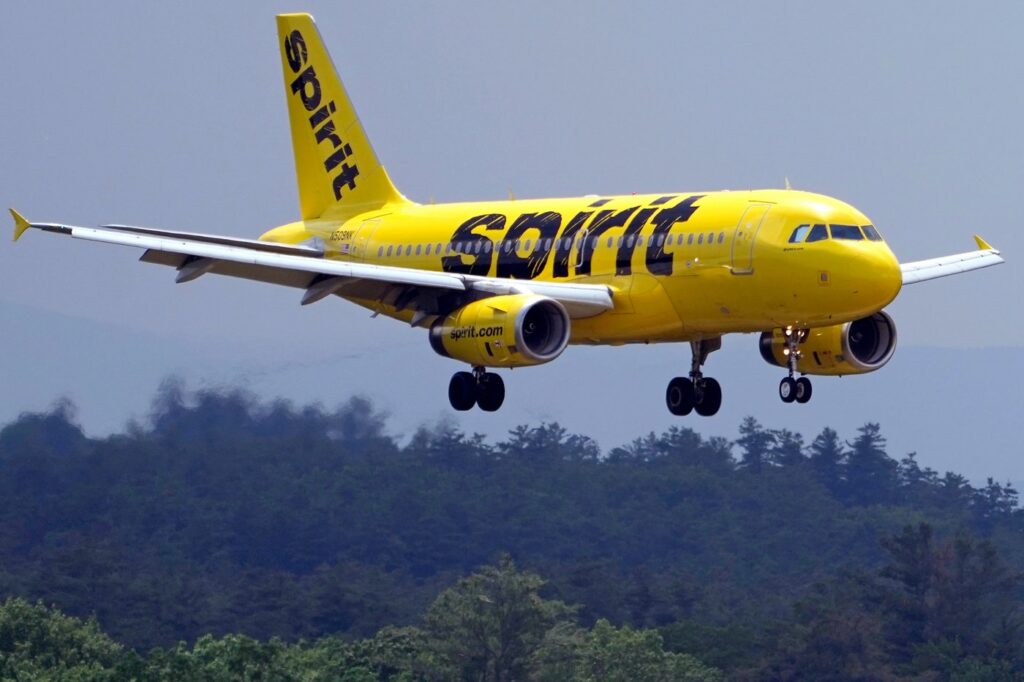
WEST PALM BEACH, Fla. (AP) — Spirit Airlines, facing significant financial distress, is on the brink of a potential shutdown after failing to secure a necessary government bailout by the end of the week. The airline, known for its budget-friendly fares, has struggled since the onset of the COVID-19 pandemic, exacerbated by soaring operating costs, including rising jet fuel prices driven by geopolitical tensions linked to the ongoing Iran war.
On Friday, President Donald Trump announced that his administration had formulated a “final proposal” for a taxpayer-funded takeover aimed at preventing the airline from collapsing. However, as the deadline passed without a deal, concerns about Spirit's viability intensified. Sources indicate that preparations were underway for a possible suspension of operations as early as Saturday, though official confirmations from the airline or the Trump administration were not immediately forthcoming.
Despite these uncertainties, Spirit Airlines attempted to reassure customers via social media platform X, stating that its flights were “operating as scheduled.” Nonetheless, the airline reported the cancellation of 52 flights on Friday alone, a significant increase from just three cancellations the previous day. The precariousness of the situation highlights the difficulties that low-cost carriers like Spirit face in a highly competitive market.
In the past week, Trump had floated the idea of a bailout, as Spirit found itself filing for Chapter 11 bankruptcy for the second time in less than two years. According to court documents, the airline cited $8.1 billion in debts against $8.6 billion in assets at the time of its most recent bankruptcy filing in August 2025. Collectively, Spirit Airlines had incurred losses exceeding $2.5 billion since the start of 2020 due to the pandemic and its aftermath.
About 17,000 jobs are at risk if Spirit shuts down, according to statements made by the airline's attorney, Marshall Huebner. Labor unions representing various airline employees, including pilots, flight attendants, and ramp workers, have actively supported rescue efforts, emphasizing that the cessation of Spirit Airlines would displace thousands of workers and reduce overall competition in the airline industry, consequently leading to higher airfares for consumers.
Notably, budget-conscious travelers and those seeking leisure flights would be most adversely affected by the potential loss of Spirit, particularly in major markets where the carrier has a significant presence, such as Las Vegas, Fort Lauderdale, and Orlando. The airline transported approximately 1.7 million domestic passengers in February, which is nearly half a million less than the same month the previous year, according to data from aviation analytics firm Cirium.
Additionally, Spirit Airlines has enacted drastic capacity reductions, providing approximately half as many seats this February compared to May 2024's figures. These cutbacks illustrate ongoing struggles in the airline's operations and highlight the broader challenges facing the aviation sector in recovering from the pandemic.
The situation surrounding Spirit Airlines serves as a critical reminder of the fragility of the budget airline model and its susceptibility to external economic pressures, leaving many industry observers awaiting either a government intervention or the company’s eventual fate.








