

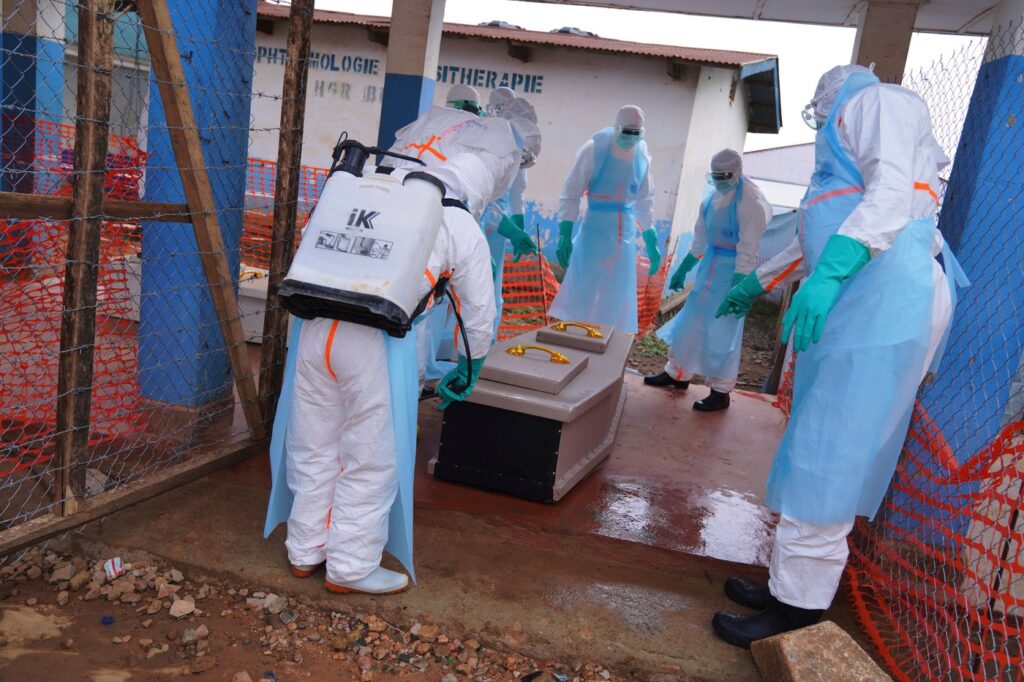
The Ebola outbreak in the Democratic Republic of Congo has surged to over 5,000 reported cases, with the latest data revealing at least 5,021 cases and 2,378 deaths as of Sunday. This alarming trend has raised concerns among health responders, who emphasize that the outbreak is occurring at an unprecedented speed, outpacing containment efforts in one of Congo's most remote regions.
The World Health Organization (WHO) has predicted that the current outbreak could surpass the severe outbreak between 2014 and 2016 in West Africa, which recorded more than 11,000 deaths. The speed of the current outbreak is particularly concerning; it has spread approximately three times faster than any previous outbreak documented in history. WHO Director-General Tedros Adhanom Ghebreyesus stated, “We must be frank: the epidemic is far from being under control,” underlining the high risk of both national and international transmission.
In the capital of Ituri province, Bunia, healthcare workers are feeling overwhelmed by working conditions, with reports of some strikers regarding delayed payments. Nurse Thérèse Anyiya voiced her exhaustion, stating, “If the managers don’t take things seriously, we too will end up withdrawing.” The effectiveness of response efforts has been hampered by a lack of approved vaccines or treatments for the Bundibugyo virus, highlighted by most new cases being reported among individuals outside monitoring systems.
Challenges in Ituri: Violence Against Health Workers
In Ituri, the province facing the brunt of the outbreak, violence has erupted against health workers, complicating the response even further. Recently, an attack occurred in the territory of Aru, where a health team was assaulted following the report of a suspected case. A mob further escalated the chaos by setting fire to an ambulance and damaging other vehicles.
Dr. Martin Cwinyay, involved in the response efforts, noted the necessity of bringing healthcare closer to the people, particularly in rural mining and displacement areas. Trish Newport, emergency coordinator with Doctors Without Borders (MSF), highlighted the critical need for community engagement, remarking that residents must be aware of the outbreak and understand the symptoms to seek care promptly.
Impact of Limited Care on Mortality Rates
Experts believe that the virus began spreading from the mining town of Mongbwalu as early as February, several months before official declaration of the outbreak on May 15. Responders are now racing against time to control the situation while grappling with numerous challenges, including threats from rebel groups, community distrust stemming from previous traumas, and poor infrastructure in affected regions.
Despite the 2014-2016 outbreak being labeled the deadliest Ebola event, the Bundibugyo outbreak has exhibited a higher fatality percentage. Current government statistics indicate a case fatality rate of 47.4%, which, in some provinces like North Kivu, has risen to a staggering 70%. This divergence emphasizes the critical need for effective healthcare delivery and swift responses to curb the ongoing spread of the Ebola virus.








