

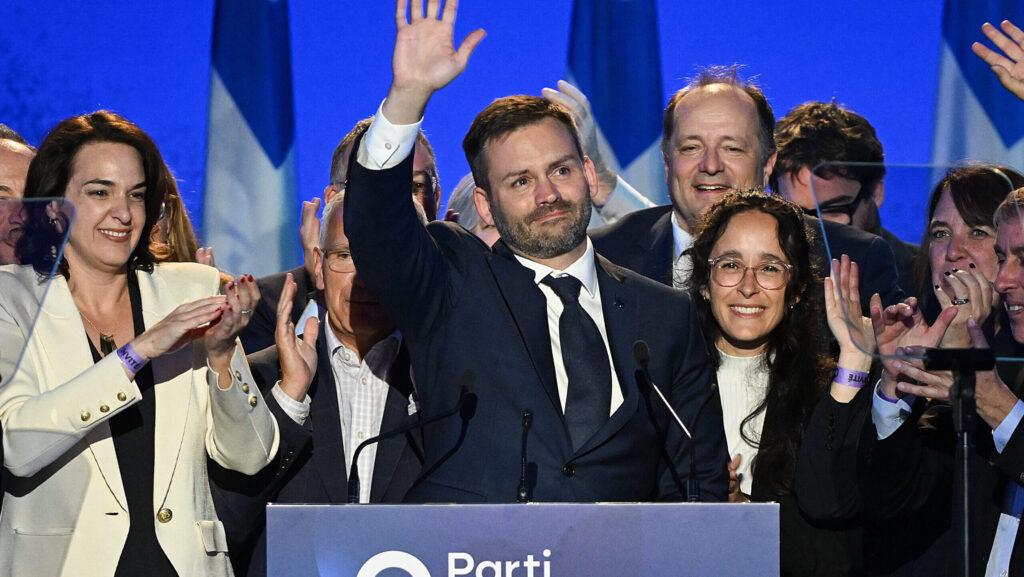
Paul St-Pierre Plamondon is set to become the next Premier of Quebec, marking a significant comeback for the Parti Québécois (PQ) after over a decade of decline and a prolonged period in the political background at the National Assembly. The pro-independence party is projected to form a minority government, securing 59 seats, which is below the 64 needed for a majority in Quebec’s legislature.
The PQ's election night triumph on October 5, 2026, was anticipated by many, as the party had led in the polls for three years and achieved four consecutive byelection victories, indicating a resurgence in support for the sovereigntist group. In his victory speech at the PQ headquarters in Montreal, St-Pierre Plamondon expressed his optimism for the future, stating, “While our campaign concludes tonight, a new political cycle is beginning, and a new chapter in our history is opening for our nation in the years ahead.”
St-Pierre Plamondon emphasized his commitment to restoring public confidence in the government and the capabilities of Quebecers, noting, “I am certain we will succeed. I have a strong team around me, and I view the future of Quebec over the coming years with great optimism.”

The Liberal Party of Quebec, led by Charles Milliard, will serve as the official Opposition for the third consecutive time, projected to capture 40 seats. Éric Duhaime’s Conservative Party of Quebec gained official party status by winning 19 seats, while Québec solidaire fell to fourth place with nine seats, which co-spokesperson Ruba Ghazal deemed a strong outcome despite the drop in representation. Christine Fréchette's Coalition Avenir Québec, which held a majority government for the past eight years, did not secure any seats, leaving its future uncertain.
St-Pierre Plamondon, who won his riding of Camille-Laurin in Montreal, acknowledged the mandate given by Quebec voters and proclaimed, “I will be the premier for all Quebecers, without exception,” including addressing the concerns of “English-speaking friends in Quebec.” He remarked, “They have decided to elect the Parti Québécois while also asking it to work with the other parties,” and he pledged to work collaboratively to address pressing issues such as the rising cost of living and homelessness.

Canadian Prime Minister Mark Carney congratulated St-Pierre Plamondon in a social media post, expressing a desire to work together to support Quebec’s businesses and workers affected by tariffs, create jobs, and tackle homelessness. Other Canadian premiers also extended their congratulations.
Potential for a Sovereignty Vote
The PQ’s victory suggests the potential for a referendum on Quebec independence in the near future. St-Pierre Plamondon has maintained that the PQ would consider holding such a referendum after Donald Trump leaves office, citing the current political climate as inappropriate for discussions on Quebec’s future. In his victory speech, he articulated the desire for Quebec to exist independently like other nations, emphasizing that it is a matter of survival for the French-speaking population in North America.
St-Pierre Plamondon clarified that the independence project is not positioned against English-speaking Canadians. He stated, “Quebec will always be a partner in good faith, open to collaboration,” expressing an intention to defend Quebec’s interests while fostering cooperative relationships with other provinces and the federal government.
The last pro-independence government in Quebec was led by Pauline Marois in 2014, but that administration was largely silent on the subject of a referendum. St-Pierre Plamondon urges Quebecers not to fear pursuing countryhood, citing historic calls for democracy as vital for the people of Quebec.
With an estimated cost of $130 million to organize, the PQ plans to prepare for a referendum as part of its electoral mandate.

The PQ’s resurgence appears unlikely only four years ago when St-Pierre Plamondon, then a relatively unknown figure, led the party to just three seats in the National Assembly. Since then, the party has seen a steady increase in electoral support, coinciding with the decline of the Coalition Avenir Québec (CAQ) following the 2022 election. Key victories in byelections during this period signaled a turning point for the PQ, who had previously suffered significant losses in prior elections.
Campaign Promises
While the PQ's promise to hold a referendum is the most prominent part of its agenda, St-Pierre Plamondon has proposed a range of additional commitments aimed at addressing various issues:
- On the economy: The PQ will support Quebec businesses affected by U.S. tariffs, target a balanced budget by 2028-29, reduce public sector compensation costs by 2.5 percent over three years, and eliminate the Quebec sales tax on used goods.
- On immigration: The party intends to reduce the number of temporary immigrants to approximately 225,000 and lower the annual permanent immigration target from 45,000 to 35,000, alongside the establishment of a Quebec citizenship ceremony.
- On language: Plans include extending Bill 101 to CEGEPs, increasing French proficiency requirements for work permits, and raising passing standards for French in high school exams.
- On health: The PQ aims to abolish Santé Québec, increase public health system funding by $550 million over four years, and create additional government-run CLSCs for minor emergencies.
- On homelessness: The party has committed to reducing homelessness by 50 percent over four years and constructing 2,000 housing units for those in need.
- On childcare: The PQ plans to create 10,000 new subsidized childcare spaces and provide financial support of $350 for families with third and fourth children.
- On monarchy: St-Pierre Plamondon has vowed to abolish the monarchy and cease funding for the lieutenant-governor.
The PQ's comprehensive platform appears poised to reshape Quebec's political landscape, addressing the critical issues facing the province while advocating for its future autonomy.








