

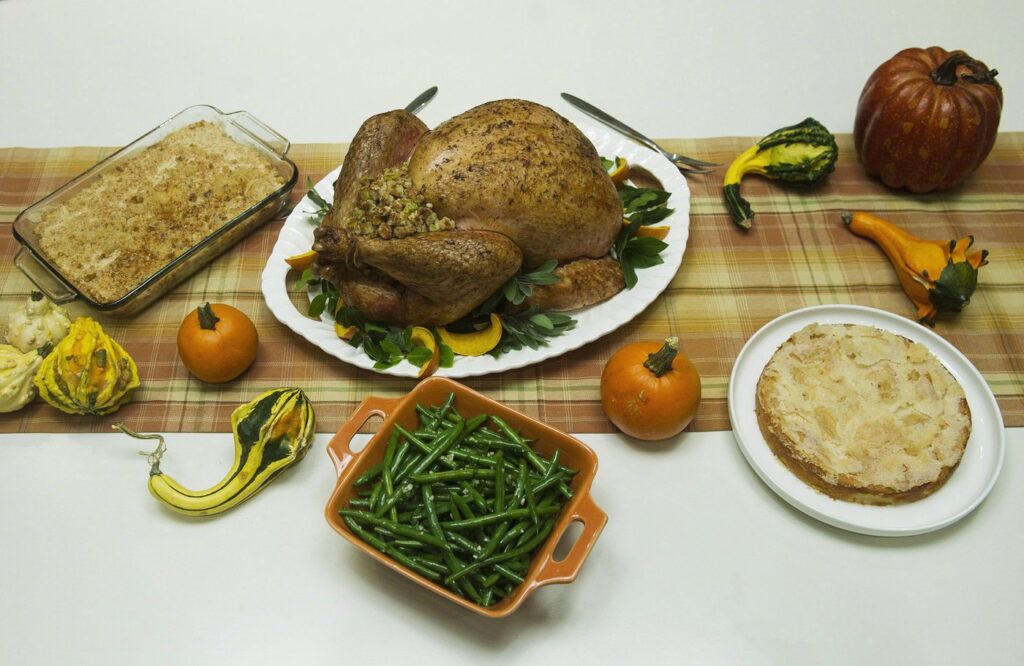
As Thanksgiving approaches, a growing wave of patriotism among Canadians has led many to reconsider their holiday meals. There is an increasing interest in using ingredients sourced from within Canada to create a feast that truly honors the country’s agricultural bounty, while also aiming to keep costs manageable.
Experts assert that preparing an all-Canadian Thanksgiving meal on a budget is relatively straightforward. Paul van der Werf, an adjunct professor at Ivey Business School at Western University in London, Ontario, emphasizes that Thanksgiving should be seen as a harvest feast coinciding with peak agricultural production across the country. He notes, “Canada produces lots of turkey, lots of potatoes. It’s the world’s second-biggest producer of cranberries.”
In 2025, Ontario was responsible for 45 percent of the country’s turkey production, as highlighted by Statistics Canada. Additionally, a separate report indicated that Canada achieved an all-time high in potato production in 2024. Van der Werf believes that a classic Thanksgiving meal is inherently Canadian, stating, “We’ve always had this real abundance of Canadian agricultural products of world-class quality.” He adds that ongoing geopolitical challenges have prompted consumers to consider sourcing ingredients domestically.
With renewed trade tensions with the United States, many Canadians are once again scrutinizing food labels for information about origin and production. However, defining what qualifies as Canadian can be challenging due to the interconnected nature of North America’s food supply chains. For example, cranberries harvested in Canada may be processed by U.S.-based companies like Ocean Spray into jelly sauce.
Jeff Stewart, executive director of the non-profit Food Day Canada, emphasizes the importance of understanding food labels when selecting Canadian-made items. He explains that many consumers opt for convenience foods, such as pre-packaged stuffing or instant mashed potatoes, but these products may not be as local as one might assume.
Stewart proposes a strategic approach for crafting a holiday menu that emphasizes local ingredients while staying within budget. He suggests visiting grocery stores or farmers markets to identify what is in season, then designing the meal around those fresh, plentiful items. “Whatever is in abundance is what you’re going to find the best prices on,” he mentions.
As autumn brings a variety of fresh produce, shoppers should focus on seasonal items like pumpkins, squash, potatoes, apples, and pears. Conversely, ingredients like blueberries, which are no longer in season, tend to be more expensive due to import costs. Stewart indicates that meals will also vary based on geographical location; a local Thanksgiving celebration in Ontario might feature a homegrown turkey, while in British Columbia, it could involve fish.
However, even when selecting locally-sourced ingredients, pantry items can pose a challenge for those striving to prepare a wholly Canadian meal. For instance, traditional pumpkin or apple pies often require spices like cinnamon or nutmeg, which are not grown in Canada. Van der Werf notes, “Cinnamon probably makes up 0.1 percent of the pie, so maybe that’s OK.” Furthermore, while sugar is often derived from imported sugar cane, domestic alternatives like sugar beets from Alberta may provide a more local option.
Stewart advocates for simpler recipes as a way to ease the process of creating a locally-sourced menu. He reminisces about meals prepared by his grandparents, reflecting on the effort involved when convenience foods were not available. He encourages modern cooks to revisit these simpler traditions, saying, “Maybe it’s time for people to think about simpler things in simpler times and go back to some of the ways that were maybe forgotten or maybe never learned.”
Ultimately, Stewart acknowledges that serving a fully Canadian meal may require some effort, but assures that commitment to sourcing locally will grow easier over time. “If you choose to go 100 percent Canadian, then you’ll find that you’ll get there, even if it’s a little bit difficult at first,” he advises.








