

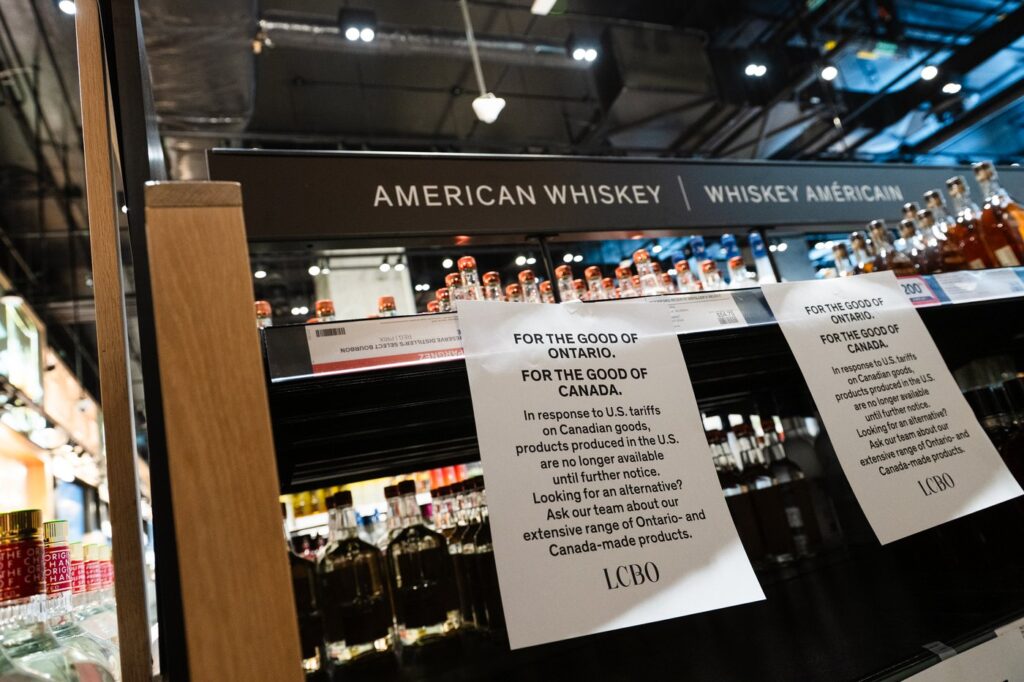
Nova Scotia Premier Tim Houston recently disclosed that Prime Minister Mark Carney has requested that provincial premiers across Canada consider allowing the sale of U.S. alcohol in liquor stores, as discussions around a new trade deal progress. This came to light during a press conference shortly after Carney briefed the premiers on a new agreement reached with the United States.
Houston affirmed that Carney's request is conditional upon the finalization of the trade deal, stating, “It’s been an irritant something that has really bothered the United States for so many reasons. Whether Canadians will actually buy it when it gets back on shelves, that’s a whole other discussion.” The urgency of this matter is underscored by the fact that almost all provinces in Canada currently ban the sale of U.S. alcohol, with Alberta and Saskatchewan being the notable exceptions.
In response to the prime minister's request, Ontario Premier Doug Ford has yet to provide any comments. Historically, Ford has expressed his discontent with the aggressive trade stance taken by former U.S. President Donald Trump, especially regarding the imposition of strong tariffs on Canadian goods. Just weeks prior, Ford labeled Trump as a "bully" in the context of trade relations, emphasizing the need to stand up to such pressures or risk detrimental outcomes for Canadian businesses.
During the press conference, Carney highlighted that the new trade deal aims to reinforce and enhance Canada’s current trade advantages with the United States. This development follows strategic negotiations spearheaded by Ministers LeBlanc and Greer, who met shortly after Trump announced a temporary three-day suspension of the previously planned 50 percent tariffs on a range of Canadian products. This suspension was intended to alleviate immediate pressure on Canadian exports.
While specifics regarding the draft agreement discussed between Greer and LeBlanc were scarce, it was confirmed that Canada’s dairy supply management system would remain intact, suggesting that some key agricultural interests are safeguarded in the negotiations. This points to a broader strategy of maintaining essential sectors of the Canadian economy while navigating complex trade dynamics with the U.S.
Overall, the push to allow U.S. alcohol back into Canadian markets reflects broader themes of trade negotiation, the balancing of provincial and federal interests, and the ongoing efforts to stabilize Canada-U.S. relations amidst changing political landscapes. The coming days are likely to see further developments as premiers across Canada consider their response to Carney's request and the evolving details of the trade negotiations.








