

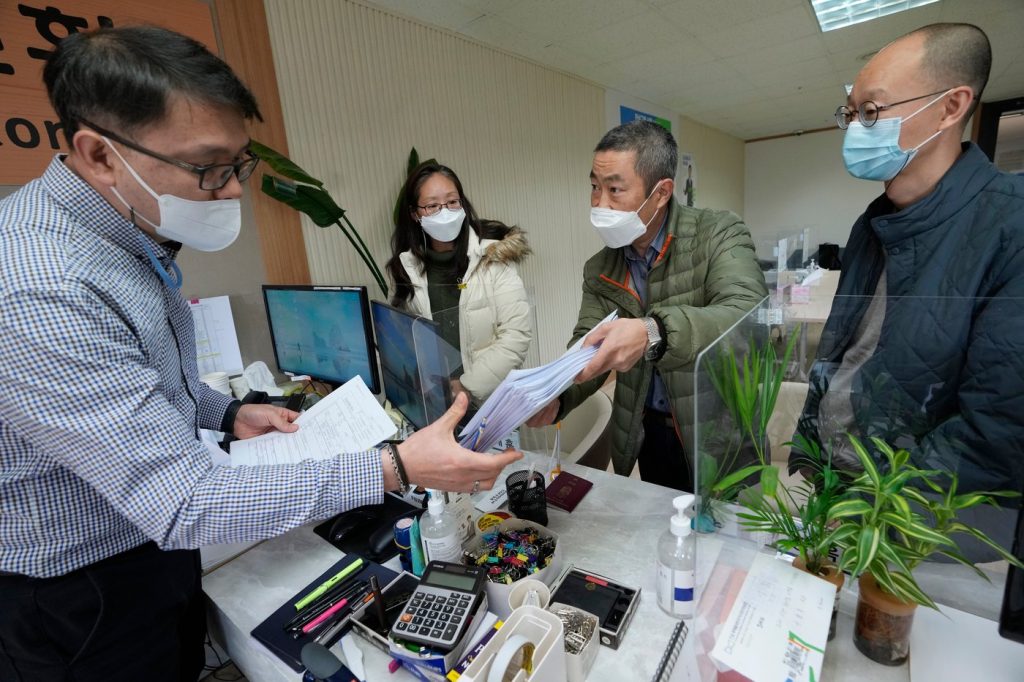
SEOUL, South Korea (AP) — The South Korean government has relaunched a Truth and Reconciliation Commission aimed at investigating the country's historical human rights violations, specifically focusing on the significant issues of fraud and malfeasance that have plagued its foreign adoption program. This new commission commenced operations on Thursday, months after the previous commission's mandate ended in November, leaving over 2,100 complaints unresolved.
The newly established commission will inherit the unresolved cases, which include 311 submissions from Korean adoptees residing in Western countries. These cases were either deferred or not fully reviewed by the second commission, which ceased a pivotal investigation into adoptions in April 2023. This suspension was attributed to internal disputes about which cases should be acknowledged as problematic.
Advocates for adoptee rights have observed a substantial increase in interest among those affected, with many more individuals reaching out for investigations. This surge includes numerous adoptees from the United States, a demographic that was underrepresented in earlier inquiries, despite American families being the largest recipients of Korean children over the past seven decades.
However, officials who participated in the previous commission have indicated that it may take several months—possibly until May or June 2024—for the new investigations to commence. The South Korean government still needs to appoint a chair to lead the commission, and as of now, investigative teams have not been formed. Initially, the commission's operations will be managed by civil servants responsible for receiving and registering cases.
This third Truth and Reconciliation Commission is the result of a law enacted in January, which expands its investigative mandate beyond adoption issues to encompass a wider range of human rights abuses potentially linked to the South Korean government. This includes investigations into civilian deaths that occurred during the Korean War from 1950 to 1953, repression during the military regimes between the 1960s and 1980s, and ongoing abuses of inmates in welfare facilities.
Throughout the 1970s to early 2000s, South Korea sent thousands of children to Western countries each year, with the peak during the 1980s averaging over 6,000 adoptions per year. The authoritarian military government of that era viewed population growth as a challenge to economic goals, treating foreign adoptions as a means to mitigate the number of dependents and contributing to what is now believed to be the world’s largest diaspora of adoptees.
The earlier investigation, which was suspended in 2023, reviewed a large number of cases spanning Europe, the U.S., and Australia. The second commission confirmed that human rights violations occurred in only 56 of the 367 complaints submitted by adoptees. Despite the limited number of confirmed cases, the commission released a significant interim report that held the South Korean government accountable for a foreign adoption program fraught with fraud and abuse. This program was heavily criticized for being driven by efforts to lower welfare costs and managed by private organizations that frequently manipulated the backgrounds and origins of children.
The interim report challenged the long-held belief in South Korea and among receiving nations that adoptions were primarily motivated by humanitarian concerns, with findings that resonated with previous investigative reporting. Collaborative investigations by The Associated Press and Frontline (PBS) analyzed extensive documentation and conducted numerous interviews to reveal how the South Korean government, in conjunction with Western nations and adoption agencies, facilitated the adoption of approximately 200,000 Korean children, often through corrupt or illegal methods.








