

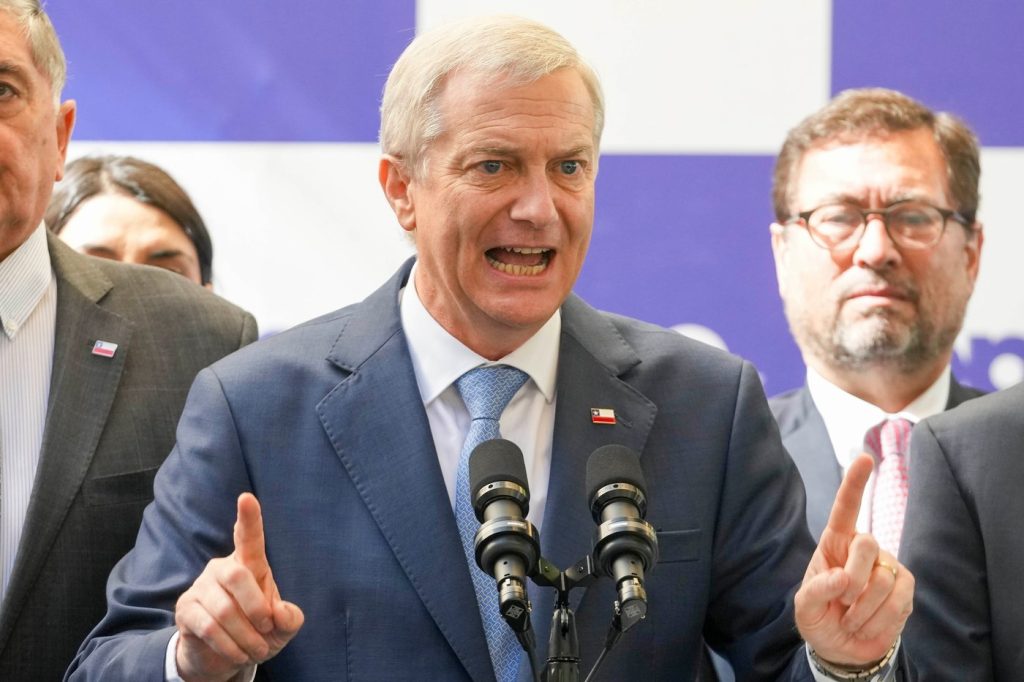
SANTIAGO, Chile (AP) – Chile's ultraconservative José Antonio Kast officially took office as president on Wednesday, signaling the most significant political shift to the right in the country since the return of democracy in 1990. His inauguration marks a pivotal moment in Chilean politics as the nation seeks to address rising concerns over crime and immigration.
Kast, a political veteran inspired by the Trump administration, secured a decisive victory in December against the government-backed communist candidate Jeannette Jara. He campaigned on a platform focused on enhancing security and tackling illegal immigration, promising policies that align closely with those of U.S. President Donald Trump.
As he assumes leadership, Chile stands at a geopolitical crossroads between the United States, striving to regain influence in Latin America, and China, which has become a key trading partner for Chile and much of the region. The ongoing rivalry between the U.S. and China has escalated from mere rhetoric to active implementation, implying a significant drop in U.S. influence under the previous Chilean administration.
Mariano Machado, an analyst from risk intelligence firm Verisk Maplecroft, highlighted the anticipation surrounding Kast's presidency, emphasizing the importance of both aligning with Washington and navigating relationships with crucial partners. Kast's approach has already indicated a willingness to strengthen ties with the U.S., particularly following tensions with outgoing President Gabriel Boric over a controversial submarine cable project intended to connect Chile and China.
Relations between Chile and the United States soured during Boric's presidency, as Boric openly criticized Trump's leadership style. Trump recognized Kast's potential by inviting him to the 'Shield of the Americas' summit, an event that gathered various right-wing leaders from the region, showcasing a clear preference for Kast over his predecessor.
Kast's rise to power comes after narrowly losing to Boric in 2021, a period during which his conservative views on social issues, particularly regarding abortion and same-sex marriage, were largely dismissed by the electorate. However, four years later, his hard-line stances on crime and immigration resonated with approximately 60% of Chilean voters who are grappling with increasing organized crime and disillusionment with Boric's unfulfilled promises.
The thematic focus of Kast's incoming government revolves around a sense of urgency, especially concerning security issues. The challenges surrounding crime and immigration are being framed as critical issues contributing to social decline, with Kast proposing measures including the criminalization of illegal immigration and the construction of barriers along Chile's borders.
Experts believe that the first 100 days of Kast's administration will be crucial in shaping its trajectory. The new government will face a divided Parliament, and its ability to govern effectively will depend on its initial responsiveness and clarity in policy direction. According to Machado, if the administration can establish traction and a clear agenda early on, it may foster cooperation from the political establishment. Conversely, a lack of direction could lead to increased polarization and discord within Congress.
Kast's abrupt decision to suspend the transition process, an unusual move since the end of the military regime in 1990, has raised concerns about potential challenges his administration may face moving forward. Observers note that a strained relationship with Congress from the outset could hinder the passage of essential laws and affect subsequent dialogue within the legislative body.
The Chilean Republican Party, now under Kast's leadership, faces a period of uncertainty as the nation navigates domestic and international challenges while seeking to define its new political identity in a rapidly changing landscape.
For further updates on Latin American affairs, visit AP's Latin America coverage.
Nayara Batschke, The Associated Press








