

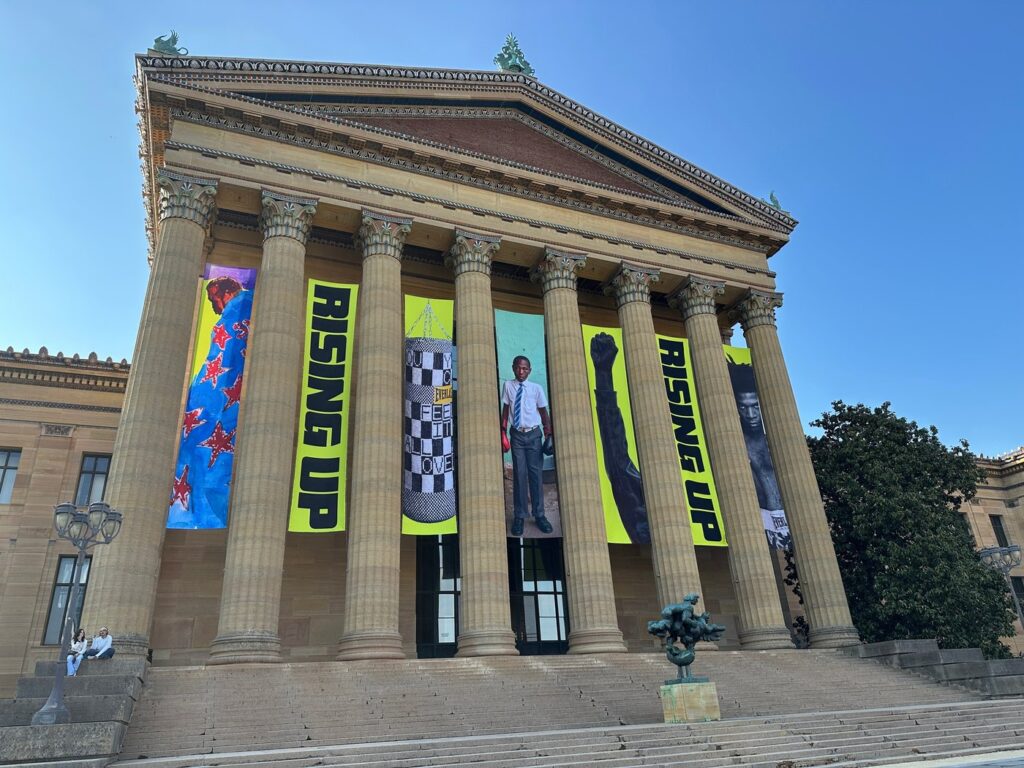
PHILADELPHIA (AP) — Visitors from across the globe flock to the steps of the Philadelphia Museum of Art, primarily drawn not by the museum's exhibitions but by the iconic bronze statue of Rocky Balboa. This statue, depicting the fictional boxer with arms raised in triumph, has become a symbol of pilgrimage for many.
For years, the museum maintained an uneasy distance from the figure of Rocky. However, a shift in perspective is underway as they invite Rocky into a new exhibition titled "Rising Up: Rocky and the Making of Monuments." This exhibition opens this weekend and aims to explore how a character from film transitioned into a real-world symbol. The project is led by guest curator Paul Farber, who has dedicated years to understanding the significance of the statue, using platforms like NPR podcasts to foster dialogue around public monuments and their meanings.
The exhibition spans over 2,000 years of boxing imagery, highlighting a continuous theme of struggle, as described by Louis Marchesano, the museum's deputy director of curatorial affairs and conservation. He emphasizes that the enduring attraction to boxing imagery lies in humanity's connection to physical and internal conflicts, resonating with audiences as much today as it did in ancient times. Marchesano remarked, "It’s not simply about watching two people beat each other up — it’s about endurance, internal fortitude, and internal struggle."
The saga of the Rocky statue is intertwined with the Philadelphia Museum of Art's identity. Initially left on the museum's steps after filming the original "Rocky" movies, the statue was later moved at the museum's request. After a brief relocation to South Philadelphia, it returned to the museum in 2006, but the relationship between the statue and the institution never fully reconciled. Marchesano candidly noted, "The museum has had — and I hate to say this, no pun intended — a rocky relationship with the statue," expressing relief at the museum's evolving stance on the beloved figure.
According to the Philadelphia Visitor Center, approximately 4 million people visit the museum's steps each year, rivaling the annual foot traffic at the nearby Liberty Bell. This popularity illustrates the statue's profound impact on both local and international visitors. For instance, David Muller, a wrestling coach from France, expressed that Rocky's challenges and triumphs provide valuable lessons for younger generations, underscoring the film's significance for personal growth and resilience.
International travelers are equally inspired. Kate Tarchalska, who visited from Poland, recalled Rocky as a childhood hero, expressing joy in standing next to the statue. Suraj Kumar, visiting from St. Louis and originally from Bengaluru, India, noted his excitement in seeing the statue, which he first learned about through his father, who introduced him to the "Rocky" films.
One of the exhibition's galleries contextualizes Rocky within the global boxing phenomenon of the 1970s, featuring works by renowned artists such as Keith Haring, Jean-Michel Basquiat, and Andy Warhol. This period saw unprecedented public interest in boxing, echoing the internal and external struggles depicted in both the "Rocky" series and contemporary artistic expressions. As Marchesano highlighted, "In the 1970s, we knew minute by minute who the heavyweight champion of the world was,” further emphasizing the shared cultural narratives present during this era.
Another segment of the exhibition focuses specifically on Philadelphia, showcasing photographs of the Blue Horizon boxing gym and the story of Joe Frazier, who significantly inspired the creation of Rocky. Marchesano asserted, "Without Joe Frazier, Rocky doesn’t exist," acknowledging the intertwined histories of the boxer and the film's character.
As the exhibition runs through August, the statue of Rocky is set to move to a permanent location at the top of the museum's steps, a position it has never officially occupied before. While Rocky's longstanding place at the bottom steps will not remain vacant, a statue of Joe Frazier will take its place, further solidifying the connection between the film, its inspirations, and the sport's legacy in Philadelphia.








