

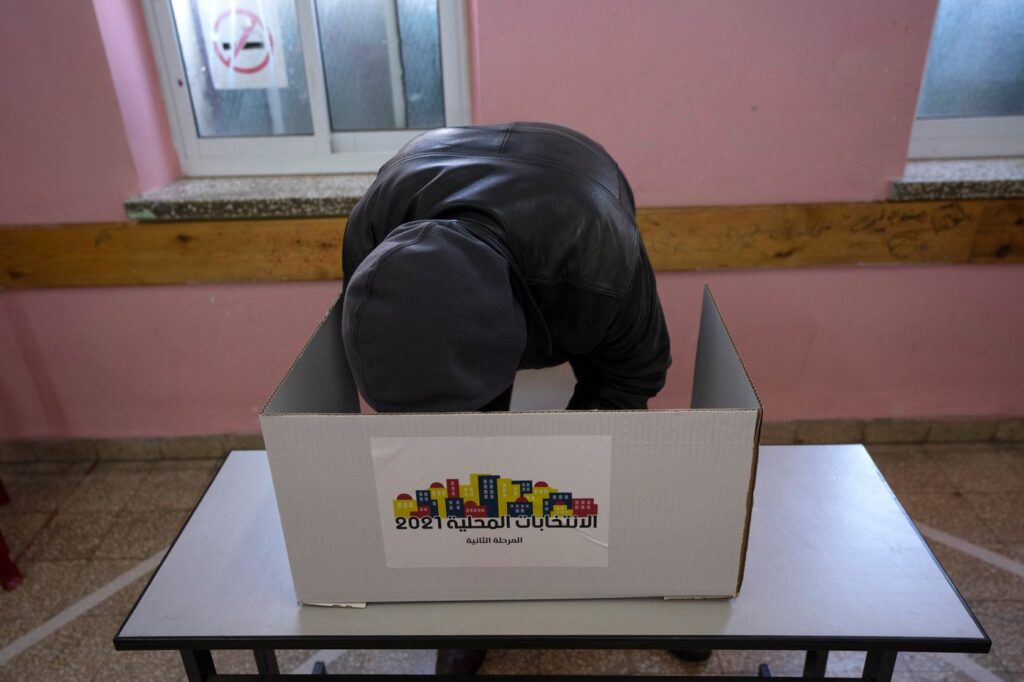
RAMALLAH, West Bank (AP) — For the first time in two decades, Palestinians in Gaza have an opportunity to participate in local elections scheduled for Saturday. This event is particularly significant as it follows the onset of the Israel-Hamas war, with voters in the Israeli-occupied West Bank also casting their ballots for the first time since the conflict began. The turnout at these elections may serve as an indicator of public trust in the political leadership, particularly among the aging leaders in the West Bank and amidst anticipation of a possible shift in governance in Gaza.
The elections in the West Bank aim to determine the composition of local councils that manage utilities such as water, roads, and electricity. Conversely, the vote in Gaza, specifically in the city of Deir al-Balah, holds more symbolic value; officials are referring to it as a "pilot" endeavor. Although the Palestinian Authority (PA) has not organized presidential or legislative elections since 2006, it has promoted these local elections after implementing reforms in response to international demands.
Operating under the slogan "We Stay," the Central Election Commission, based in Ramallah, has worked to encourage the approximately 70,000 eligible voters in Gaza’s Deir al-Balah and 1 million voters in the West Bank to participate in the elections. According to spokesperson Fareed Taamallah, the voting process is a manifestation of the Palestinian people's desire to remain on their land and develop their nation.
Despite extensive destruction in Gaza resulting from over two years of warfare, the commission decided to hold elections in Deir al-Balah, which, while affected by airstrikes, avoided a ground invasion. The commission faced challenges in conducting traditional voter registration and was unable to supply essential materials for the election, including ballots and boxes, to Gaza. The Israeli military's Coordination of Government Activities in the Territories (COGAT) has not made statements regarding the entry of election materials into Gaza.
Past local election turnout among Palestinians has averaged between 50% and 60%, which, while decreasing in recent years, remains relatively high compared to similar elections in Lebanon and Tunisia, where turnout was below 40% and 12%, respectively. President Mahmoud Abbas, aged 90, signed a decree last year that revamped the electoral process to meet some Western donors' requirements. This reform allows individual candidates to run rather than being part of a slate, lowers the age required to run, and increases quotas for female candidates.
Another decree issued by Abbas stipulates that candidates must accept the Palestine Liberation Organization's (PLO) program, which recognizes Israel and renounces armed struggle, effectively excluding Hamas and other factions from the electoral process. Notably, this election cycle marks the first instance in six local elections where no alternative faction has formally presented a slate, a development interpreted by analysts as a reflection of political disillusionment among the Palestinian electorate regarding Abbas’s leadership.
In the West Bank, the PA has limited autonomy, and local councils handle essential services such as waste collection and permitting for construction. Elections are set to take place in villages categorized as "Area C," which falls under Israeli military control, as well as in areas occupied since the Israeli military's ground invasion in the northern West Bank last year. While numerous campaign posters can be seen across cities, many, including Ramallah and Nablus, are not holding elections due to insufficient candidate registrations.
The PA's influence has diminished in light of the absence of peace negotiations with Israel and the continuous expansion of Israeli settlements. However, the PA perceives local elections as a safer way to exhibit progress on reforms. According to Aref Jaffal, director of the al-Marsad Arab World Democracy and Electoral Monitor, the PA aims to reinforce its legitimacy through local elections amidst its weakened national governance structure.
In Gaza, this election marks the first since 2006, following Hamas's electoral victory that year and its subsequent violent takeover of the region from the Fatah-led PA. While Hamas did not field candidates for these elections, polls suggest it retains significant popularity among Palestinians in both Gaza and the West Bank. International observers emphasize the importance of these elections for Palestinians to assert their democratic rights during such challenging circumstances, although responses from international actors regarding the elections have generally been muted.
As Gaza prepares for a significant transition in governance, driven by international mechanisms established in previous years, the upcoming elections assume critical relevance. While no local elections have been established in Israeli-annexed East Jerusalem due to the Oslo Accords lacking provisions for such, the broader implications of the Palestinian electoral process may have lasting effects on the quest for Palestinian statehood and governance reform.








