

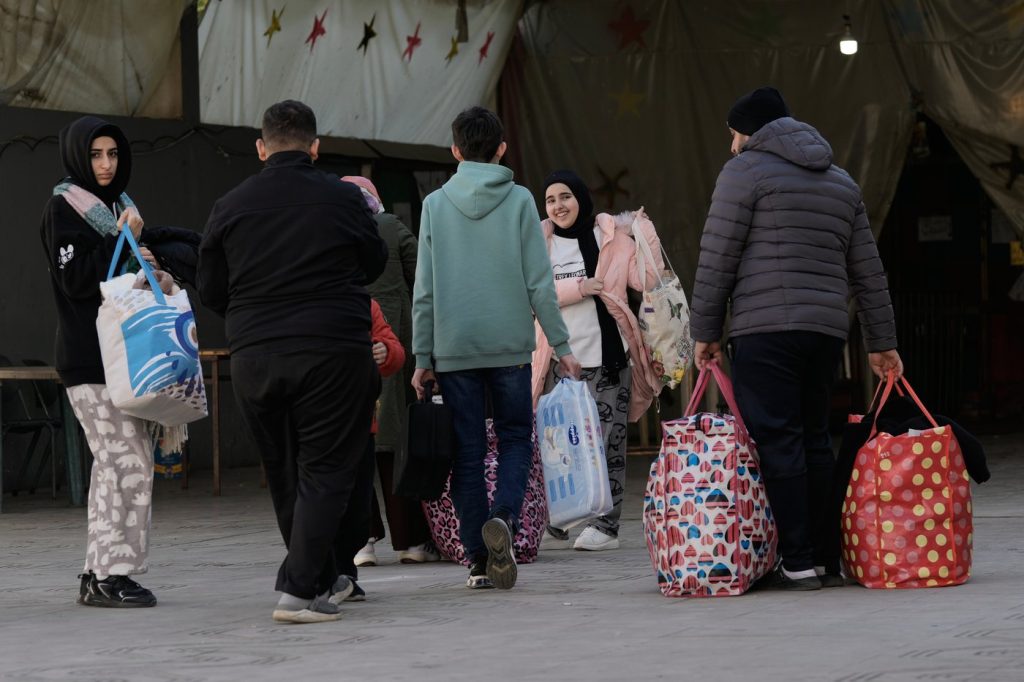
BEIRUT (AP) — A Lebanese mother, who awakened to prepare a pre-dawn meal before another day of fasting during Ramadan, found herself caught in an escalating conflict as Israeli warplanes began attacking southern Lebanon. This was in direct retaliation for missiles and drones launched by Hezbollah. On March 2, along with tens of thousands of others fleeing potential danger, the woman's family embarked on what was supposed to be a one-hour journey from Nabatiyeh to Beirut, which turned into a grueling 15-hour ordeal.
The 45-year-old woman, speaking anonymously due to fears of repercussions from Hezbollah supporters, expressed her opposition to the militant group's decision to begin the conflict. Now living in a school turned into a shelter in the Lebanese capital with her husband, their two children, and her mother-in-law, she emphasized the plight of many displaced families during this holy month.
This resurgence of violence comes just 15 months after the last war between Israel and Hezbollah ended with a U.S.-brokered ceasefire in November 2024. Since then, Hezbollah has faced growing dissatisfaction within its base and increasing pressures from the Lebanese government. On the same day of the recent attacks, the Lebanese government declared Hezbollah's military actions illegal, with almost all Cabinet ministers approving the measure despite Hezbollah's strong influence. This marked a significant shift in the government's stance, affirming that the decision for war and peace rests solely with the state.
Moreover, the current conflict erupted as Hezbollah conducted its first strikes against Israel in over a year, following Israeli and U.S. attacks on Iran days before. Regions like southern Lebanon, the Bekaa valley, and Beirut's southern suburbs saw mass evacuations as warnings from Israel prompted residents to flee. The horror of the last war, which resulted in over 4,000 casualties and significant infrastructure damage amounting to $11 billion, still lingers in the minds of the Shiite communities most affected.
People like Hussein Ali, who has been displaced for the second time in under two years, fear a repeat of the destruction they previously endured. He voiced that the responsibility for this war cannot solely rest on the citizens' shoulders, noting that many have yet to recover from past conflicts. Such sentiments have fueled a public debate, as some Lebanese Shiites now openly criticize Hezbollah for provoking the current situation and the consequent suffering caused by repeated conflicts.
The Lebanese government's recent hardening attitude towards Hezbollah is unprecedented. Prime Minister Nawaf Salam stated that all military activities by Hezbollah are illegal and that the group must surrender its weapons to the Lebanese state. The army has begun to act on these directives, recently arresting three Hezbollah members for transporting weapons, although they were released on bail shortly thereafter.
Despite heightened criticism of Hezbollah, many supporters still justify the group's actions, claiming that retaliation against Israel was warranted due to ongoing violations of the ceasefire. The situation remains complex; individuals like Ali Saleh, who fled from a village near Nabatiyeh, expressed unwavering support for Hezbollah as a necessary force against Israeli aggression. He prayed for victory over Israel, reflecting the deeply entrenched sentiments within parts of the Shiite community.
Political analysts note that while voices of dissent may have grown, genuine opposition remains subdued due to fear of repercussions. Professor Sadek Nabulsi posited that this discontent is not a new phenomenon, as Hezbollah’s support base has historically endured hardship without abandoning their allegiance. Nevertheless, the current wave of criticism may signify a gradual shift in sentiment among the populace, similarly seen during past conflicts.
As the situation progresses, the delicate balance between opposition and support for Hezbollah continues to evolve, marking a potential turning point in Lebanon's complex political landscape. With ongoing hostilities and the compounded grief of past wars still fresh, the fate of many hangs in the balance amidst the intensifying conflict.








