

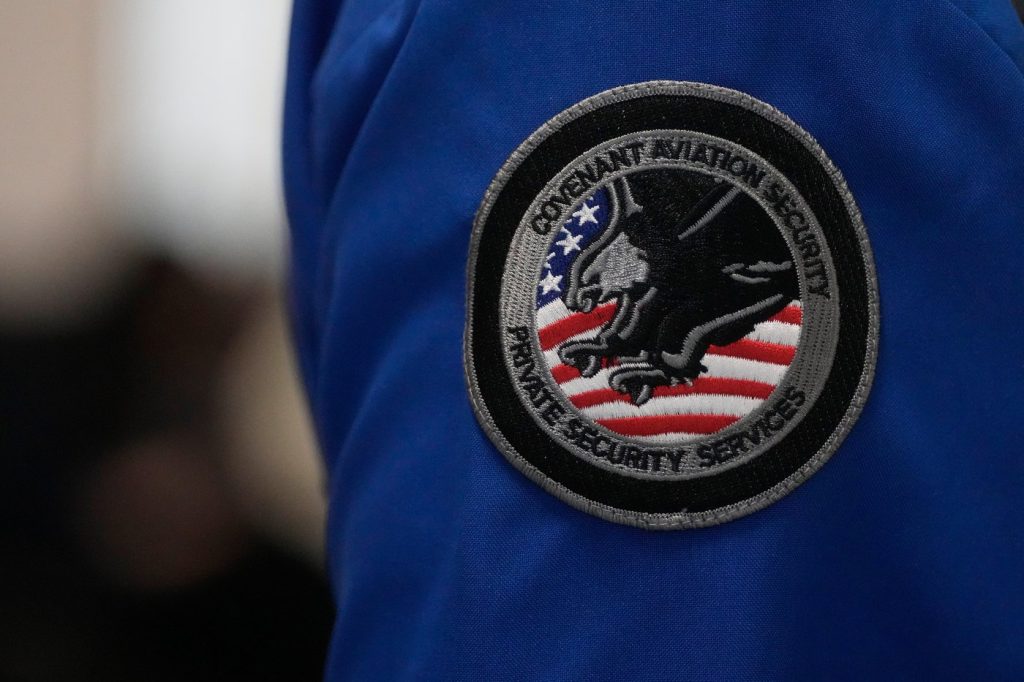
Long security lines at U.S. airports have become a notable concern, particularly as a government shutdown continues. Reports indicate that lines have begun to extend into baggage claim areas and even parking garages over the weekend. This scenario may lead to more extensive travel disruptions as the shutdown persists. However, such issues have not surfaced at San Francisco International Airport (SFO), which is among nearly two dozen U.S. airports utilizing a TSA program that allows private contractors to manage security screenings while under federal oversight.
Due to the nature of their funding, as contractors are paid through federal contracts, their compensation continues even during government shutdowns. Doug Yakel, a spokesperson for SFO, affirmed that allocated funds remain uninterrupted, presenting a stable situation during a turbulent time for other airports struggling with staffing and pay issues.
This contrast highlights a broader debate within the aviation industry regarding the role of privatization in maintaining security operations and preventing operational disruptions during political stand-offs. Some industry experts suggest that the TSA screening partnership program could serve as a model to mitigate the effects of future government shutdowns on airport operations. Such a model previously proved effective during the 43-day government shutdown last year, as reported by Yakel.
Critics of this privatization approach caution against potential risks, stating that outsourcing security tasks could compromise job protections and benefits for workers already facing high turnover due to challenging working conditions. The program permits airports to use approved private security companies to manage screening checkpoints while TSA maintains authority over security procedures and supervision, ensuring screeners meet the same rigorous standards as federal employees.
Besides SFO, other airports participating in this program include Kansas City International Airport, Atlantic City International Airport, and Orlando Sanford International Airport. In contrast, the majority of the nation’s roughly 400 commercial airports employ federal security officers directly. During government shutdowns, these TSA employees are required to report for work without pay, resulting in increased absenteeism and slow-moving security checkpoints as shutdowns extend.
The current partial government shutdown affects only the Department of Homeland Security, which includes TSA. This ongoing impasse results from congressional opposition to funding over immigration enforcement tactics, marking the third shutdown within a year that has left TSA workers temporarily unpaid. Such disruptions can have a cascading effect throughout the travel system, exacerbating problems amidst an already congested schedule, particularly during the busy spring break travel season.
Aviation security expert Sheldon Jacobson notes that the success of SFO’s privatization model demonstrates its viability, arguing it warrants further exploration. He contends that the effectiveness of SFO, a major hub for international travel, illustrates that even larger operations can be managed well under a privatized system. Jacobson highlights that the scale of operations should not limit the adoption of such measures across other airports.
Conversely, the American Federation of Government Employees, representing TSA employees, strongly opposes privatization, asserting that it can weaken accountability and increase the risk of cost-cutting affecting training and staffing. Proponents of retaining federal oversight point to the TSA’s post-9/11 establishment, which implemented stringent airport security standards now considered essential.
Some industry representatives advocate simple legislative solutions to ensure aviation workers receive pay regardless of the government’s funding status. Consensus among travel industry groups emphasizes that repeated government shutdowns negatively impact both essential workers and travelers, warranting urgent attention from Congress to prevent such occurrences.
Meanwhile, discussions surrounding possible privatization continue, with some Republican lawmakers proposing the elimination of TSA and transitioning oversight to new entities. The TSA leadership remains open to evaluating potential privatization routes, emphasizing that any such plan must maintain high security standards alongside TSA oversight.
For its part, SFO's longstanding use of private contractors has inadvertently revealed a significant benefit during recent shutdowns — reduced staffing disruptions at checkpoints. Observers note that ensuring rigorous standards under private contractors is key to maintaining efficient and secure airport operations.








