

HONG KONG (AP) – Oil prices surged over 4% following a national address by U.S. President Donald Trump regarding the ongoing Iran war. In his first address since the conflict escalated, Trump stated that the U.S. would continue to "hit Iran very hard" and mentioned that military operations might conclude in a matter of weeks, claiming that "core strategic objectives are nearing completion."
During his Wednesday night speech, Trump asserted, "We are going to hit them extremely hard over the next two to three weeks. We’re going to bring them back to the Stone Ages, where they belong." However, he did not provide specifics about ending the supply disruptions caused by the conflict, particularly in relation to the Strait of Hormuz, a crucial waterway for global oil and gas transport, which has experienced tensions amid U.S. threats to target Iranian energy infrastructure.
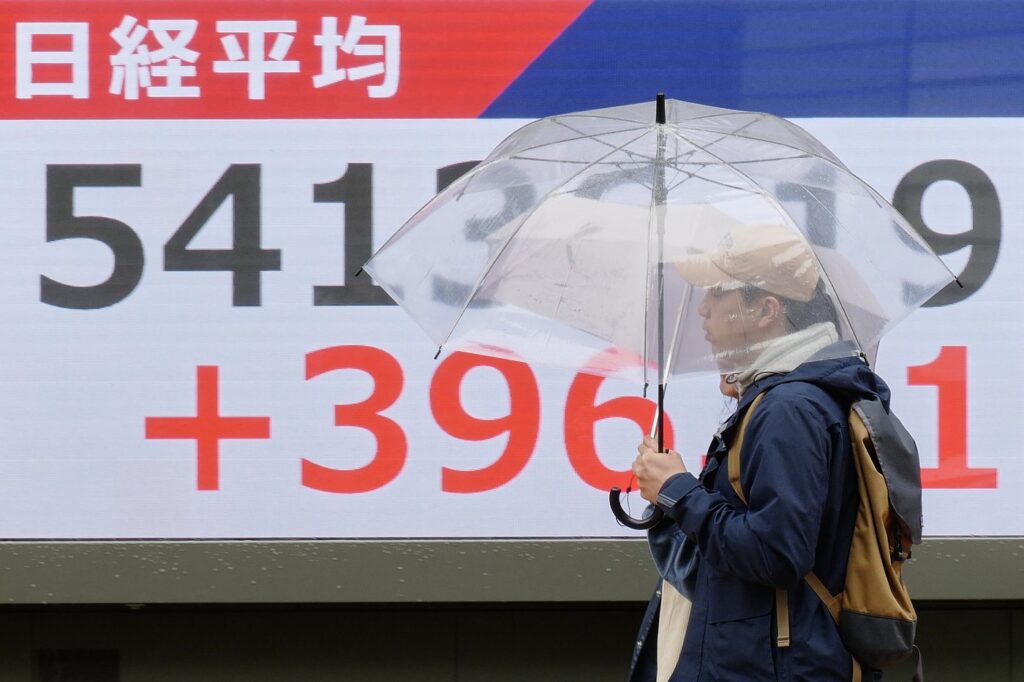
In response to Trump's remarks, the financial markets reacted negatively. The Nikkei 225 in Tokyo fell by 1.9% to 52,731.94 during early trading on Thursday, while South Korea's Kospi plummeted 3.6% to 5,281.22. Hong Kong's Hang Seng index also declined by 0.9% to 25,056.42, and the Shanghai Composite dropped 0.5% to 3,928.30. Additionally, the S&P/ASX 200 in Australia saw a decrease of 0.6%, and Taiwan's Taiex fell by 1.1%. U.S. futures were also down by more than 0.9%.
On the commodity market, oil prices reacted sharply to Trump's statements. Brent crude, which serves as the international benchmark, witnessed a rise of 4.9% to $106.16 per barrel, and benchmark U.S. crude increased by 4% to $104.15 a barrel. Market analysts expressed disappointment, noting that Trump's speech lacked specific details that investors were seeking regarding a potential ceasefire, with Takashi Hiroki, chief strategist at Monex in Tokyo, stating, "There were no concrete details about the end of the hostilities with Iran.”
Despite the tensions surrounding the Iran crisis, there had been some optimism on Wednesday prior to Trump's address, fueled by his earlier comments suggesting that the U.S. military could wrap up operations in "two to three weeks." This had previously led to gains in world stock markets, with the S&P 500 rising by 0.7% to 6,575.32, the Dow Jones Industrial Average increasing by 0.5% to 46,565.74, and the Nasdaq composite climbing 1.2% to 21,840.95.
Other notable market movements included a significant jump in shares of Eli Lilly, which rose by 3.8% following the U.S. Food and Drug Administration's approval of its GLP-1 pill for weight loss. In contrast, Nike’s shares plunged by 15.5% despite reporting better-than-expected quarterly profits, largely due to concerns over weaker future sales.
In the currency market, the U.S. dollar appreciated against the Japanese yen, rising to 159.37 from 158.82. Meanwhile, the euro traded at $1.1545, down from $1.1589.
Overall, financial markets are reacting to the heightened geopolitical tension stemming from the Iran war and the uncertain outlook provided by the U.S. administration. Investors are keenly watching for any indications of de-escalation or a formal ceasefire agreement.








