

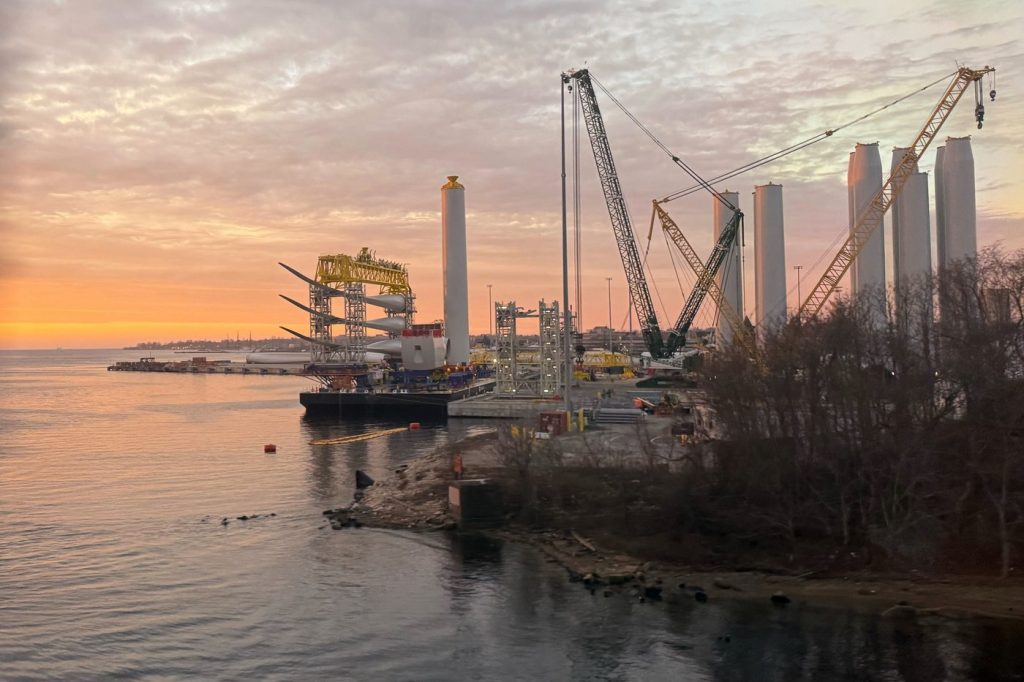
A federal judge in Washington has allowed construction to resume on the Empire Wind project, an offshore wind initiative based in New York, in a significant ruling for developer Equinor. The decision comes in response to an order from the Trump administration that aimed to halt the project, an action that the developer argued would jeopardize its viability within days.
District Judge Carl J. Nichols, a Trump appointee, ruled that construction could proceed while he assesses the legitimacy of the government's suspension order. He criticized the government for failing to adequately address crucial arguments made by Empire Wind, particularly claims that the administration did not follow appropriate procedures. This ruling marks a second win for wind energy developers against the Trump administration's interruptions this week.
The Empire Wind project is being developed by the Norwegian company Equinor and is designed to provide power to over 500,000 homes, with the project currently around 60% complete. The project's future had been cast into uncertainty due to the limited availability of specialized construction vessels and significant financial losses incurred. The project is pivotal for New York, particularly given the limited options for land-based renewable energy sources.
The Trump administration had frozen multiple offshore wind projects on the East Coast just days before Christmas, citing national security concerns. The administration has long been critical of offshore wind farms, with Trump labeling them as "losers" and questioning their economic viability while also expressing concerns regarding their impact on landscapes and wildlife.
In a related ruling earlier this week, Senior Judge Royce Lamberth allowed the Revolution Wind project, developed by Danish company Orsted, to continue. Lamberth noted that the government's justification for stopping construction lacked sufficient explanation and highlighted that the near-complete project would meet about 20% of Rhode Island’s electricity needs and 5% of Connecticut’s.
Orsted is also contesting the suspension of its Sunrise Wind project in New York, with a hearing yet to be scheduled. Meanwhile, Dominion Energy Virginia is expected to challenge the suspension of its Coastal Virginia Offshore Wind project in court as well. The fifth project impacted by the administration's order is Vineyard Wind, which is currently under construction in Massachusetts, although its developers have not publicly confirmed plans to join the legal challenges against the order.
During a recent hearing, Judge Nichols noted that the government's primary concerns appeared to be related to the operation of wind turbines rather than the construction process itself. The government argued against this interpretation, with Associate Attorney General Stanley Woodward expressing skepticism about the developer's claims regarding the catastrophic effects of halting construction.
Equinor's senior vice president overseeing the Empire Wind project, Molly Morris, emphasized the company's commitment to delivering a critical new power source for New York, stating the importance of the project in the context of renewable energy expansion in the region.








