

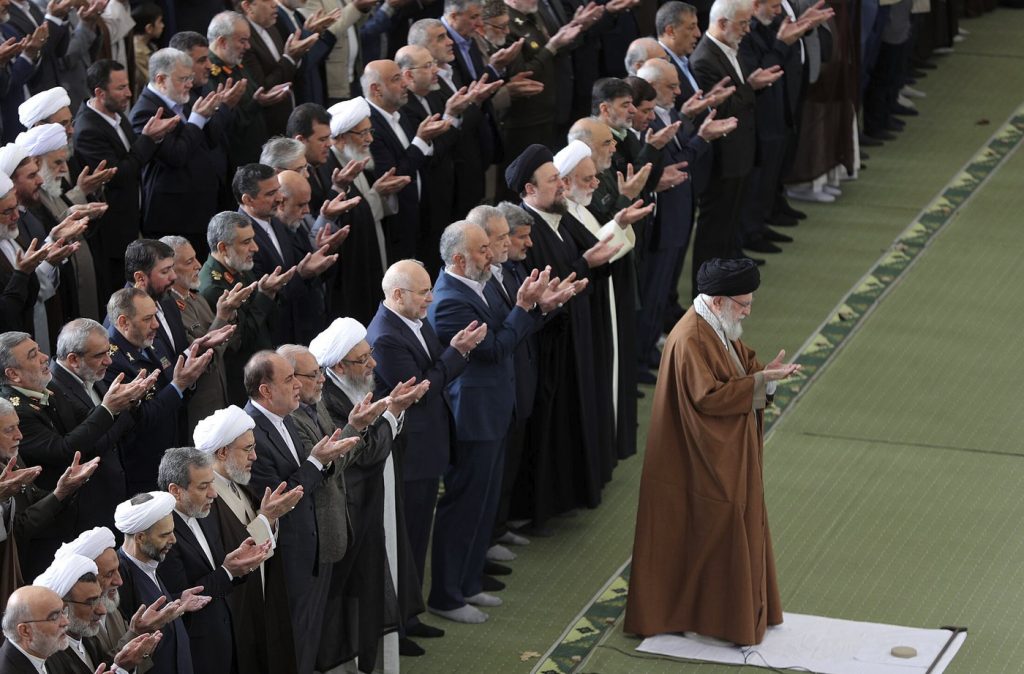
The death of Iran's Supreme Leader Ayatollah Ali Khamenei, who served for nearly 37 years, poses significant questions regarding the country's political future. Following Khamenei's assassination, a complex succession process has begun to unfold, triggering immediate responses from the Iranian government.
On the morning after Khamenei’s assassination, a temporary leadership council was established in accordance with Iranian law. This council includes Iran's sitting president, Masoud Pezeshkian, the head of the judiciary, Gholamhossein Mohseni Ejei, and a member of the Guardian Council who is selected by the Expediency Council. These members will temporarily assume leadership responsibilities while the nation navigates the succession process.
In line with Iranian law, an 88-member panel known as the Assembly of Experts must select a new supreme leader in the near future. The Assembly consists solely of Shiite clerics who are elected every eight years, with their candidacies vetted by the Guardian Council, responsible for maintaining Iran's constitutional order. Historically, the Guardian Council has disqualified various candidates, indicative of its significant influence over Iran's political landscape. For instance, former moderate President Hassan Rouhani was barred from running for the Assembly of Experts in the upcoming March 2024 elections.
Amid the speculation surrounding possible candidates, one key figure has emerged: Mojtaba Khamenei, the son of the late Supreme Leader. Although he has no prior government experience, his candidacy may be possible given his familial ties. However, the idea of a dynastic transfer of power to Khamenei's son could ignite substantial backlash from both the public and those within the political elite who may view such a transition as un-Islamic, reminiscent of the monarchical rule seen prior to the 1979 revolution.
This upcoming transition is reminiscent of the only previous instance of a supreme leader’s succession in Iran. Following the death of Grand Ayatollah Ruhollah Khomeini in 1989, who played a crucial role during the Islamic Revolution and led the country through the devastating Iran-Iraq War, power was transferred to Khamenei. The current political landscape is further complicated by regional tensions, following a conflict initiated by Israel against Iran in June 2025, which adds a layer of urgency to the succession process.
The role of the supreme leader is pivotal within Iran's theocratic system, holding extensive powers over various state matters. The supreme leader serves as the commander-in-chief of Iran's military and the Revolutionary Guard, a powerful paramilitary group with significant influence and control in the country. Under Khamenei’s leadership, the Revolutionary Guard gained considerable empowerment and has played a crucial role in promoting Iran’s strategic interests in the region, particularly as part of the "Axis of Resistance," which aims to counter U.S. and Israeli influence.
The transition of power following Khamenei’s death is a critical moment in Iran's political history. Observers will closely monitor the developments in the coming weeks as the temporary leadership council governs and the Assembly of Experts prepares to select a new supreme leader, ultimately determining the trajectory of Iran's political future.








