

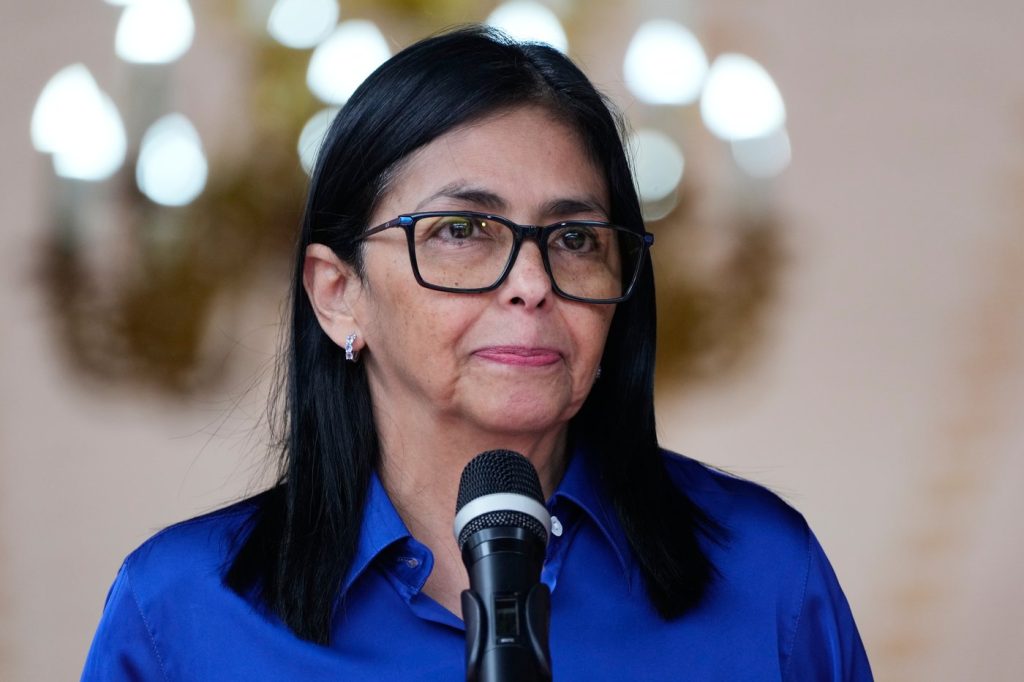
CARACAS, Venezuela (AP) – Delcy Rodríguez, Venezuela’s acting President, is scheduled to deliver her inaugural state of the union speech on Thursday, addressing a nation grappling with uncertainty following the recent ousting of her predecessor, Nicolás Maduro, by the United States. As she takes the stage, Rodríguez faces the dual challenge of responding to the pressure from Washington while maintaining the loyalty of the faction that remains committed to Maduro's government.
The upcoming address is particularly significant, coming just a day after Rodríguez announced her administration's initiative to release political prisoners who had been detained during Maduro’s rule. She described this action as part of a "new political moment" heralded by the recent events that led to Maduro's removal earlier this month.
In her speech to the National Assembly, which is dominated by her ruling party, Rodríguez is anticipated to outline her vision for governance, including potential reforms in the state-owned oil industry. This sector has become a focal point since U.S. President Donald Trump expressed intentions to revitalize it following Maduro's departure.
On the same day, Trump was scheduled to meet with María Corina Machado, a prominent Venezuelan opposition leader, at the White House. Her political party has been recognized for winning the 2024 elections, results that Maduro’s government has rejected. However, in expressing support for Rodríguez, who previously held the position of Maduro's vice president since 2018, Trump appeared to diminish Machado’s influence in the ongoing political landscape.
Following a conversation with Trump, Rodríguez committed to channel every dollar earned from oil sales into transforming Venezuela's deteriorating public health care system. The country's hospitals have long suffered from lack of resources, often requiring patients to bring their own supplies, such as syringes and surgical screws, for basic care.
Rodríguez finds herself in a precarious position, balancing the demands from both the United States and hard-line elements within her own government who control the security forces in Venezuela. This tightrope walk is further complicated by her history; Trump had previously sanctioned Rodríguez for human rights violations during his administration. His recent engagement with her emphasizes the U.S. intention to exert control over Venezuela's oil exports and maintain influence in the region.
In a stark reminder of the ongoing turmoil, Maduro is currently incarcerated in a Brooklyn jail facing drug-trafficking charges, which he has denied. The interplay between international pressures and domestic loyalty continues to shape the political landscape as Rodríguez prepares for her address, aiming to navigate the complex challenges ahead.
As developments unfold, the world watches closely, with implications not only for Venezuela but for the broader geopolitical dynamics in Latin America.








